
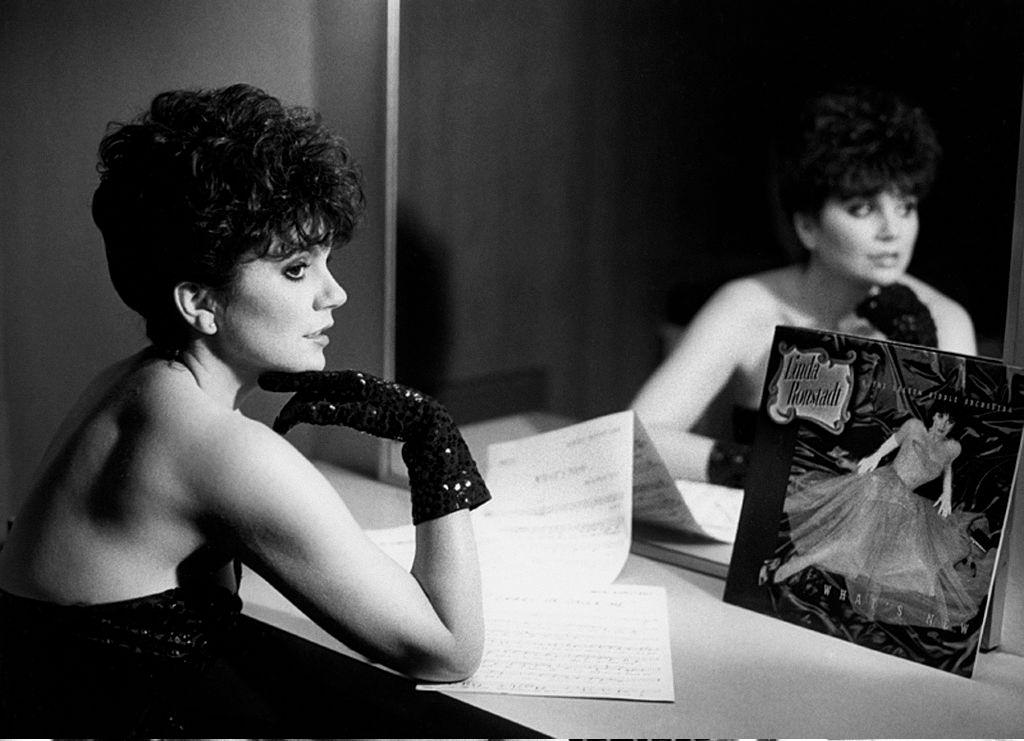
When a rock-and-roll promise becomes a late-’70s reassurance, “That’ll Be the Day” turns into a warm, lived-in vow—steady as a heartbeat, bright as stage lights.
There’s a particular kind of electricity in hearing Linda Ronstadt step to the microphone and choose a song that already carries history in its bones. “That’ll Be the Day (Live in Atlanta, 1977)”—circulating from her concert at the Fox Theatre on December 1, 1977—isn’t just a nostalgic detour. It’s a statement of lineage: a modern superstar (in full stride) tipping her hat to the raw, lean architecture of early rock & roll, and proving how timeless a good two-and-a-half-minute truth can be. The setlist evidence places the song early in the night—coming right after the opener “Lose Again”—as if she wanted the room to remember, immediately, where so much of this music began.
To put the song in context first—because the roots matter—“That’ll Be the Day” was written by Buddy Holly, Jerry Allison, and (controversially credited) Norman Petty, and became a landmark hit for The Crickets in 1957. Its very title traces back to a line repeated by John Wayne in The Searchers, and the record climbed to No. 1 on Billboard’s popular music chart later that year—one of those cultural moments that seems to press a permanent crease into time.
Now jump forward, and you’ll see why Ronstadt’s choice hits so deeply in 1977. Her studio recording of “That’ll Be the Day” had already been a major success: she cut it for her platinum, Grammy-winning album Hasten Down the Wind (released August 9, 1976), produced by Peter Asher—and the single climbed to No. 11 on the U.S. Billboard Hot 100, while also crossing over onto the country chart. So by the time she sang it in Atlanta on December 1, 1977, she wasn’t resurrecting an old chestnut; she was revisiting a song she had already made hers, one that audiences knew not as a museum piece, but as a living part of her own repertoire.
That’s the quiet emotional trick of this performance: the lyrics are youthful—bold, even a little brash—but Ronstadt sings them with a kind of seasoned clarity, like someone who’s learned that confidence isn’t always loud. In the original rockabilly world, “that’ll be the day” can sound like a dare, a kid’s chin lifted to the sky. In Ronstadt’s hands, it becomes something more complicated and more human: a boundary drawn with tenderness still in the voice. Not bitterness—resolve. The phrase turns into a small personal constitution: I know what I will not return to. I know what I can survive.
And live, especially in 1977, the song’s meaning changes in another subtle way. Concerts don’t preserve music; they test it. Under bright lights, with the band pushing air and the audience pushing back, a song either stiffens into nostalgia or it breathes like a present-tense conversation. This Atlanta rendition—often associated with the Fox Theatre performance and circulated as part of the era’s broadcast recordings—breathes. It sounds like rock & roll still doing its original job: turning private feeling into something you can share with strangers, safely, for a few minutes.
If the studio hit from Hasten Down the Wind was Ronstadt showing how elegantly she could translate Buddy Holly into her own country-rock language, the Atlanta performance is her showing how naturally that translation could live on stage. And that’s why it lingers: not because it’s rare, or flashy, or re-invented beyond recognition—but because it’s faithful in the best way. Faithful to the song’s simple spine, faithful to the audience’s memory, faithful to the idea that the past isn’t behind us so much as beside us, humming along—waiting for the right voice to bring it back into the room.
In the end, “That’ll Be the Day (Live in Atlanta, 1977)” feels like a bright thread tying decades together: 1957’s lean, sunlit rebellion and 1977’s polished, confident stagecraft—stitched into one refrain you can still sing without thinking… and still feel, even when you do.