
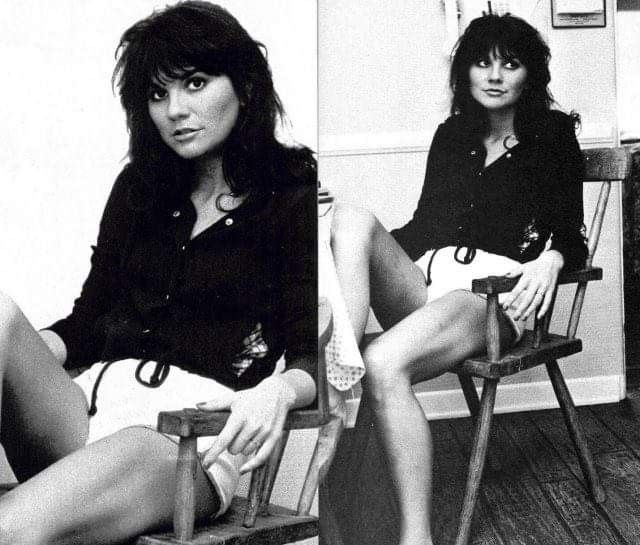
A Motown tear turned into a cathedral echo—this live “Tracks Of My Tears” is less a performance than a truth finally spoken out loud.
On November 16, 1976, in Offenbach am Main, Germany, Linda Ronstadt stepped into a song that already carried its own legend—and made it sound freshly wounded. The concert was recorded at the Stadthalle Offenbach for the German TV music series Rockpalast, and the setting matters: European broadcast cameras, a disciplined hall, a band locked in, and a singer who—at that moment—could turn any familiar melody into a living scene.
To understand why this particular live take hits so hard, you have to remember what “Tracks Of My Tears” already was before Ronstadt ever touched it. The song was first recorded in 1965 by **Smokey Robinson and **The Miracles, released on Motown’s **Tamla Records, and written by Robinson with Warren Moore and Marvin Tarplin. It became a major hit—No. 16 on the Billboard Hot 100 and No. 2 on the Billboard R&B chart—and later earned the kind of honors that only the most durable songs receive (including Grammy Hall of Fame recognition and inclusion in major “greatest songs” lists). That original is all poise: heartbreak wearing a smile so convincing it almost passes for joy.
Ronstadt’s studio version—already a triumph—set the stage for the Germany performance. She recorded the song for her 1975 album **Prisoner in Disguise (released September 15, 1975), produced by **Peter Asher. As a single, her remake climbed to No. 25 on the Billboard Hot 100, No. 4 on Billboard Adult Contemporary, and No. 11 on Billboard Country—proof that her voice could carry Motown sadness into multiple American radio worlds at once. In the UK, it reached No. 42 on the Official Singles Chart (first chart date May 8, 1976).
So by late 1976, she wasn’t covering the tune so much as revisiting a room she already knew well—only now it was lit differently. The Stadthalle Offenbach performance sits within a set that moved between country standards, rock ’n’ roll oldies, and contemporary singer-songwriter material—an arc that makes “Tracks” feel like the emotional midpoint where the mask slips. And because this show was taped for Rockpalast, there’s an added intimacy: you can sense that she’s singing not just to the people in the seats, but to everyone who will later meet her eyes through a screen.
What changes in the live performance is the temperature of the lyric. In the Miracles’ original, the narrator is heartbreak’s magician—crying inside, smiling outside. In Ronstadt’s hands, especially here, the “smile” feels thinner, more human. She doesn’t dramatize; she clarifies. She makes the song less about clever concealment and more about the weary art of enduring—how you learn to keep your face composed when your inner weather refuses to cooperate.
And then there’s the band—part of what gives this version its muscle and its tenderness at the same time. The Rockpalast documentation lists the musicians onstage with her, including **Waddy Wachtel and **Andrew Gold among the lineup, anchoring that mid-’70s Ronstadt sound: tight, glossy, but never cold. The groove doesn’t rush to comfort her; it simply holds steady—like a friend who doesn’t interrupt, because they know you need to finish saying what you came to say.
That’s the secret power of “Tracks Of My Tears (Live in Germany, November 16, 1976)”: it turns a classic into a confession without changing the song’s shape. It reminds you that the best standards aren’t preserved by being kept pristine—they’re preserved by being re-lived. And when Ronstadt sings it in Offenbach, you don’t just hear an old Motown masterpiece reborn. You hear the quiet courage of someone admitting, in the plainest words, that the heart can keep breaking… and still insist on showing up, beautifully, for one more night.