
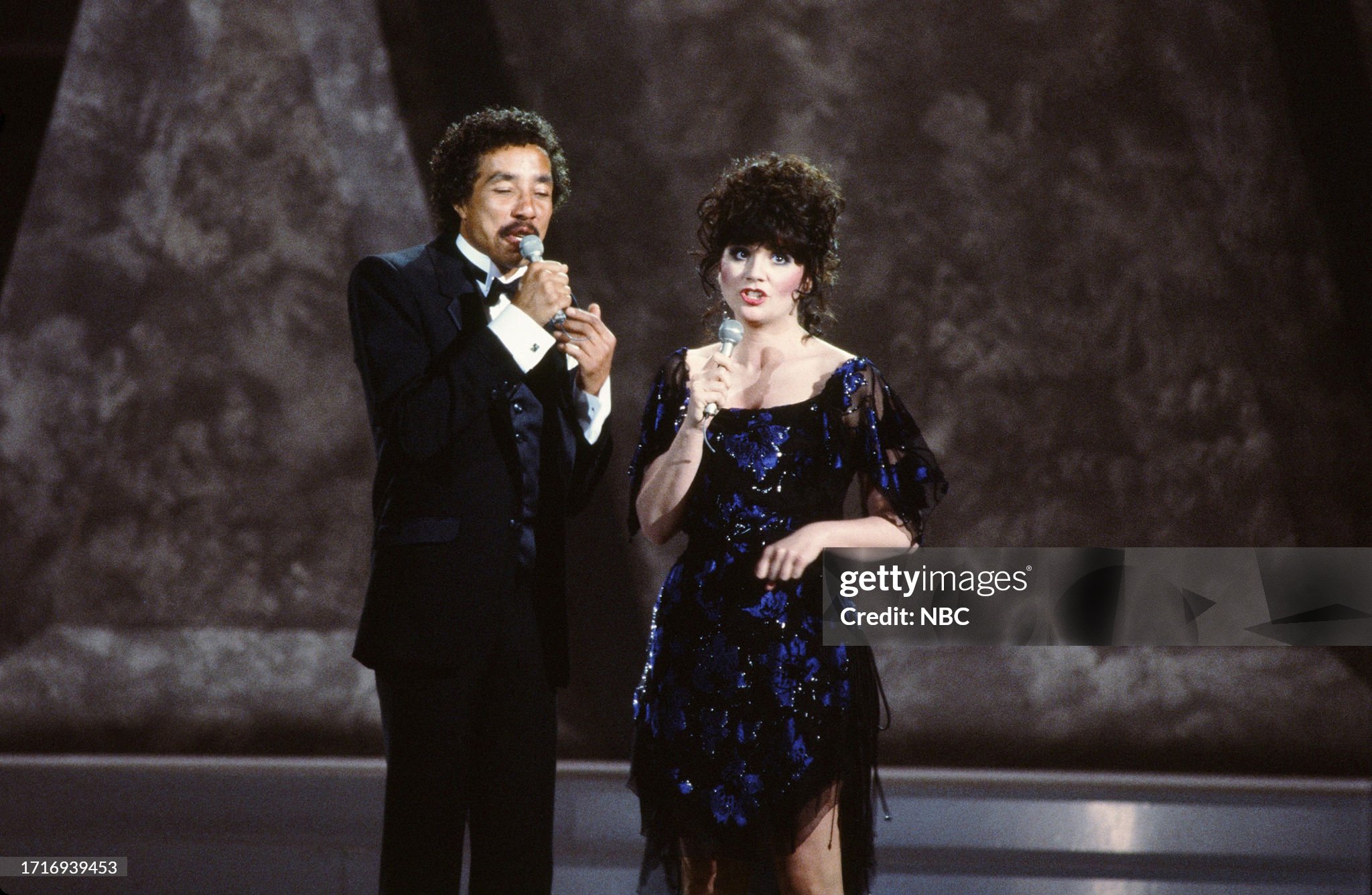
A duet that turns two Motown classics into one shared memory—where apology and sorrow become tenderness, and the past suddenly feels present again.
On March 25, 1983, in the Pasadena Civic Auditorium in Pasadena, California, Linda Ronstadt and Smokey Robinson stood together for Motown 25: Yesterday, Today, Forever and performed a medley of “Ooo Baby Baby” and “The Tracks of My Tears.” The special was taped that night before a live audience and later broadcast nationally on NBC on May 16, 1983.
Those dates matter because the performance wasn’t a casual “guest spot.” It was staged inside a televised anniversary built to canonize a label’s legacy—and here was the label’s most elegant poet, Smokey Robinson, singing his own heartbreak standards beside a singer who had already carried them into another era. There’s a particular kind of electricity when the songwriter is onstage with a great interpreter: it feels less like a cover and more like a circle closing gently.
The medley’s emotional logic is perfect. “Ooo Baby Baby” (Miracles, 1965) is the plea of a person who knows they’ve done wrong—an apology with trembling hands. It reached No. 16 on the Billboard Hot 100 and No. 4 on Billboard’s R&B chart. “The Tracks of My Tears” (Miracles, 1965) is what happens after the apology fails: the smile in public, the devastation in private. It reached No. 16 on the Billboard Hot 100 and No. 2 on Billboard’s R&B chart. Put together, they move like a short life story: mistake → remorse → the quiet aftermath.
Now here’s the detail that turns the duet into something almost cinematic: Linda Ronstadt didn’t come to these songs as a tourist. She had already lived in them on record—twice, in two different emotional colors. In 1975, she recorded “The Tracks of My Tears” for Prisoner in Disguise, and her version peaked at No. 25 on the Billboard Hot 100 (and No. 11 on the country chart, paired with her duet version of “The Sweetest Gift” as the B-side). Then, in 1978, she remade “Ooh Baby Baby” (spelled that way on her release) for Living in the U.S.A.; it climbed to No. 7 on the Billboard Hot 100 and reached No. 2 on the Adult Contemporary chart.
So when Ronstadt sings these titles beside Robinson in 1983, she isn’t borrowing his suit—she’s bringing back garments she’s already worn until they fit her own body. And Smokey, hearing his words returned in Ronstadt’s unmistakable tone, doesn’t have to “sell” the emotion. He can simply stand inside it. The result feels like two kinds of truth sharing the same microphone: the author’s original ache and the interpreter’s hard-earned empathy.
The meaning of the medley, especially in this setting, is more than nostalgia. It’s about how heartbreak becomes part of cultural memory—how songs teach people to name what they feel. “Ooo Baby Baby” is shame softened into prayer. “The Tracks of My Tears” is dignity cracking, quietly, behind a brave face. Sung back-to-back, they suggest that love doesn’t just end; it leaves evidence—tiny footprints in the everyday, the “tracks” you can’t erase even when you’re smiling for company.
And because this was Motown 25, a night designed to look backward with pride, the duet also carries a gentle, almost philosophical message: great songs don’t age out. They change clothes. They move from Detroit radio to California television, from 1965 charts to 1983 living rooms, and they still feel like they’re speaking directly to whoever is listening with their guard down.
If you want one sentence to hold onto after the applause fades, it’s this: in that medley, Ronstadt and Robinson remind us that the finest soul music isn’t about drama—it’s about honesty delivered with grace, the kind that makes even regret sound human.