
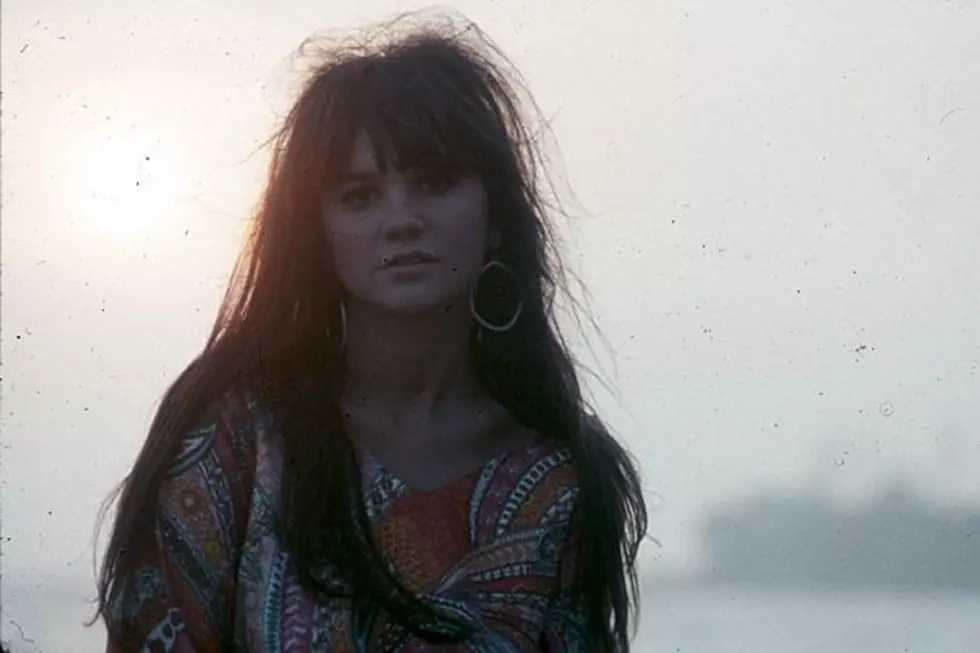
A young voice insisting on freedom: “Different Drum” isn’t a breakup song so much as a brave refusal—love offered honestly, but without surrendering the self.
In 1967, Linda Ronstadt stepped onto television with “Different Drum” and, in a few bright minutes, made independence sound like something you could hum. The performance is often shared today simply as a “live on television” clip from that year—grainy, immediate, and electric in the way only early TV pop moments can be. What matters most is the timing: this was Ronstadt before the arena-era triumphs, before the iconic 1970s run, singing the song that first pushed her name into the national conversation.
“Different Drum” was written by Michael (Mike) Nesmith—yes, the Monkee—who composed it in 1964. The song had already lived another life before Ronstadt ever touched it: it was first recorded by The Greenbriar Boys and appeared on their 1966 album Better Late Than Never! Nesmith even tried to bring it to The Monkees, but it was turned down for the group’s official releases (though he performed a comedic snippet on the TV show).
Then came the version that changed everything: the Stone Poneys recording, issued as a single by Capitol in September 1967. It entered the Billboard Hot 100 on November 11, 1967, stayed there for 17 weeks, and climbed as high as No. 13—Ronstadt’s first major hit. That chart peak is the song’s “opening position in the world,” the moment it stopped being a clever composition passed around folk circles and became a pop event with a pulse.
But the story behind the record is even more revealing than the numbers. The Stone Poneys had intended an acoustic ballad approach; producer Nick Venet had other plans, choosing a richer, quasi-baroque pop arrangement. The resulting track is famous (and a little bittersweet) for its studio reality: Ronstadt was the only member of the Stone Poneys who performed on the hit recording, backed instead by top session musicians and a string section—complete with Don Randi on harpsichord and Jim Gordon on drums. Ronstadt later recalled feeling “confused” by the sudden change in approach and the lack of rehearsal time—yet that tension is part of what you can hear: a young singer leaning into a lyric that demands calm certainty, even as the moment around her is moving fast.
That’s why the 1967 television performance is so hauntingly apt. On TV, the song stops being a carefully constructed studio miniature and becomes a human declaration. “You and I travel to the beat of a different drum” isn’t delivered like a slogan—it lands like a boundary spoken softly, the way real boundaries usually are. The narrator isn’t cruel; she’s clear. She doesn’t deny affection, but she refuses the bargain that love must equal settling down. In Ronstadt’s phrasing, the message becomes almost tender: I care about you… and I still need my own rhythm.
There’s also a quiet cultural resonance in the way Ronstadt’s version flips Nesmith’s original perspective—changing “girl” to “boy” so the woman keeps the freedom in her own mouth. In 1967, that wasn’t just a lyrical tweak; it was a subtle re-centering of agency. The song doesn’t punish romance—it simply insists that romance cannot be a cage.
And perhaps that’s why “Different Drum” keeps returning, decade after decade, to people who thought they’d outgrown it. The older you get, the more you recognize that the hardest words aren’t angry words—they’re honest ones. Ronstadt, barely into her twenties, delivered honesty with a poise that feels almost startling now: not defiance for show, but self-knowledge stated plainly. Watching that 1967 TV moment, you don’t just hear a “first hit.” You hear the first clear outline of the artist she would become—an interpreter with the courage to sound like herself, even when the world wanted her to follow someone else’s beat.