
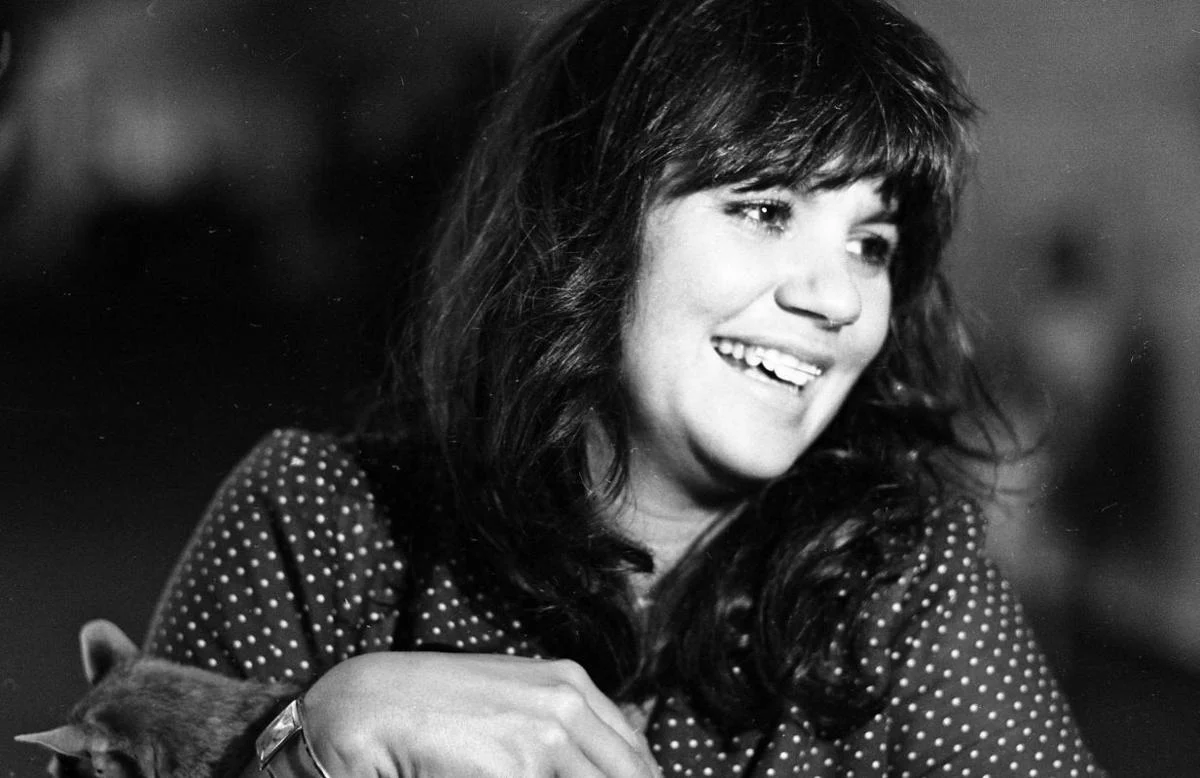
A young voice standing fearlessly in the shadow of tradition, turning classic country sorrow into something fiercely alive and personal.
When Linda Ronstadt stepped onto the stage of The Johnny Cash Show in 1970 to sing “Lovesick Blues,” the moment carried far more weight than a simple television performance. It was not a single release, not a chart play, not a promotional appearance tied to an album cycle. It was something quieter and rarer: a declaration of musical identity made in front of the very tradition that had shaped the song itself.
First, the grounding facts—because this performance is often spoken of with emotion, but deserves precision. “Lovesick Blues” is a song written by Cliff Friend and Irving Mills in 1922, but it entered American cultural memory through Hank Williams, whose 1949 recording famously spent 16 weeks at No. 1 on the Billboard Country & Western chart. By the time Linda Ronstadt sang it on national television, the song was already sacred ground—associated with heartbreak, rawness, and the unpolished ache of classic country music. Ronstadt’s rendition on The Johnny Cash Show did not chart, because it was never released as a single at the time. Its importance lies elsewhere: in impact, not numbers.
By 1970, Linda Ronstadt was still in a transitional phase. Her major solo commercial breakthrough—“You’re No Good,” Heart Like a Wheel, arena tours, superstardom—was still a few years away. At this point, she was known as a gifted singer moving between folk, rock, and country, searching for a place where her voice could fully belong. Singing “Lovesick Blues” on Johnny Cash’s stage was not a safe choice. It was bold. Cash’s audience understood the song intimately. Any hint of affectation or disrespect would have been immediately visible.
What happens instead is something disarming. Ronstadt doesn’t mimic Hank Williams, nor does she modernize the song beyond recognition. She approaches it head-on, with clarity and emotional control, letting her voice carry both strength and vulnerability. There’s steel in her tone, but also openness. She doesn’t collapse into sorrow—she contains it. The performance feels less like lament and more like testimony.
Visually and emotionally, the contrast is striking. A young woman, dressed simply, standing under studio lights, singing a song that had long been framed as male heartbreak. Without changing a word, Ronstadt shifts the emotional gravity. The pain becomes universal rather than gendered. Longing becomes something dignified rather than desperate. In that moment, “Lovesick Blues” stops being only about romantic misery and becomes about endurance—the kind that doesn’t beg for rescue.
The setting matters deeply. The Johnny Cash Show was more than entertainment; it was a cultural meeting ground. Cash used his platform to bridge generations and genres—traditional country, folk, gospel, rock, and emerging voices. For Ronstadt, being invited was an endorsement of credibility. Singing this song, in that space, was a quiet initiation. She wasn’t borrowing country music. She was being welcomed into it.
Listening now, the performance carries a strong sense of foreshadowing. You can already hear the artist she would become: someone capable of honoring musical history without being trapped by it. Someone who could move between styles not as a tourist, but as a fluent speaker. This moment explains why, later, Ronstadt could sing Roy Orbison, Buddy Holly, traditional Mexican songs, and Tin Pan Alley standards with equal authority. She understood that respect begins with listening, not imitation.
There is also something deeply human in the restraint of this performance. Ronstadt does not oversell the pain. She trusts the song. That trust is what makes the performance linger. It feels lived-in, not acted. Like someone remembering rather than reenacting heartbreak.
“Lovesick Blues” (Live on The Johnny Cash Show, 1970) endures not because it redefined the song, but because it revealed the singer. In a few unadorned minutes, Linda Ronstadt showed that she possessed not only one of the great voices of her generation, but also the judgment to know when less is more. It is the sound of an artist standing at the doorway of something larger—still young, still unclaimed by fame—but already certain of where she belongs.