
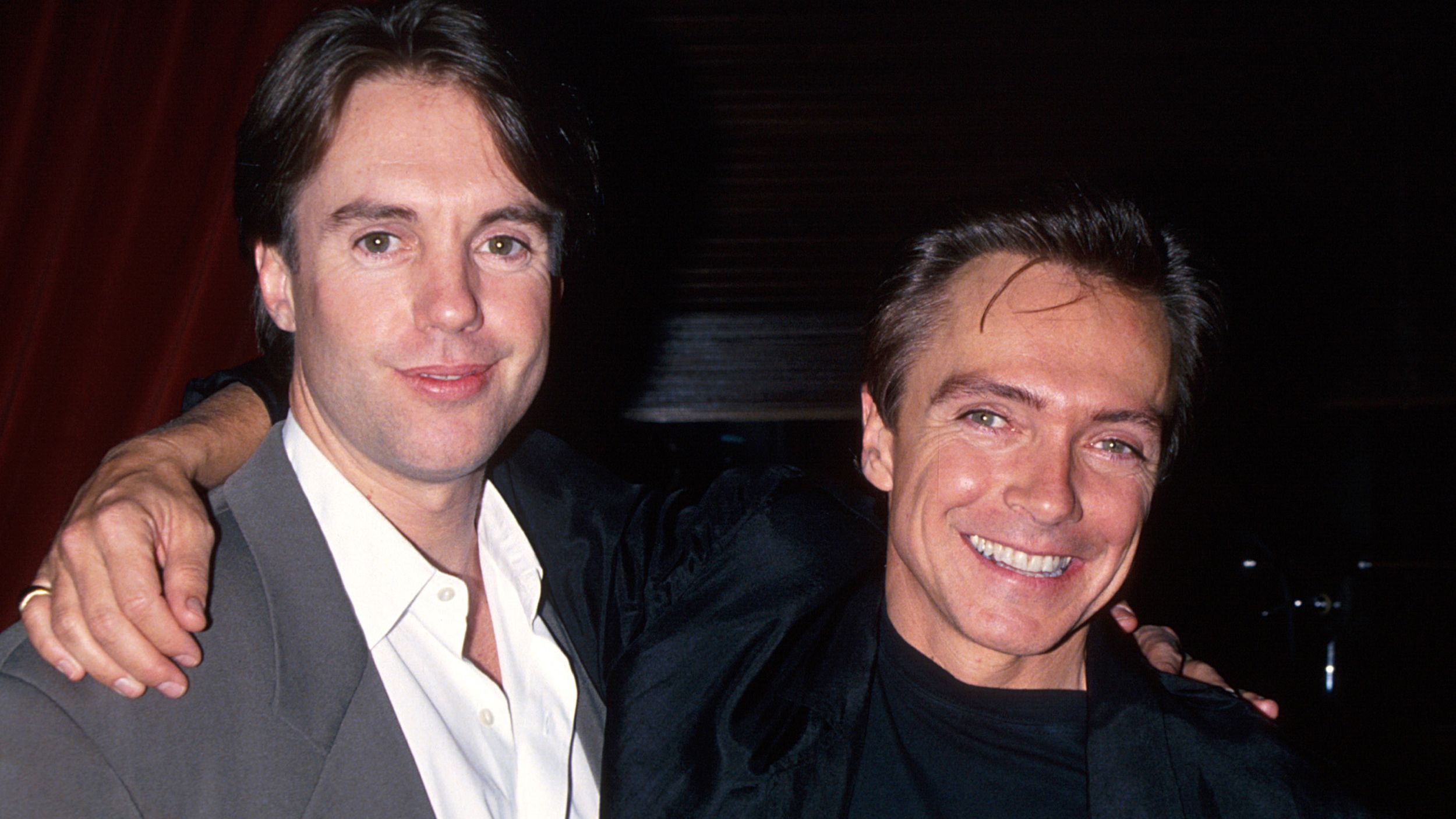
“Hi-Heel Sneakers” is David Cassidy stepping into an old blues suit and wearing it with grown-up ease—turning nightlife bravado into a wink that still hides a bruise.
The most important facts first, because they place this performance exactly where it belongs in his late-era story. “Hi-Heel Sneakers” appears as track 5 on the 1990 album David Cassidy (released August 1990 on Enigma Records), a record that marked his first U.S. studio album in 14 years. The album reached No. 136 on the Billboard 200, and its featured single “Lyin’ to Myself” became his first U.S. Top 30 hit in many years. Cassidy’s “Hi-Heel Sneakers” itself was not the big chart single from the project—so it has no debut position on the Hot 100 to report—but it plays an outsized role in the album’s personality: the moment he reminds you, plainly, that he always had real rock-and-roll instincts under the pop mythology.
Now the lineage: “Hi-Heel Sneakers” is a classic blues number written and first recorded by Tommy Tucker (credited as Robert Higginbotham) in 1963, released as a single in 1964—and it was a genuine hit, reaching No. 11 on the Billboard Hot 100. That history matters, because Cassidy is not merely “covering an old song.” He’s choosing a standard with a proven pulse—one that has been recorded by an astonishing range of artists—then re-framing it as part of his own comeback narrative.
So what’s the story behind Cassidy’s version? Part of the answer is simply timing. By 1990, he was no longer required to sound like the poster on a bedroom wall. He could sound like a man. The album’s tracklist places “Hi-Heel Sneakers” right after “Boulevard of Broken Dreams”—a moody title that hints at scars—and that sequencing is telling. It’s as if he steps out of the emotional wreckage and says, with a half-smile: All right. Let’s go out tonight. The song becomes a small act of defiance against time—against disappointment, against the world’s habit of freezing artists in the decade it prefers.
The production credits show it was treated as a real centerpiece, not a throwaway. Discogs listings for the album note “Hi-Heel Sneakers” at about 3:55, written by Robert Higginbotham, and credited in that release context with production involvement including Carter and Clams Casino (with E.T. Thorngren credited for mixing on the track). Another behind-the-scenes source tied to the session work describes a production/arrangement role by Jeff Silverman and John Carter, underscoring that this cut had hands-on crafting rather than casual nostalgia.
Meaning-wise, “Hi-Heel Sneakers” has always been a flirtation song—an invitation wrapped in rhythm, the old blues trick of turning desire into a strut. Yet Cassidy’s reading brings an extra layer: it’s a man reclaiming his own swagger. The lyric’s premise—put on your hi-heel sneakers, we’re goin’ out tonight—is simple, almost playful. But in his voice, coming at this point in his career, it also sounds like survival. Sometimes you don’t go out because you’re carefree; you go out because staying home makes the silence too loud.
And that’s the charm of Cassidy’s performance here: he doesn’t pretend he invented the blues. He respects it. He steps into its language the way a seasoned actor steps into a role—knowing that the audience can smell dishonesty instantly. He sings it with enough grit to feel earned, but with enough polish to keep it on the radio side of the street. It’s not museum authenticity; it’s adult authenticity—someone honoring an older tradition while letting his own biography show through the seams.
In the end, “Hi-Heel Sneakers” on David Cassidy is more than a cover. It’s a statement in motion: I’m still here. I still have rhythm. I still know how to light a room. And for listeners who remember the earlier chapters, that may be the sweetest irony of all—he returns not with a plea to be loved again, but with a blues grin and an open door, asking you to come along for the night.