
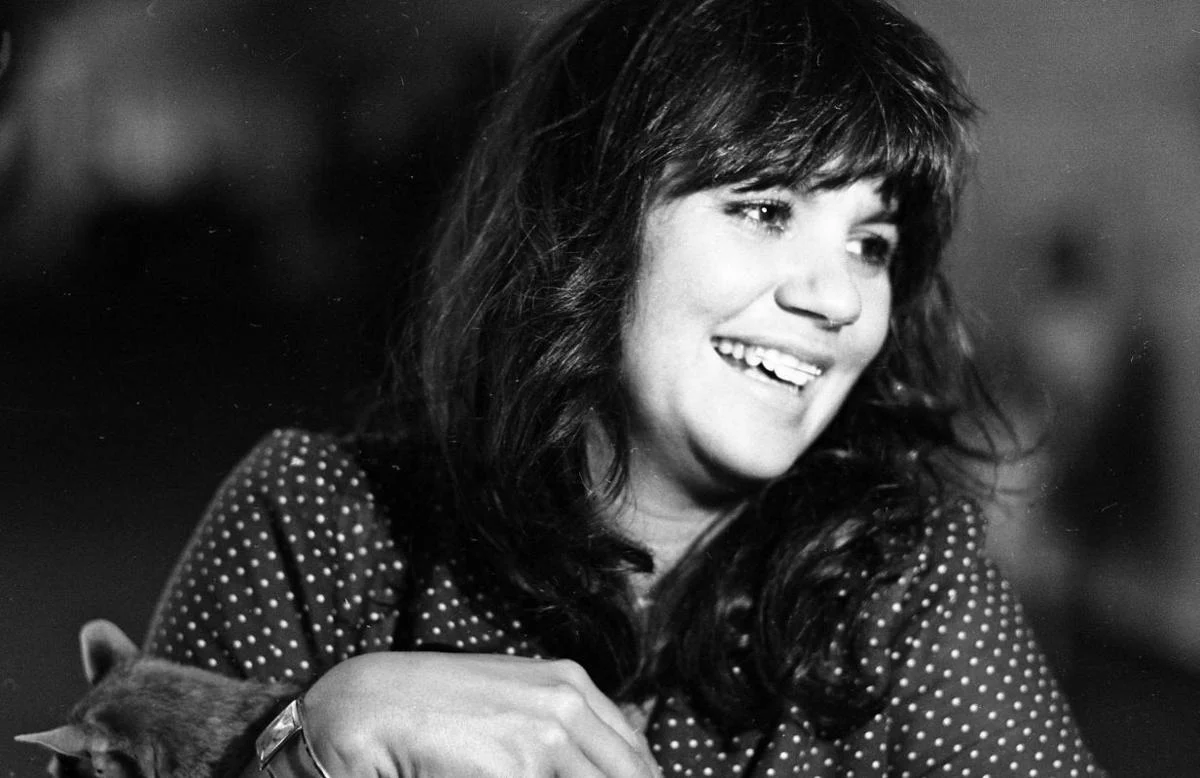
“You’re No Good” in this 4/24/1980 Hollywood performance is a public breakup turned into private fire—Linda Ronstadt refusing regret, and turning anger into rhythm you can dance to.
On April 24, 1980, inside Television Center Studios, Hollywood, California, Linda Ronstadt closed the distance between studio perfection and live-wire instinct. Her performance of “You’re No Good” (Live at Television Center Studios, Hollywood, CA 4/24/1980)—a sweeping 6:23 on the later archival release—doesn’t simply revisit a hit. It reclaims it, stretching the familiar song into something roomier, tougher, and more alive than memory usually allows. This concert was recorded for broadcast as an HBO television special, and decades later it resurfaced as Live in Hollywood (released February 1, 2019 by Rhino), finally letting listeners hear Ronstadt at the peak of her powers with the kind of clarity that feels almost like time travel.
The story of “You’re No Good” begins long before Ronstadt ever sang it. Written by Clint Ballard Jr., it was first recorded by Dee Dee Warwick in 1963, produced by Jerry Leiber and Mike Stoller—a classic early-’60s foundation that carried both grit and elegance. Ronstadt, though, didn’t treat it like a museum piece. She began using “You’re No Good” to close her live shows in early 1973, urged on by bandmate Kenny Edwards, and even took it to television on The Midnight Special (broadcast December 21, 1973)—already understanding that this song worked best when it felt immediate, a door slammed while the room is still shaking.
When the studio version finally arrived, it arrived with history-making force. Ronstadt’s 1974 recording—cut at The Sound Factory with producer Peter Asher—became her signature pop breakthrough, climbing to No. 1 on the Billboard Hot 100 (chart dated February 15, 1975). Billboard’s chart history also notes the single’s debut at No. 86 on December 7, 1974. It’s one of those rare cases where “cover” stops meaning “secondhand.” In Ronstadt’s voice, the lyric isn’t merely a complaint—it’s a verdict delivered with composure so fierce it feels cleansing.
So what changes in 1980?
Everything that experience can change.
By the time she stepped onto that studio stage in Hollywood, Ronstadt had lived inside arenas, charts, and constant reinvention—and the song had lived inside her, too. On this 4/24/1980 performance, the band doesn’t simply play the arrangement; they open it up. The later commentary around this concert notes how the group really jams on “You’re No Good”, with extra instrumental space that wasn’t there in the tight radio version. That expansion is why the runtime grows to 6:23: it becomes less a three-minute single and more a living scene, paced like an argument you don’t want to repeat but still need to finish properly.
Part of the electricity comes from who’s behind her. The archival album credits the backing band with longtime collaborators: Bill Payne (keyboards), Kenny Edwards (guitar/banjo/backing vocals), Danny Kortchmar (guitar), Dan Dugmore (guitar/pedal steel), Bob Glaub (bass), Russ Kunkel (drums), plus Peter Asher (percussion/backing vocals) and Wendy Waldman (backing vocals). And crucially, it was recorded and mixed by Val Garay, the same engineer whose work helped define the sheen-and-punch balance of so many classic rock records. This is the sound of artisans who know how to be powerful without being messy—how to make intensity feel controlled, which paradoxically makes it feel even more dangerous.
The meaning of “You’re No Good” in this performance isn’t simply “I’m over you.” It’s something more adult, and more quietly radical: I remember exactly what you were, and I’m no longer willing to edit myself to make it softer. Ronstadt doesn’t spit the words; she places them. She lets the groove do the shouting, while her voice stays clear, cutting, luminous—like a bright blade held steady. In live form, the song becomes a kind of emotional self-respect anthem: the moment when heartbreak stops bargaining and starts telling the truth.
That’s why this Television Center Studios version lands with such lasting weight. It carries the polish of a broadcast performance—because it was made for one—yet it keeps the human heat of a band pushing and responding in real time. It isn’t nostalgia. It’s evidence. Evidence that a great singer can take a familiar hit and, years later, make it sound less like yesterday’s success and more like tonight’s survival.