
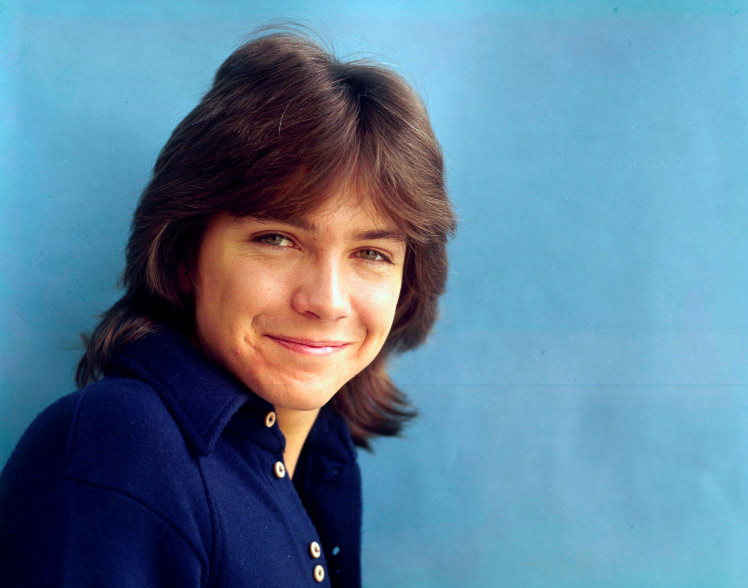
A soft-focus memory of youth and fleeting freedom, where summer becomes not a season, but a feeling that can never quite be held again.
There is a particular kind of song that doesn’t announce itself as important while it’s playing—but stays behind long after the final note fades. “Summer Days” belongs to that quiet category. Performed and recorded by David Cassidy, the song is not one of the titles most often pulled from his catalog, yet it reveals something essential about who he was trying to become as an artist when the noise of fame began to thin and the introspection crept in.
“Summer Days” appeared in 1973 on Dreams Are Nuthin’ More Than Wishes, David Cassidy’s third solo studio album, released by Bell Records. Importantly—and this is where many memories blur—the song was not released as a single, and therefore did not chart on the Billboard Hot 100. That absence is meaningful. This was not a track designed to chase radio rotations or teen-mag headlines. It was an album piece, meant to be discovered slowly, privately, the way memories surface when you’re no longer looking for them.
By 1973, David Cassidy stood at a crossroads. The explosive success of The Partridge Family had already peaked, and while his solo career was commercially viable, the cultural climate was shifting. The early 1970s were less forgiving to manufactured innocence. Audiences were aging, expectations deepening. Cassidy—often underestimated because of his heartthrob image—was increasingly interested in material that leaned inward rather than outward.
“Summer Days” reflects that shift beautifully. Musically, it is restrained and warm, built on gentle acoustic textures and an unhurried tempo. There is no dramatic crescendo, no show of vocal power for its own sake. Instead, Cassidy sings with a softened tone—less about projection, more about presence. It feels as though the song is being remembered rather than performed, as if the singer is standing slightly apart from his own youth, watching it drift away.
Lyrically, “Summer Days” is not about a specific romance or a single moment. It is about passing time. The title itself carries an unspoken irony: summer, so often associated with permanence and freedom in memory, is by nature temporary. The song lingers in that contradiction. There’s joy in recollection, but also an unmistakable sense of loss. The days were bright—but they are already over by the time the song begins.
What gives the song its emotional gravity is Cassidy’s delivery. There is no pleading, no attempt to freeze time. He accepts its movement. In doing so, he allows the listener to bring their own history into the space the song creates. It becomes less about his summer days, and more about the ones each listener has quietly stored away—days defined not by events, but by atmosphere: sunlight through windows, long afternoons, voices that no longer call.
Within Dreams Are Nuthin’ More Than Wishes, “Summer Days” plays an important role. The album itself marked a turning point—less bubblegum, more reflection. While the record did not produce a major hit on the level of “Cherish” or “Rock Me Baby,” it stands as one of Cassidy’s most sincere artistic statements. “Summer Days” fits this identity perfectly: modest, thoughtful, emotionally honest.
With time, the song has taken on an unintended poignancy. Knowing the pressures Cassidy lived under—the tension between public adoration and private struggle—the song sounds almost prophetic. It captures the fleeting nature of not just youth, but of uncomplicated joy. Fame, like summer, can feel endless while you’re inside it. Only later do you realize how quickly it moved.
“Summer Days” does not try to define an era. It does something more personal. It reminds us that the most meaningful moments in life often pass quietly, without ceremony—and that music, at its best, doesn’t stop time, but helps us remember how it once felt to stand inside it.
In that sense, this song is not nostalgia for the sake of longing. It is recognition. And that makes it one of David Cassidy’s most quietly enduring performances.