
“I Put a Spell on You” is a love song that stops pretending to be polite—desire turned into a roar, the kind of vow you make when you’re afraid the night might take someone away from you.
If there’s a reason John Fogerty’s reading of “I Put a Spell on You” still feels electrifying decades later, it’s because he doesn’t approach it like a “cover.” He approaches it like a possessed confession—half threat, half prayer—where the singer isn’t trying to win an argument, he’s trying to hold on to a heartbeat. The performance carries the old, theatrical madness of the original, yet it lands with Fogerty’s own grit: swampy, urgent, and human enough to make the obsession feel uncomfortably familiar.
The song’s first life belongs to Screamin’ Jay Hawkins, who wrote and first recorded it in the mid-1950s as a piece of wild, unhinged rhythm-and-blues theater—an early rock “curse” that sounded like it was crawling out of a fog machine. But Fogerty’s version—the one most people mean when they say “John Fogerty” and this title—arrived through Creedence Clearwater Revival at a very specific turning point: their self-titled debut album Creedence Clearwater Revival, released in June 1968 on Fantasy Records.
And here’s the important “ranking at release” detail that often gets lost: this track wasn’t just an album deep-cut. It was issued as a single in October 1968, backed with “Walk on the Water,” and it reached No. 58 on the U.S. charts—modest compared to their biggest hits, but significant as proof that their strange, rootsy intensity could still break through pop radio’s gatekeeping. The album itself went on to peak at No. 52 on the Billboard 200, a slow-building rise that feels fitting for a band who never sounded like they were chasing the fashion of the moment.
What’s haunting—and oddly beautiful—is how the song helped define Fogerty’s early artistic identity. On that 1968 recording, he’s not yet the arena icon barking out “Fortunate Son.” He’s a young man leaning into a darker kind of charisma, using the blues as a stage for emotional extremes. The genius is that the extremity doesn’t feel fake. The singer is clearly “too much,” but it’s the believable kind of too much: the kind you recognize from your own life, when pride and longing get mixed together and you can’t separate them cleanly.
The behind-the-scenes story of the CCR cut is also part of the spell. The debut album was recorded in late 1967 and early 1968 at Coast Recorders in San Francisco, with Saul Zaentz and Fogerty credited in the production chain. This matters because the record doesn’t sound “expensive.” It sounds focused—like a band in a small room trying to make a big feeling fit inside a three-minute performance. The guitars grind, the groove keeps trudging forward, and Fogerty’s vocal—manic, pleading, fearless—does the rest.
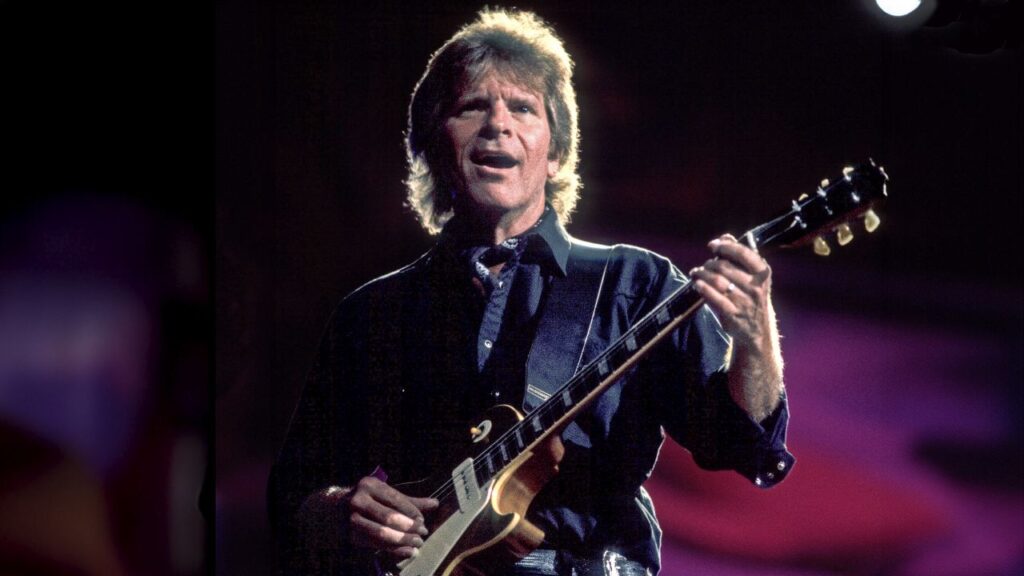
Then, years later, the song took on a second life in Fogerty’s own hands—older hands, but still burning. After a long stretch where he largely avoided performing Creedence material, he returned to it on stage and captured it on the live album Premonition, recorded December 12–13, 1997 and released June 9, 1998. Hearing him sing “I Put a Spell on You” in that era is like watching the same storm through an older window: the heat is still there, but now it’s shaped by experience. The obsession becomes less adolescent drama and more an adult recognition—how easily love can slide into possession, how quickly longing can start bargaining with darkness.
And that’s the meaning that lingers: “I Put a Spell on You” isn’t really about magic. It’s about the moment you’re tempted to replace trust with force—when you want certainty so badly you’d rather “cast a spell” than risk being left. Fogerty sings that temptation without cleaning it up, and that honesty is why the song endures. It doesn’t flatter us. It simply tells the truth, loudly—then leaves you in the silence afterward, wondering what you’ve ever said (or wanted) when you were afraid of losing someone you loved.