
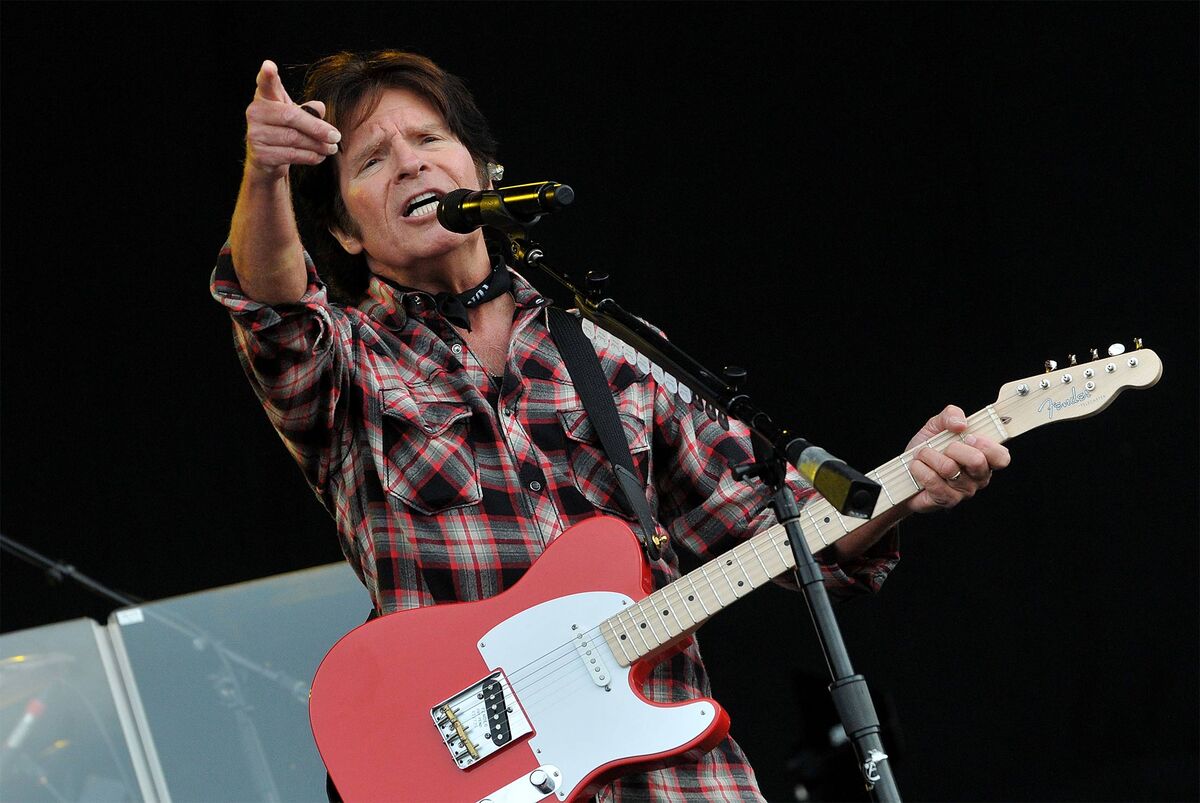
“Up Around the Bend” is the sound of escape without denial—an open-road promise that somewhere, just past the next curve, life can feel lighter again.
Few rock records offer freedom so quickly and so plainly as “Up Around the Bend”. It arrives like a burst of daylight: a bright, high guitar figure, a steady forward push, and John Fogerty singing as if he’s already got one foot out the door. Released in April 1970 as a double A-side with “Run Through the Jungle,” the single climbed to No. 4 on the Billboard Hot 100 in the spring of 1970—proof that even in a noisy, crowded era, a simple invitation could still cut through. Across the Atlantic, it became a major British hit too, reaching No. 3 on the Official UK Singles Chart and spending 12 weeks on the chart (with its first chart date listed as June 20, 1970).
The most important thing to remember, though, is that this isn’t merely “a CCR song.” It’s a Fogerty song in the purest sense—written and produced by him, built around his instincts for momentum, economy, and mood. And it was created under pressure: sources note it was composed and recorded only a few days before Creedence Clearwater Revival’s April 1970 European tour, which helps explain why the track feels so urgent, so road-ready—like it was made with suitcases already packed.
Soon after, it found its long-term home on Cosmo’s Factory, the album that many listeners treat like a greatest-hits set disguised as a studio record. Industry and label retrospectives commonly cite the album’s original release date as July 16, 1970. And there’s an almost cinematic irony in the pairing: “Up Around the Bend” feels like a clean wind off the highway, while “Run Through the Jungle” on the other side of the single carries a darker, more ominous tension. Two moods, one 45—hope and dread pressed back-to-back, like the era itself.
The story behind “Up Around the Bend” is wonderfully physical. Fogerty has recalled that the idea came to him while riding his motorcycle through the California hills—a real-world bend in a real road turning into a mental picture of possibility. That’s exactly what the lyric delivers: not a detailed destination, not a postcard with a fixed address, but a feeling. There’s a place ahead. A gathering. Something better. The song doesn’t explain the “where” because it doesn’t need to. It understands the oldest American fantasy: if you keep driving, the scenery can change—and so can you.
Musically, the magic is in how little the band wastes. Creedence Clearwater Revival always sounded like they believed in the strength of the straight line: no ornamental detours, no decorative excess, just the groove and the message moving together. The guitar riff in “Up Around the Bend” is a kind of bright flare shot into the sky—short, piercing, impossible to ignore. Underneath, the rhythm section locks in with the unglamorous confidence of a working engine. You don’t “float” through this track; you travel.
And that’s the heart of its meaning. “Up Around the Bend” isn’t escapism that pretends trouble doesn’t exist. It’s escapism as survival—a reminder that the spirit needs motion, needs the belief that tomorrow can be different from today. In 1970, with the world loud and tense, Fogerty offered a small, durable miracle: a song that doesn’t argue with you, doesn’t preach at you—just holds the door open and says, come on.
Maybe that’s why it still hits so hard, decades later. We all know what it is to feel boxed in by routine, by headlines, by whatever weighs on the shoulders in a given year. And we all know the strange comfort of a voice that insists—plainly, stubbornly—that something good might be waiting just out of sight. John Fogerty didn’t promise paradise. He promised the curve in the road. And sometimes that’s enough: the sound of wheels turning, the night air clearing, and the faith—brief but real—that freedom is still possible… up around the bend.