
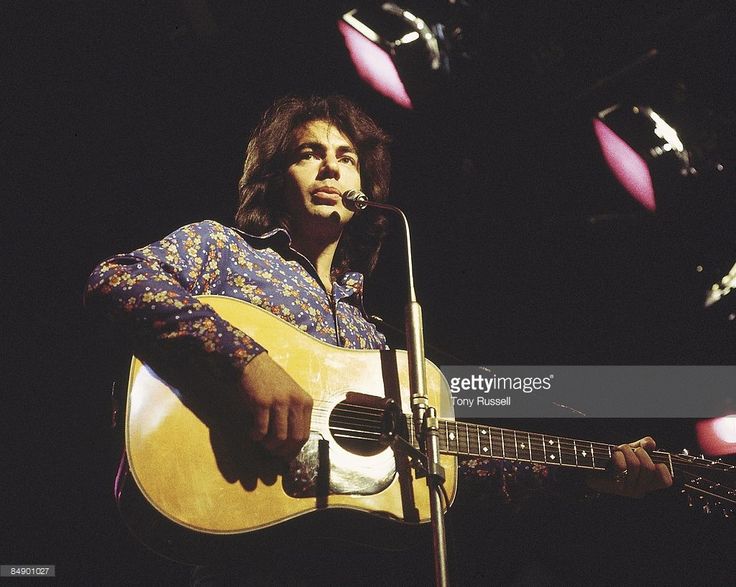
“Dry Your Eyes” is Neil Diamond at his most compassionate: a slow-burning benediction for a wounded nation, asking us to stop staring at the fracture and start breathing again.
If you came to Neil Diamond through the big, crowd-lifting choruses, “Dry Your Eyes” can feel like stepping into a different room—quieter, dimmer, and far more intimate. It isn’t a radio juggernaut. It wasn’t even released as a major single from its parent album. Instead, it sits near the end of Beautiful Noise (released June 11, 1976) as track 11, running 3:23, credited to Neil Diamond and Robbie Robertson. That co-writing credit is the first clue that you’re not hearing “standard issue” Diamond. You’re hearing a songwriter meeting another songwriter at a serious crossroads—Diamond, already a superstar, deliberately inviting Robertson’s sharper, cinematic sensibility into his sound world.
The chart story around the song is, in a way, its own kind of poetry. “Dry Your Eyes” didn’t compete for a Hot 100 peak; it lived as an album cut—an interior monologue rather than a public speech. Yet the album that carried it was anything but minor: Beautiful Noise peaked at No. 4 on the Billboard 200 and No. 10 on the UK Albums Chart, a strong, era-defining showing for a record that was billed as a creative “comeback” and stylistic departure. In other words, Diamond was standing in bright commercial light—and still chose to close his album with something that feels like a candle rather than a spotlight.
The story behind “Dry Your Eyes” is where the song’s tenderness turns solemn. According to accounts centered on Robertson’s own recollection, this is the only song Diamond and Robertson wrote together, and Robertson has described it as reflecting the grief many people felt after the assassination of Martin Luther King Jr. on April 4, 1968. That context doesn’t make the song “political” in the slogan sense. It makes it human. It frames the lyric as a response to collective mourning—what it feels like when a country tries to stand up straight while its knees are still shaking.
And then there is the moment that turned the song into a kind of pop-culture time capsule: Diamond performed “Dry Your Eyes” with The Band at their farewell concert, The Last Waltz, at Winterland in San Francisco on November 25, 1976—a performance later immortalized in Martin Scorsese’s film and the associated live releases. It’s a striking image: Diamond, often associated with big showmanship, stepping into The Band’s earthy, end-of-an-era atmosphere and singing this song as if it were a prayer spoken over a closing chapter. Even the production story feels symbolic—one world saluting another, one era blessing the next.
Musically, “Dry Your Eyes” moves with a measured dignity—no flashy tricks, no melodramatic lunges. It asks the listener to slow down, to stop flinching, to let the wound be acknowledged without being reopened for spectacle. That’s why the lyric hits the way it does: it isn’t asking you to forget what happened. It’s asking you to survive it. “Dry your eyes” is not dismissal; it’s permission to breathe after the sobbing has exhausted you.
What makes Diamond’s performance so affecting—especially in the shadow of its origin story—is the way he balances comfort with realism. The song doesn’t pretend everything is “fine.” It offers something sturdier than optimism: a hand on the shoulder, a steady voice that stays in the room after the headlines fade. This is Diamond writing for the aftermath—when the crowds go home, when the TV goes dark, when grief becomes private again and you have to figure out how to carry it into morning.
In the end, “Dry Your Eyes” endures precisely because it doesn’t chase immortality. It simply speaks softly into a time of hurt—on a best-selling album, in a legendary farewell concert—like a reminder that the most meaningful songs aren’t always the ones that chart highest. Sometimes they’re the ones that quietly teach a wounded heart how to keep going.