
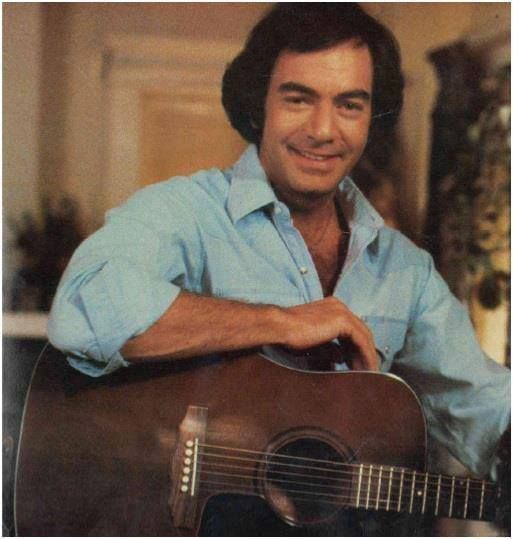
“Free Life” is Neil Diamond at his most quietly determined—an open-road declaration that freedom isn’t a slogan, but a hard-won inner posture.
Put the landmarks in place first, because they sharpen what you’re hearing. “Free Life” is a Neil Diamond original from his 1970 studio album Tap Root Manuscript, released October 15, 1970, produced by Tom Catalano and Diamond himself. The song also had a noteworthy “public life” beyond the LP: it was issued as the B-side to Diamond’s single “He Ain’t Heavy… He’s My Brother” on UNI 55264—a single that peaked at No. 20 on the Billboard Hot 100 and No. 4 on Billboard Adult Contemporary. Meanwhile, Tap Root Manuscript reached No. 13 on the U.S. album chart (Billboard 200), with Billboard showing a peak date in December 1970.
Those facts matter because “Free Life” often gets overshadowed by the era’s bigger Diamond headlines—especially “Cracklin’ Rosie,” the album’s chart-topping engine. Yet if you listen closely, “Free Life” is the kind of track that tells you who an artist is when the spotlight isn’t demanding a chorus built for radio. It sits early in the album’s sequence—right after “Cracklin’ Rosie”—like a second glance at the same man: not the showman working the room, but the restless soul pacing behind the curtain, asking what it really means to live on your own terms.
There’s a particular mood to Diamond’s 1970 work—part Brooklyn grit, part wide American highway, part spiritual curiosity. Tap Root Manuscript is often singled out as one of his more experimental albums, even splitting its second side into an ambitious suite, “The African Trilogy.” In that context, “Free Life” feels like the album’s plainspoken mission statement: before we go searching outward—into rhythms, myths, and far horizons—let’s admit the first frontier is inside the chest. Freedom begins as a decision: to stop living by other people’s measurements, to stop mistaking noise for purpose, to stop calling habit “fate.”
What makes “Free Life” endure isn’t just its message—plenty of songs praise freedom—but its tone: a firm, almost workmanlike insistence. Diamond doesn’t sing it like a rebellious teenager slamming a door; he sings it like an adult who has carried obligations long enough to know how heavy they can become. That’s the difference between fantasy and conviction. A fantasy says, someday I’ll be free. Conviction says, I’m choosing it now—even if it costs me comfort, even if it costs me approval.
And then there’s the subtle poetry of its release history. As the flip side to “He Ain’t Heavy… He’s My Brother,” “Free Life” was literally paired with a song about duty, compassion, and shared burden. That coupling feels almost symbolic: two truths placed back-to-back on the same piece of vinyl. On one side, the moral weight of brotherhood—carrying someone because you love them. On the other, the private need to breathe, to stand upright, to remember you are also a person with a life of your own. It’s not contradiction; it’s balance. Anyone who has lived a while knows you need both, or you risk becoming either selfish or spent.
So when Neil Diamond sings “Free Life,” he isn’t selling an escape. He’s offering a compass. The song can feel like a memory of a time when “freedom” meant something tactile—keys in the hand, a car idling, a night road opening ahead—yet it still lands now because the deeper longing hasn’t changed. We still want room to think. Room to choose. Room to be ourselves without performing for the world’s expectations.
That is the quiet gift of “Free Life”: it doesn’t demand that you run away from your life. It simply reminds you that your life is yours—still yours—no matter how many years have tried to tell you otherwise.