
“He Ain’t Heavy, He’s My Brother” is a hymn of loyalty disguised as a pop ballad—saying that love is measured not by what you carry, but by who you choose to carry.
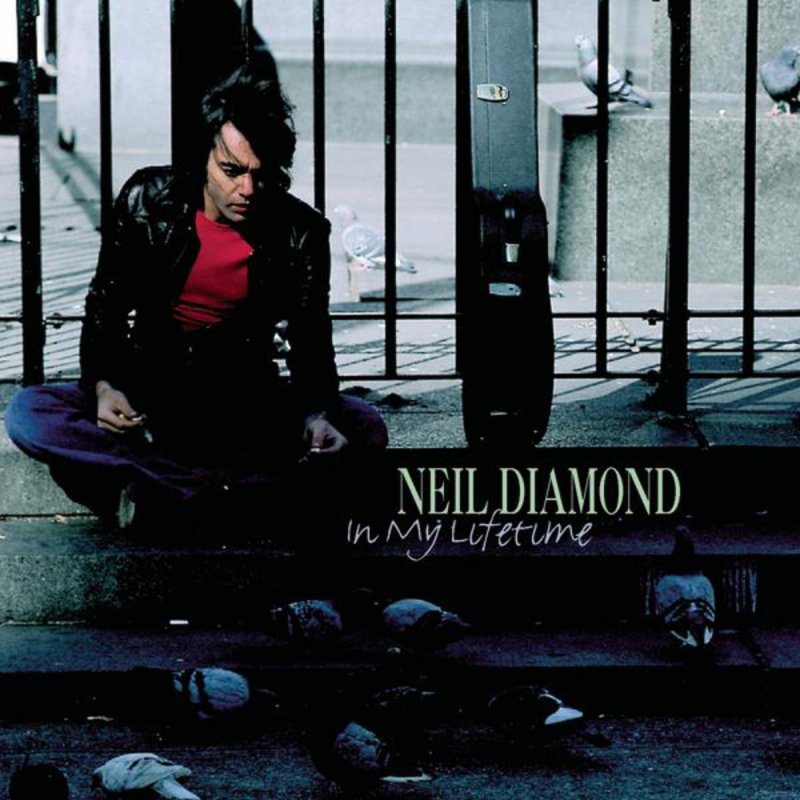
When Neil Diamond recorded “He Ain’t Heavy, He’s My Brother”, he wasn’t chasing novelty. He was reaching for a moral idea so old it feels carved into stone: that devotion can make even the heaviest burden feel light. His version was released on UNI Records in late 1970, and—unlike many “covers” that merely borrow a familiar tune—it became a substantial hit in its own right. According to chart documentation summarized in standard discographies, Diamond’s single entered the Billboard Hot 100 at No. 68 on November 7, 1970, and ultimately peaked at No. 20; it climbed even higher on Billboard Adult Contemporary, reaching No. 4.
The recording appears on Diamond’s ambitious 1970 album Tap Root Manuscript, released October 15, 1970, a record remembered not only for the blockbuster “Cracklin’ Rosie” but also for its adventurous “African Trilogy” suite on side two. In that setting, “He Ain’t Heavy, He’s My Brother” plays a special role: it’s the emotional “straight line” amid an album that otherwise enjoys taking scenic routes. Diamond sings it with the open-throated sincerity that made him a trusted voice for big feelings—yet he keeps the performance grounded, like someone speaking gently at the bedside rather than preaching from a stage.
The song itself was written by Bobby Scott and Bob Russell, and its backstory carries a quiet poignancy: Russell was seriously ill (dying of lymphoma) during the collaboration, and the two writers reportedly met only a few times, yet produced a ballad that would outlive both era and fashion. The title phrase has an even older lineage. It echoes a long-circulated anecdote—popularized in the 20th century through Boys Town—of a child carrying a smaller boy and insisting, with surprising pride, that he isn’t heavy because he’s her brother. That’s why the line lands so hard: it isn’t clever wordplay. It’s a moral reflex.
Of course, many listeners first knew the song through The Hollies, whose 1969 recording became the international breakthrough version. But Diamond’s approach is different in emotional temperature. The Hollies’ take, with its orchestral sweep, feels like a public statement—dignified, communal, almost civic. Diamond’s reading feels more like a private promise. He leans into the tenderness of the lyric, making “brother” sound like a word you say when you’re trying not to cry. Even if you never look up a single fact about its chart run, you can hear why it worked for him: Diamond specialized in songs where sincerity isn’t a pose but a kind of spiritual posture.
And there’s a deeper reason this particular song suited him in 1970. Tap Root Manuscript arrived at a moment when Diamond was balancing pop stardom with an urge to write about larger human themes—identity, duty, belonging. “He Ain’t Heavy, He’s My Brother” fits that impulse perfectly. It’s not romantic love, not heartbreak, not the usual pop fuel. It’s something steadier: a vow to stand beside someone when standing beside them costs you something. The lyric doesn’t glamorize suffering; it dignifies it. It suggests that love becomes real at the exact moment it stops being convenient.
That’s why the song still feels almost startling today. In an age that often celebrates independence as the highest virtue, “He Ain’t Heavy, He’s My Brother” quietly argues for a different greatness: the willingness to be responsible for another human being, without bragging, without resentment. Diamond’s voice—warm, earnest, slightly weathered even in his early years—makes that argument feel less like instruction and more like remembrance, as if he’s recalling a time when neighbors and family ties were not abstract ideals but daily practice.
So if you ever wondered why this track, in Diamond’s catalog, keeps resurfacing in hearts and in setlists, the answer is simple. The song doesn’t promise you escape. It promises you meaning. And in Neil Diamond’s hands, that meaning arrives not as a slogan, but as a soft, stubborn truth: some loads don’t break us—because love changes the weight.