
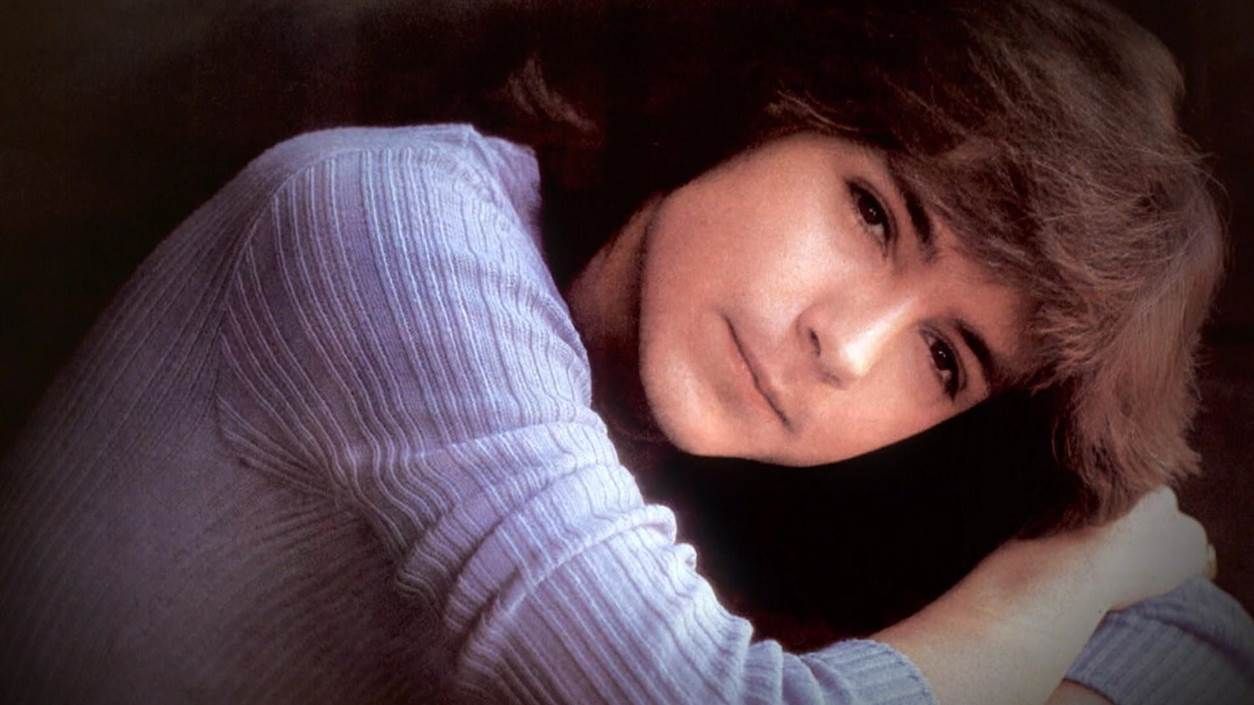
“Wish You Were Here” becomes a farewell letter set to melody—David Cassidy reaching back to his father’s songbook, and finding, in the simplest words, a place where absence finally speaks.
David Cassidy’s “Wish You Were Here” is one of those recordings that lands less like a “track” and more like a moment you overhear—quiet, intimate, and a little astonishing in its timing. It was released on May 24, 2018 as part of the posthumous EP Songs My Father Taught Me: The Last Sessions. The EP didn’t arrive with the old machinery of radio singles; instead, it found its audience the way late-night truths often do—through listeners who were ready for something gentle. On Billboard’s Jazz Albums chart, David Cassidy’s EP reached No. 13 (chart date June 23, 2018) and stayed on the chart for 12 weeks, an improbable late-career chapter that feels like a soft vindication. His official site also reported strong digital reception: No. 1 on Amazon’s Jazz Chart, No. 2 on iTunes Jazz, and the song “Wish You Were Here” reaching No. 34 on the iTunes Jazz Top 100.
But the statistics—useful as they are—don’t explain why this particular song can stop you in your tracks.
First, “Wish You Were Here” is not a Cassidy original. It’s a classic popular song written by Harold Rome, first released in 1952 as the title tune from his Broadway show Wish You Were Here. And then comes the detail that turns the whole thing into something almost unbearably human: the song was introduced in the show by Jack Cassidy—David’s father. In other words, when David Cassidy sings “Wish You Were Here” in 2018, he isn’t simply choosing a standard. He’s walking into a room his father once stood in, and speaking into the same air—decades later, with the weight of a life between them.
That’s the “story behind it,” and it’s not a marketing story—it’s a family story.
A&E’s publicity around David Cassidy: The Last Session underscores that this EP was completed and released posthumously, framing these recordings as part of his final creative chapter. And those who wrote about the late-period Cassidy heard the intent clearly: he was returning to “songs he remembered his father singing,” trying to complete a circle he’d carried for a long time. The EP title itself—Songs My Father Taught Me—doesn’t pretend this is merely repertoire. It’s inheritance. It’s memory with a melody line.
Musically, “Wish You Were Here” suits Cassidy in a surprising way. People often remember him frozen in the bright amber of the early ’70s—posters, television fame, the scream of a crowd. But this track belongs to the quieter room beyond the spotlight, where a singer can finally use softness as strength. Apple Music’s credits confirm Harold Rome as the composer/lyricist for this recording, grounding it firmly in that classic American song tradition rather than pop nostalgia. And that tradition matters: songs like this don’t beg to be “reinterpreted” with cleverness. They ask for sincerity, breath control, and the courage to let simplicity carry the emotional freight.
The meaning of “Wish You Were Here”—especially in Cassidy’s hands—becomes layered without ever becoming complicated. On the surface, it’s the oldest ache: someone is missing, and the world is slightly wrong without them in it. But underneath, there’s a deeper tremor: the recognition that longing doesn’t always point to romance. Sometimes it points to time. Sometimes it points to the person you never fully got to know, or the conversation you kept postponing, or the forgiveness that didn’t arrive on schedule.
That’s why this particular title phrase—wish you were here—feels so sharp when sung late in life. It isn’t dramatic. It’s elemental. It’s what we think when the phone doesn’t ring anymore, when the house is quiet, when memory turns up uninvited. And because this song is tied to Jack Cassidy—because it once belonged to the father’s stage—David Cassidy singing it can feel like more than remembrance. It can feel like an attempt at closeness across a distance no one can close by ordinary means.
In the end, “Wish You Were Here” stands as one of the most quietly resonant things David ever recorded—not because it chases the past, but because it faces it. It’s not a comeback in the flashy sense. It’s a return in the spiritual sense: a voice stepping back into the family songbook, and finding that the simplest line in the world can still hold the heaviest truth.