
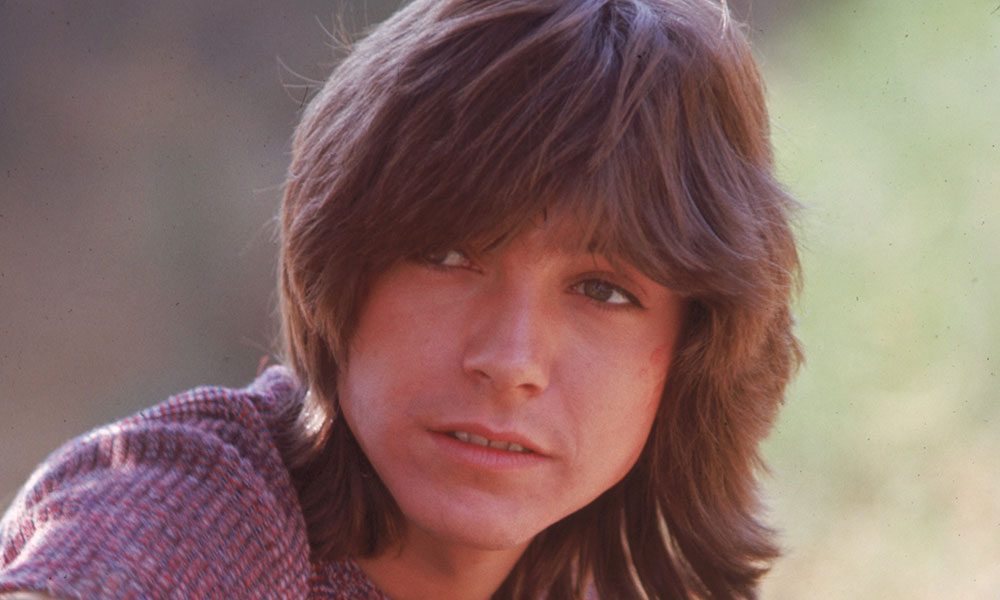
“Raindrops” is a grown man’s confession in soft focus—tears made ordinary as weather, grief made quiet as a room after everyone has gone home.
David Cassidy’s “Raindrops” belongs to his later, more reflective catalogue—not the screaming stadium of teen-idol hysteria, but the steadier, more private space where a singer tries to be understood on adult terms. The track opens his 1992 studio album Didn’t You Used to Be…, released in September 1992 on Scotti Bros., recorded February–June 1992 at Santa Monica Sound Recorders, with production, recording, and mixing by Eric “E.T.” Thorngren. The song’s writing credits tell their own story: David Cassidy, his wife Sue Shifrin, and Dee Clark—a collaboration that signals intention, craft, and a desire to step beyond nostalgia into something freshly personal.
As for “ranking at release,” “Raindrops” is not remembered for a splashy chart debut. Germany’s Offizielle Deutsche Charts (GfK) lists “Raindrops” as a 1992 single, with Dee Clark credited for “Musik/Text” and Thorngren as producer, but it does not show a chart entry/peak the way it does for Cassidy’s German-charting titles (like “The Last Kiss,” “Rock Me Baby,” etc.). In other words, it arrived less like a headline and more like a letter—sent out into the world, hoping to be received by the right ears.
That context matters, because Didn’t You Used to Be… was itself a kind of answer to a question Cassidy had been asked—sometimes kindly, sometimes cruelly—for years. The album’s very premise (and even its originally punctuated title) leans into that strange experience of living inside the public’s memory while still trying to live forward. Wikipedia notes that the album’s ten tracks were all written or co-written by Sue Shifrin, making it unusually unified—almost like a shared diary set to music. AllMusic frames the release in a pop/rock lane that spans “teen idol” history and contemporary pop/rock present tense—an uncomfortable bridge, but a real one.
So what is “Raindrops” about?
It’s about what happens when sorrow stops being dramatic and becomes familiar. The hook image—raindrops—works precisely because it’s so ordinary. Rain doesn’t ask permission. It simply falls. And in the emotional world of the song, tears have that same inevitability: not an event, but a condition; not a performance, but a physical truth you can’t negotiate away. Even the title feels deliberately unglamorous, as if to say: this isn’t romance-as-fireworks; this is romance-as-weather—lingering, grey, and quietly persistent.
Musically, the album credits hint at a sophisticated, adult-contemporary palette. On “Raindrops,” Derek Nakamoto is credited with strings & organ and Rhodes piano, an instrument whose warm shimmer can make sadness feel close enough to touch—like lamplight on a rainy window. Cassidy himself is credited with lead vocals, backing vocals, and guitar, placing him not only at the microphone but inside the frame of the song, shaping it with his own hands.
And that’s where the deeper “behind the song” truth lives: “Raindrops” is part of Cassidy’s long effort to be heard as more than a symbol. In 1992, the world had moved on to new stars and new sounds, yet here he was—making an album anchored in co-writing, studio craft, and a calmer kind of storytelling. The emotional gravity of “Raindrops” comes from that tension. You can sense the distance between the boy the world once projected onto him and the man now trying to speak plainly. The song doesn’t beg for pity; it asks for recognition—the kind that arrives late in life, when you finally understand that being remembered is not the same as being known.
In the end, “Raindrops” is one of those songs that earns its place slowly. It may not have announced itself with chart numbers, but it carries something more durable: the sound of someone admitting—without ornament—that hurt is real, that pride doesn’t stop it, and that sometimes the bravest thing a singer can do is to let the rain be heard exactly as it is.