
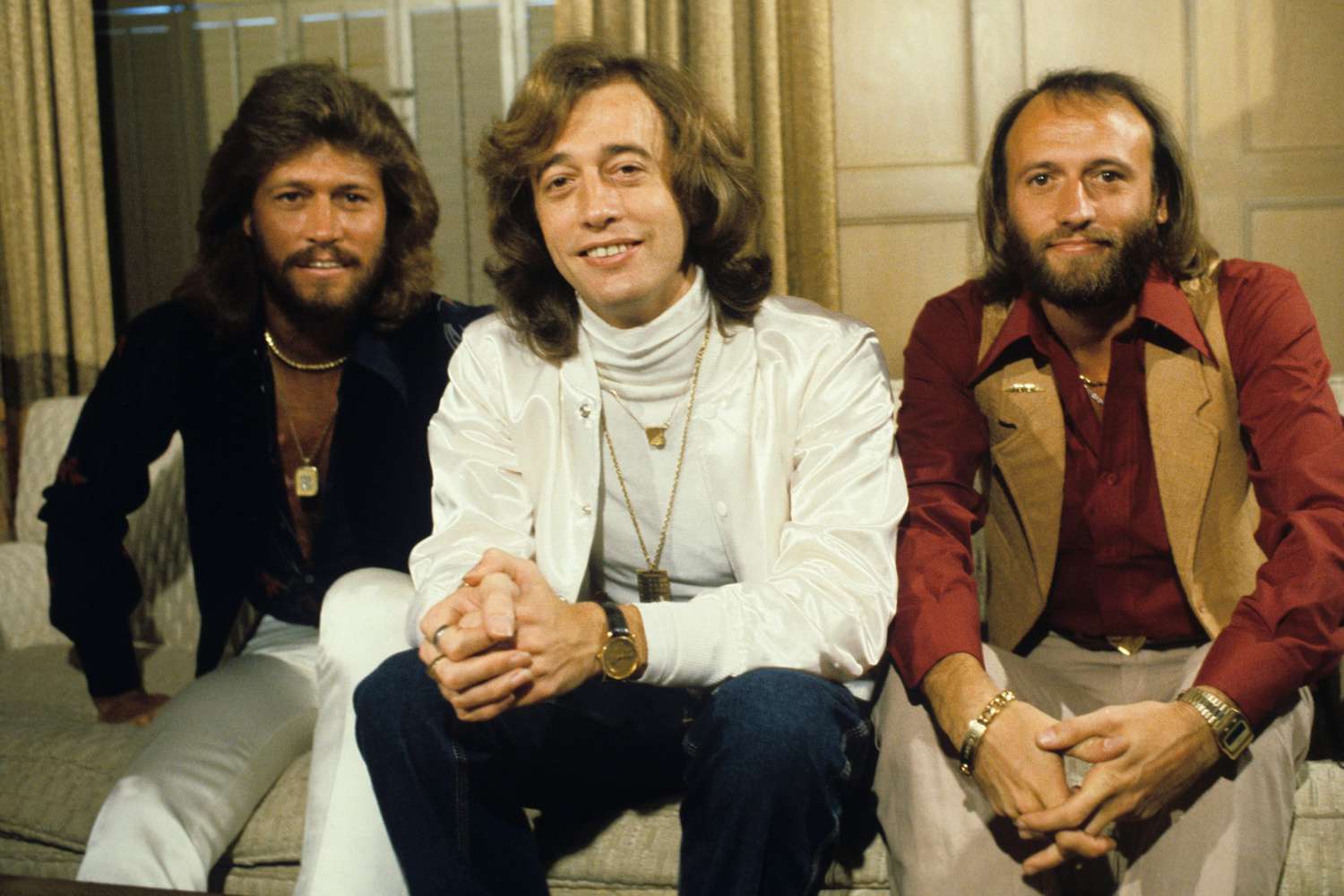
“With My Eyes Closed” is a late-career Bee Gees whisper—proof that desire doesn’t always shout; sometimes it simply returns in the dark, asking to be trusted again.
By the time the Bee Gees released “With My Eyes Closed” on Still Waters in 1997, they were no longer trying to “keep up.” They were doing something subtler—stepping inside contemporary sounds while keeping their oldest gift intact: that ability to make longing feel like a physical place you’ve been before. The song sits on Still Waters (track 6), the group’s 21st and penultimate studio album, released March 10, 1997 in the UK (Polydor) and May 6, 1997 in the US (A&M).
If you measure “arrival” by chart position, the album provides the clearest story—because “With My Eyes Closed” wasn’t pushed as a headline single. Still Waters peaked at No. 2 on the UK Albums Chart and No. 11 on the Billboard 200, a remarkable late-era resurgence that briefly placed the brothers back in the center of popular attention. That renewed attention didn’t happen in a vacuum: 1997 was also the year the Bee Gees were inducted into the Rock & Roll Hall of Fame, a public coronation that inevitably makes listeners revisit the catalog with fresh ears.
But “With My Eyes Closed” isn’t a victory-lap song. It’s more like the quiet moment after the applause—when you’re alone again, and the truth you avoided all day finally sits down beside you.
One of the most historically interesting facts about the track is who helped shape its sound. “With My Eyes Closed” was written by Barry, Robin, and Maurice Gibb, but it was produced by Raphael Saadiq—yes, that Raphael Saadiq, a modern R&B craftsman whose touch carried the warmth and muscle of contemporary groove. On MusicBrainz’ credit listing, you can see Saadiq’s fingerprints everywhere: he’s credited for production, mixing (with Gerry Brown), and even bass, guitar, and additional vocals, alongside drum programming. The track runs 4:19, long enough to settle into a mood rather than merely deliver a hook and disappear.
That production choice tells a story all its own. Still Waters was made with a constellation of producers—Russ Titelman, David Foster, Hugh Padgham, Arif Mardin, and Saadiq among them—almost as if the Bee Gees were walking through different rooms of the 1990s, listening carefully, and borrowing only what felt honest. Saadiq’s room is where “With My Eyes Closed” lives: not glossy adult-contemporary bombast, but a smoother, more intimate R&B-influenced atmosphere—music designed for closeness, not spectacle.
And that’s where the song’s meaning begins to glow.
The title “With My Eyes Closed” is a small phrase, but it carries a whole emotional posture: surrender without blindness, trust without naïveté. It suggests the way love often operates when we’re past the age of easy certainty—when we’ve learned what endings feel like, yet we still choose to lean in. There’s an ache in that choice. Closing your eyes can be comfort, but it can also be risk: you stop checking exits, stop guarding every soft spot, stop measuring the room for danger. You let feeling lead.
In the Bee Gees’ hands—especially in this late period—romance rarely sounds like teenage fireworks. It sounds like memory and consequence. Their voices (that familiar blend of Barry Gibb’s warmth, Robin Gibb’s plaintive edge, and Maurice Gibb’s anchoring presence) carry decades inside them, which means even a gentle love song can feel haunted by what came before. You don’t hear three men trying to prove they still belong. You hear three brothers who already know what lasts: melody, harmony, and the steady courage it takes to be tender in a world that prizes armor.
That’s the quiet triumph of “With My Eyes Closed.” It doesn’t announce itself with chart peaks or radio ubiquity. It does something more enduring: it creates a private room inside a comeback album. Still Waters brought the Bee Gees back to high chart placements; “With My Eyes Closed” brings the listener back to something even older—the feeling of wanting someone so deeply that you stop rehearsing your defenses.
And perhaps that’s why it lands with such a nostalgic pull. Not nostalgia for 1997, exactly—though the production carries that era’s smooth late-night sheen—but nostalgia for a way of loving that many people recognize: the kind that’s not showy, not youthful, not performed for anyone else. Just a quiet decision, made in the dark:
I’m here. I’m listening. And for a moment, I’ll let myself believe—eyes closed.