
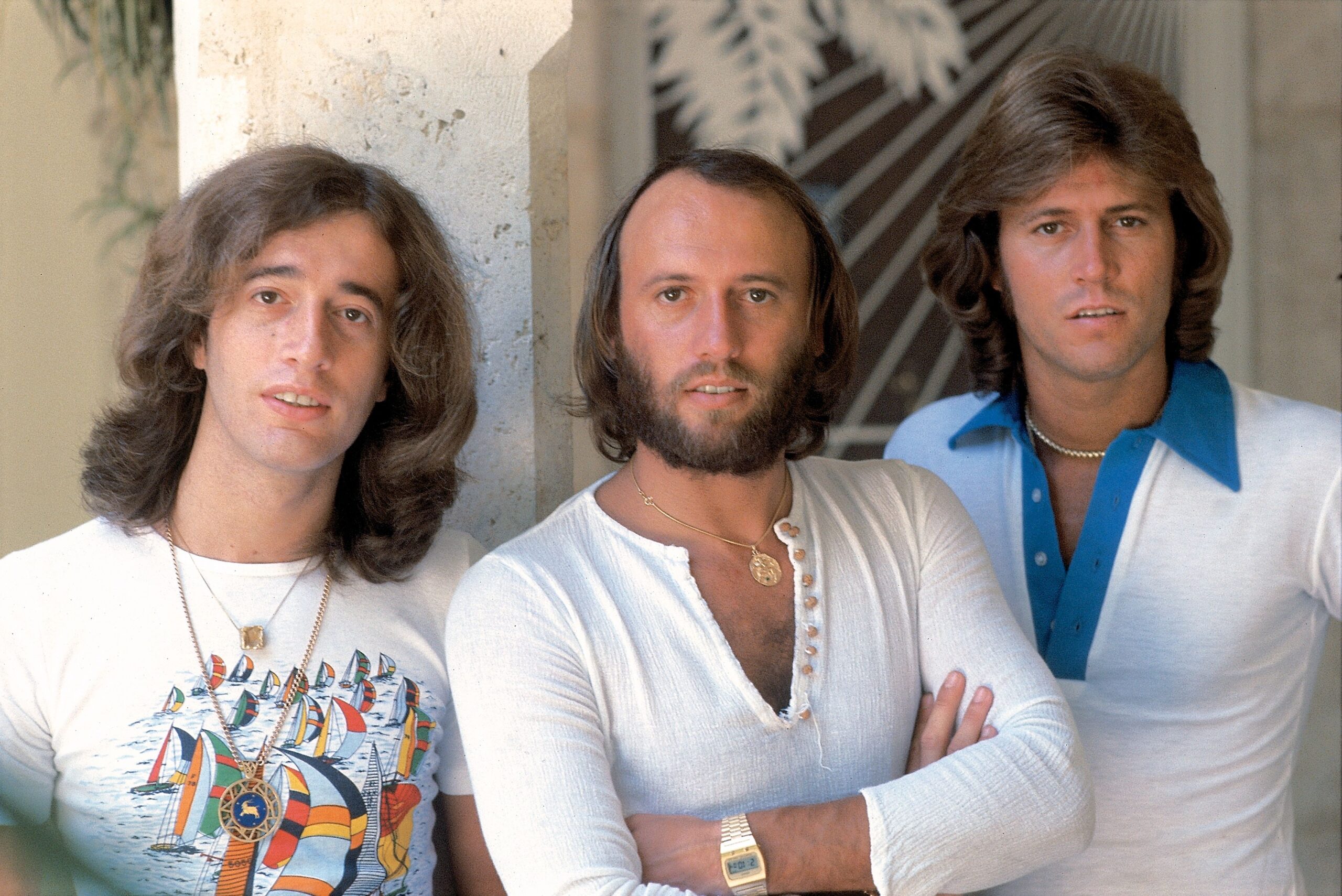
“Mr. Natural” is the Bee Gees singing their way out of a dead end—trying on a tougher, more soulful suit, and daring the world to notice the glow beneath it.
Released as a single on March 29, 1974, “Mr. Natural” was credited to Barry Gibb and Robin Gibb as songwriters, and—crucially—became the Bee Gees’ first single produced by Arif Mardin. It was backed with “It Doesn’t Matter Much to Me”, a reminder that the band could still turn soft and pastoral in an instant, even as they began leaning into a grittier pulse.
Commercially, the record arrived quietly, almost timidly, in a period when the Bee Gees’ chart power had cooled. In the U.S., “Mr. Natural” reached No. 93 on the Billboard Hot 100; in Australia it climbed much higher, peaking at No. 11. It also charted on Canada’s RPM listings (including No. 12 on Canadian Adult Contemporary). Those numbers don’t scream “comeback”—but they do document something more interesting: a band in transition, trying to reintroduce themselves not with nostalgia, but with a new kind of confidence.
That transition had a real story behind it. The Bee Gees had just endured a painful setback: their post–Life in a Tin Can album (provisionally titled A Kick in the Head Is Worth Eight in the Pants) was rejected within the Robert Stigwood/RSO world, and the group’s direction felt uncertain. The pivot came with advice and opportunity—Stigwood connecting them with Arif Mardin (via Atlantic circles), a producer/arranger who could hear where their instincts wanted to go: closer to R&B, closer to the dance floor that was beginning to stir, closer to a more physical beat.
So “Mr. Natural” isn’t just a title track. It’s a calling card.
Recorded on January 8, 1974 at Command Studios, London, the performance itself carries that “we’re building a new band around us” feeling. The lineup includes touring reinforcements like Alan Kendall (electric guitar), Dennis Bryon (drums), and Geoff Westley (piano)—names that matter because the sound matters: more bite, more groove, more room for instruments to push rather than politely accompany. And vocally, the brothers do something very Bee Gees and very sly—trading lead territory so the song feels like a conversation between identities, not a single narrator.
A few months later, the song became the centerpiece of the album Mr. Natural, released in May 1974, again with Arif Mardin at the helm. The album didn’t roar up the charts—peaking at No. 178 on the U.S. Billboard 200—but it was a meaningful step in the band’s reinvention, and it performed better in Australia (album peak No. 20). In hindsight, that’s the point: this record wasn’t the victory parade. It was the rehearsal that made the later triumph possible.
Now, the feeling of “Mr. Natural” is where its meaning lives.
The title suggests a character—someone smooth, maybe a little smug, maybe blessed with effortless charm. But the Bee Gees sing it with an edge that complicates the surface. There’s swagger here, yes, yet it doesn’t sound like a man who has never doubted himself; it sounds like a man performing confidence because he needs it. That tension—between polish and insecurity—is exactly what makes the song poignant when you place it in 1974: the Bee Gees, once kings of the late ’60s, now fighting to be seen as present tense again.
Critics at the time heard the spark. Trade papers praised the record’s tight harmonies and unusual flavor—one review called it a standout from “chart veterans,” noting its distinctive rock seasoning. That’s a lovely phrase for this era: “veterans.” Not old, not finished—simply experienced enough to know the world can stop clapping. And what do veterans do? They adapt. They listen harder. They step into a new rhythm without abandoning the voice that made them who they are.
That’s why “Mr. Natural” feels quietly nostalgic today, even for listeners who never lived through its release. It captures that universal moment when you realize the world has changed its taste, and you can either become a museum piece or learn a new dance. The Bee Gees chose the dance. You can hear them learning it in real time—still unmistakably themselves, still obsessed with melody and harmony, but letting the beat carry more weight, letting the guitars and keys speak louder, letting the music hint at the future that would soon arrive.
And perhaps the most bittersweet truth is this: “Mr. Natural” didn’t get the commercial “reward” it deserved in the U.S. Yet it stands as one of those pivotal tracks that artists make for survival, not for trophies—the kind of song you record when you’re determined to keep moving forward, even if the road is dim.
In the Bee Gees’ long story, “Mr. Natural” is the sound of a door opening—not the main stage yet, but the hallway that leads there. And once you hear it that way, its modest chart peak stops looking like failure. It starts looking like the first clear sign of another era on the way.