
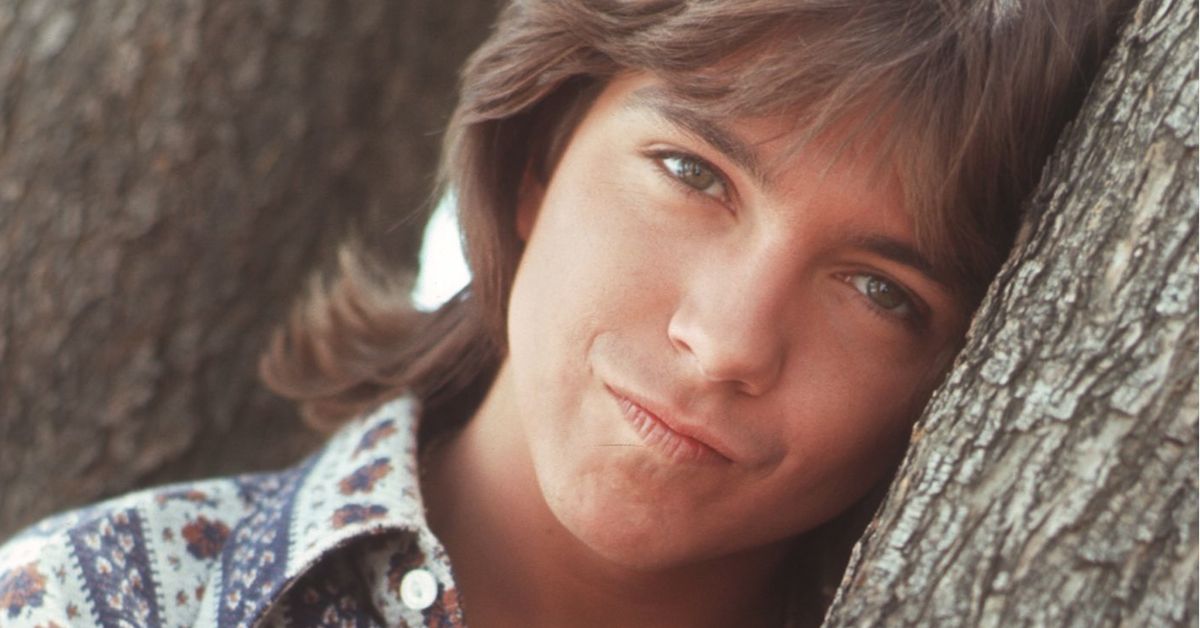
“I’ll Never Stop Loving You” is a vow whispered at full volume—David Cassidy choosing devotion over drama, and turning the fear of time into a promise that refuses to loosen its grip.
By 1992, David Cassidy was living in a very different kind of spotlight—one with fewer screams, more silence, and far more room for honesty. That is exactly the climate in which “I’ll Never Stop Loving You” was born. The song appears on his ninth studio album Didn’t You Used to Be…, released in September 1992, recorded between February and June 1992 at Santa Monica Sound Recorders, and produced by Eric “E.T.” Thorngren. If the early ’70s were Cassidy’s era of public adoration, this record belongs to the era of private reckoning—when the voice remains recognizable, but the themes lean more adult, more bruised, more determined to mean what they say.
“I’ll Never Stop Loving You” (track 5, 4:12) is credited to David Cassidy, Sue Shifrin, and John Wetton, and it’s performed as a duet with Treana Morris. The duet element matters: this isn’t the lone heart speaking into the void. It’s a conversation—two voices meeting in the same emotional room, holding the same fragile thing up to the light, as if to say: If we say it together, maybe it will last.
In strict “ranking at release” terms, the song’s story is not one of major chart conquest. It did exist as a named single in 1992 (documented by Germany’s official chart database as David Cassidy & Treana Morris – “I’ll Never Stop Loving You”, with Thorngren listed as producer), but it is also clearly marked as not a charting title there—an almost poignant footnote to a record built more for loyal listeners than for a fast-moving marketplace. In other words: this was not designed to be a headline. It was designed to be kept.
The behind-the-scenes story becomes even more interesting when you realize the song lived multiple lives in the early ’90s. Wikipedia’s album notes report that Cher recorded it for her 1991 album Love Hurts, and Heart recorded it as “Never Stop Loving You” around 1990 (later appearing on Japanese and compilation releases). That kind of cross-artist migration tells you something: the composition had a strong emotional chassis—one that could carry different voices and still hit the same essential nerve. But Cassidy’s version feels particular because of who he was by 1992: someone who had already watched fame flare bright and then thin out, someone who knew that “forever” is not a romantic decoration—it’s a decision you make while fully aware the world won’t help you keep it.
That awareness is the song’s emotional engine. The lyric idea—love lasting “until forever,” love outliving even the body—sits right on the edge between romance and mortality. It’s not merely I love you. It’s I will love you even when life turns the lights off. And sung by David Cassidy, a man whose image had once been treated like a product, the vow takes on an extra layer: a pledge to be real, not just adored. The duet with Treana Morris softens the grandness; it gives the promise a human face, the feeling of two people making a pact in the kitchen after midnight, when the world is finally quiet enough to hear the truth.
There’s also a subtle artistic statement in the credits and personnel around the album. Didn’t You Used to Be… is described as the only Cassidy album released on Scotti Bros., and it’s noted that the tracks were largely written or co-written by Sue Shifrin (Cassidy’s wife), framing the project as closer to home—less industry machine, more personal circle. In that setting, “I’ll Never Stop Loving You” doesn’t sound like an attempt to re-enter the teen-idol carousel. It sounds like a man planting his feet and saying: This is what I am now.
So the meaning of “I’ll Never Stop Loving You” isn’t simply devotion. It’s devotion spoken against the clock. It’s the courage of tenderness when cynicism would be easier. And perhaps that’s why the song can feel unexpectedly moving: because it doesn’t beg you to remember the old David Cassidy. It invites you to meet the later one—still melodic, still romantic, but now singing as if love is not a fantasy at all… but a hard-won promise, made with eyes open, and kept one day at a time.