
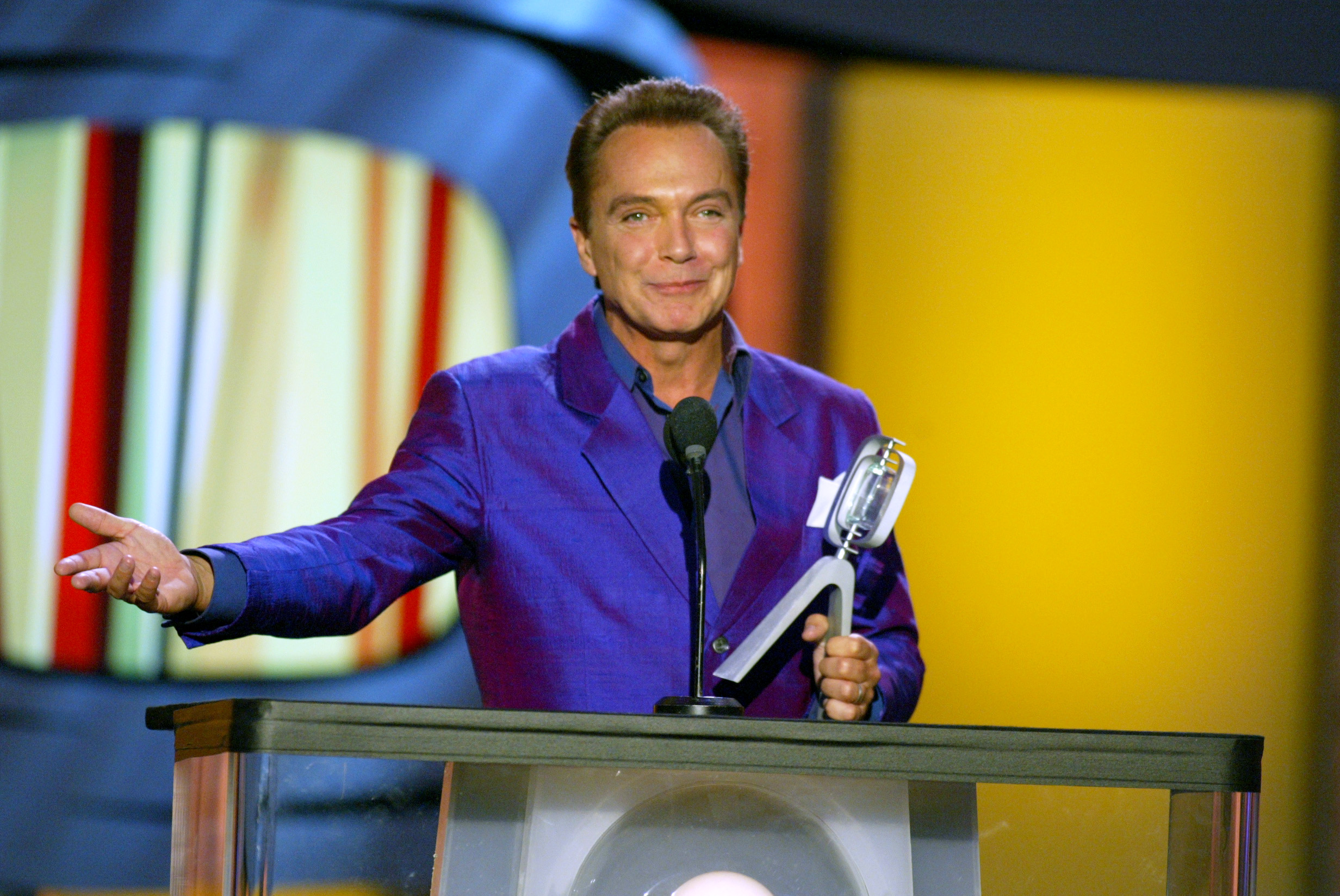
“Treat Me Like You Used To” is a plea for time itself—a request to be loved the way you once were, before warmth turned into habit and habit into distance.
“Treat Me Like You Used To” belongs to David Cassidy’s later, more private chapter—not the stadium-screaming teen-idol years, but the era when he was writing from inside adult relationships, with adult consequences. The song appears on his 1992 studio album Didn’t You Used to Be… (released September 1992), and it carries a telling set of credits: written by David Cassidy, his wife and songwriting partner Sue Shifrin, and Mark Spiro. In other words, this isn’t “a song he sang” so much as “a song he helped build,” line by line, from lived-in emotion.
In chart terms, it’s important to be exact: “Treat Me Like You Used To” was not issued as the album’s chart single, and standard discography listings point instead to “For All the Lonely” as the 1992 single—marked as a release that did not chart in the major territories tracked there. So this is not a song with a neat “debut at No. ___” headline. Its story is subtler: it’s an album track that functions like a close-up—one of those moments where a record stops trying to impress the outside world and turns its gaze inward.
That inwardness is baked into the album’s identity. Didn’t You Used to Be… was recorded February–June 1992 at Santa Monica Sound Recorders and produced by Eric “E.T.” Thorngren. The album’s concept is almost domestic in the best sense: the tracks are all written or co-written by Cassidy and Shifrin, making it feel less like a label product and more like a household’s emotional paperwork—letters never sent, arguments replayed, apologies practiced in the mirror. And “Treat Me Like You Used To,” sitting early in the track list, carries that intimate weight.
The “behind the song” context matters because Cassidy had already been rebuilding his musical identity for years. His 1990 comeback album David Cassidy (his first U.S. album release in 14 years, per the same source) reached No. 136 on the Billboard album chart, and its single “Lyin’ to Myself” is described there as his first top-30 hit in eighteen years. By 1992, he wasn’t chasing the same kind of spotlight—he was chasing believability. “Treat Me Like You Used To” sounds like it comes from someone who knows how fame can roar, and how silence can roar louder when you’re alone with someone who’s stopped looking at you the way they once did.
Emotionally, the song’s title is its thesis: it’s not merely “love me,” but restore me—restore the small rituals, the tenderness, the uncomplicated kindness. There’s an ache in that kind of request, because it admits something painfully ordinary: most relationships don’t end with a bang; they cool by degrees. The tragedy isn’t always betrayal—it’s erosion. And a line like “treat me like you used to” is what a heart says when it can still remember the earlier version of the same person standing in front of it.
Musically (and even in the personnel notes), you can see Cassidy aiming for grown-up pop with texture rather than teen-pop gloss: the album credits include The Fungi Horns on tracks including “Treat Me Like You Used To,” suggesting a warm, adult-contemporary palette—music with breath in it, music that knows the value of a slow burn. That matters, because horns—when used with restraint—often sound like memory itself: a little golden, a little bruised, a little like the past leaning in to comment on the present.
In the end, “Treat Me Like You Used To” is compelling precisely because it doesn’t come with a trophy-case chart story. Its power is the kind that arrives later, when a listener has lived long enough to recognize the specific pain it names: not heartbreak as drama, but heartbreak as change—the person you love still there, yet somehow no longer the person you knew. And in that quiet, steady insistence—David Cassidy asking for yesterday’s tenderness in today’s colder room—the song becomes what so many late-career recordings aspire to be: not a comeback, but a confession.