
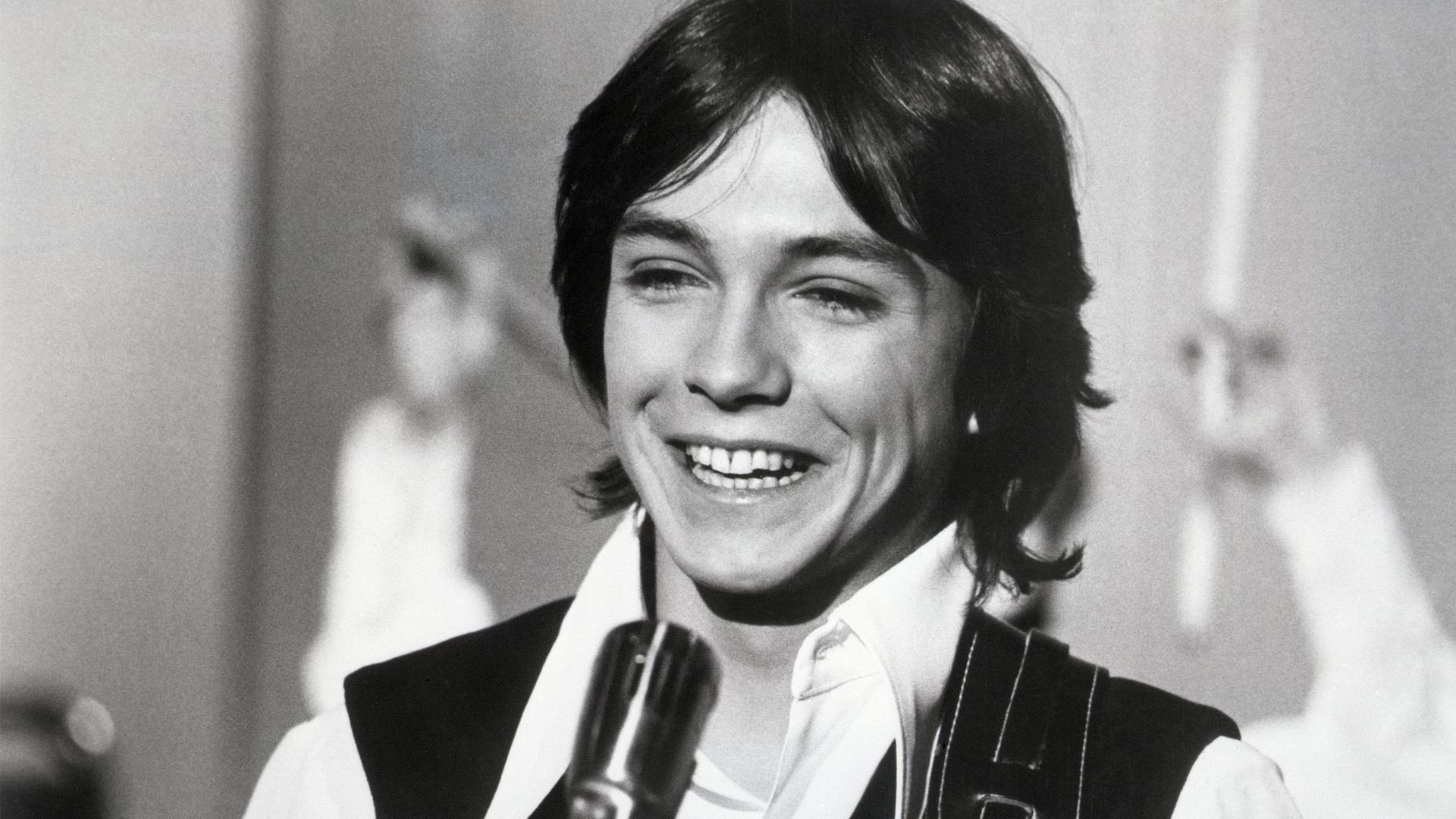
“Echo Valley 2-6809” is a song about dialing the past—when a phone number could hold an entire summer, and longing sounded like a gentle ring in the dark.
If you trace David Cassidy’s most wistful moments, “Echo Valley 2-6809” is one of the quiet surprises—less a “hit” than a memory capsule. The recording belongs to The Partridge Family era, appearing on their third album Sound Magazine, released in August 1971. The album itself landed high: it reached No. 9 on the US Billboard 200, and later peaked No. 14 in the UK (and No. 18 in Australia). But here’s the crucial point for accuracy: “Echo Valley 2-6809” was not issued as a U.S. single, so it has no Billboard Hot 100 “debut” or peak position of its own. The album’s lone U.S. hit single was “I Woke Up in Love This Morning,” which peaked at No. 13 on the Hot 100.
So why does this particular track endure in the Cassidy constellation?
Because “Echo Valley 2-6809” isn’t built like bubblegum. It’s built like a sigh. The song’s very title—a phone number—does something quietly brilliant: it turns romance into a reachable place, a location you can dial, as if love were a neighborhood exchange and the past might still pick up. The track is credited to songwriters Kathy Cooper and Rupert Holmes, and that pairing matters: there’s a storylike clarity to the lyric, the sense of a tiny world sketched in a few lines, tenderly observed rather than melodramatically performed.
On Sound Magazine, the song sits on Side One—right in the early stretch of the record—surrounded by bright, polished pop crafted under producer Wes Farrell. The album was recorded at United Western in Hollywood, and the personnel list reads like a snapshot of top-tier studio craft: Hal Blaine on drums, Larry Knechtel and Mike Melvoin on keys, and the ever-silky backing vocals associated with the project. Even if you didn’t know those names, you can hear the professionalism in the track’s cleanliness—how everything supports the emotion without crowding it.
What makes the song feel so “Cassidy,” though, is its particular flavor of longing. This isn’t heartbreak as betrayal; it’s heartbreak as distance. The lyric’s central act—calling—implies separation without spelling out blame. It’s the ache of someone left with only a number and the courage to use it, hoping that the voice on the other end will sound like it used to. In a pre-digital world, a phone call had weight: you had to decide, lift the receiver, commit to the ring, and face the possibility of no answer. “Echo Valley 2-6809” turns that small risk into an entire emotional universe.
And it’s telling that, although it never became a stateside single, the song gained a reputation through visibility and affection. One retrospective on Cassidy’s catalog notes it was “a ‘hit’ due to being featured in the TV show,” emphasizing that its place in fans’ hearts came from recognition, not chart arithmetic. That’s often how certain songs survive the decades: not by conquering the rankings, but by quietly attaching themselves to life—playing in living rooms, echoing from television speakers, becoming linked to evenings that felt safe and simple.
There’s also a bittersweet irony in the album context. Sound Magazine is remembered as a high point—commercially strong, culturally visible, even certified gold—yet “Echo Valley 2-6809” feels like the moment where the gloss thins and something more human shows through. The Partridge world sold cheerful perfection, but this song lets a crack appear: the realization that wanting someone can be as gentle as it is painful, and that sometimes all you can do is call and hope.
In the end, David Cassidy’s connection to “Echo Valley 2-6809” is less about a chart peak and more about a mood he carried so well: romantic yearning delivered with softness, not swagger. It’s the sound of pop innocence growing a shadow—and of a listener, years later, hearing that ring again and recognizing the strange truth inside it: some numbers don’t just reach a person. They reach a time.