
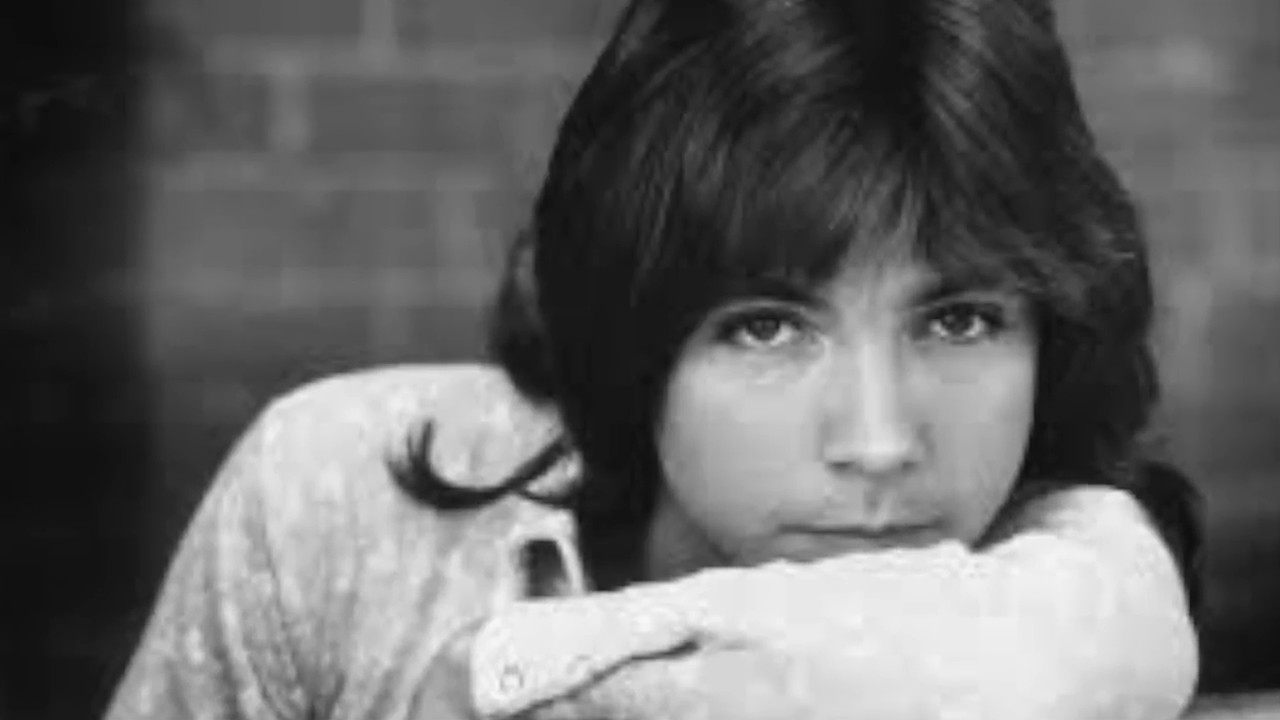
“That Guy” is the moment friendship turns into distance—two men looking at each other and realizing they’ve become strangers, even while the old bond still aches underneath.
“That Guy” isn’t a lost David Cassidy pop B-side from the Partridge era—it’s a piece of musical theatre, and that’s the key to hearing it correctly. The song appears on Blood Brothers: The International Recording (released 1995), a studio cast album of Willy Russell’s musical Blood Brothers, featuring David Cassidy, Shaun Cassidy, and Petula Clark, with Russell himself as the Narrator. On the album’s track list, “That Guy” is track 13, and it runs about 1:53—a short track, but emotionally loaded, like a line of dialogue that changes everything.
Because it’s a cast-recording number rather than a radio single, “That Guy” doesn’t have a clean “debut at No. X” chart story. Its “ranking,” in the way theatre songs truly earn their place, lives inside the endurance of the show itself: Blood Brothers became a West End landmark, winning the Laurence Olivier Award for Best New Musical, then returning in a revival that ultimately ran for more than 24 years in London and played over 10,000 performances, closing in November 2012. That kind of longevity is its own chart—measured not in weeks, but in the number of times an audience holds its breath at the same tragic turn.
In the story of Blood Brothers, the song’s meaning is heartbreakingly precise. The musical follows twin brothers separated at birth and raised in different social classes—Mickey and Edward—whose friendship is both genuine and doomed, pulled apart by circumstance and misunderstanding. “That Guy” is sung as a duet between Mickey and Edward (the show’s two central men), and it’s widely described in performance guides as an Act Two moment—an echo of their earlier childhood duet “My Friend,” only now the language has cooled. Where “my friend” is immediate and trusting, “that guy” is what you call someone when closeness has thinned into awkward recognition—when you can still remember the warmth, but you can’t quite reach it anymore.
That shift in wording is the song’s knife. It isn’t just a clever lyric; it’s the sound of time doing what time does: rearranging people without asking permission.
And that’s why this number can feel so quietly devastating, especially with David Cassidy and Shaun Cassidy singing it together on the 1995 recording. The album’s own background notes that Blood Brothers marked the first time the two appeared together on an album—two brothers, both once teen idols, now meeting in a different kind of spotlight: one that doesn’t flatter, one that tells the truth. In their earlier pop years, the point was brightness—certainty, desire, applause. In “That Guy,” the point is the opposite: the discomfort of seeing someone you once loved as family and realizing you’ve drifted into separate lives.
Musically, it’s brief, almost conversational, which suits the moment. Theatre songs sometimes function like emotional “close-ups,” and this one behaves exactly that way—no grand chorus to hide behind, no elaborate buildup. It arrives, says what it has to say, and leaves you with the uneasy aftertaste: Was that really him? Was that really us?
Underneath the dialogue-like structure, the theme is painfully universal. We all have people who were once essential—friends, siblings, companions in the long afternoons—who slowly become “that guy” or “that girl” in our own internal language. Not because we stopped caring, but because life can be a quiet thief. It steals time. It steals proximity. It steals the easy right to say a name and be understood.
In the world of Blood Brothers, that distance is sharpened by class and fate, but the emotional mechanism is the same one found in ordinary life: separation becomes habit, and habit becomes identity. By the time you meet again, you’re carrying different histories in your pockets, and you’re no longer sure where the old friendship fits.
So “That Guy” ends up doing something more subtle than “sadness.” It shows you the process of sadness—how it begins not with a dramatic ending, but with a small change in address. With a pronoun. With a label. With the moment the heart reaches for “my friend”… and the mouth says something safer.
If you listen to David Cassidy here without the baggage of earlier decades, you hear a performer leaning into character and consequence rather than charm. And if you listen knowing the show’s long, storied West End life—those 10,000+ performances, that run stretching from the late 1980s revival through 2012—you also hear why audiences kept returning: because the wounds in this story aren’t exotic. They’re familiar.
In the end, “That Guy” is not famous because it’s big. It’s famous—quietly, among those who know—because it’s accurate. It captures the sorrow of realizing that sometimes the most painful goodbyes aren’t spoken. Sometimes they’re simply referred to.