
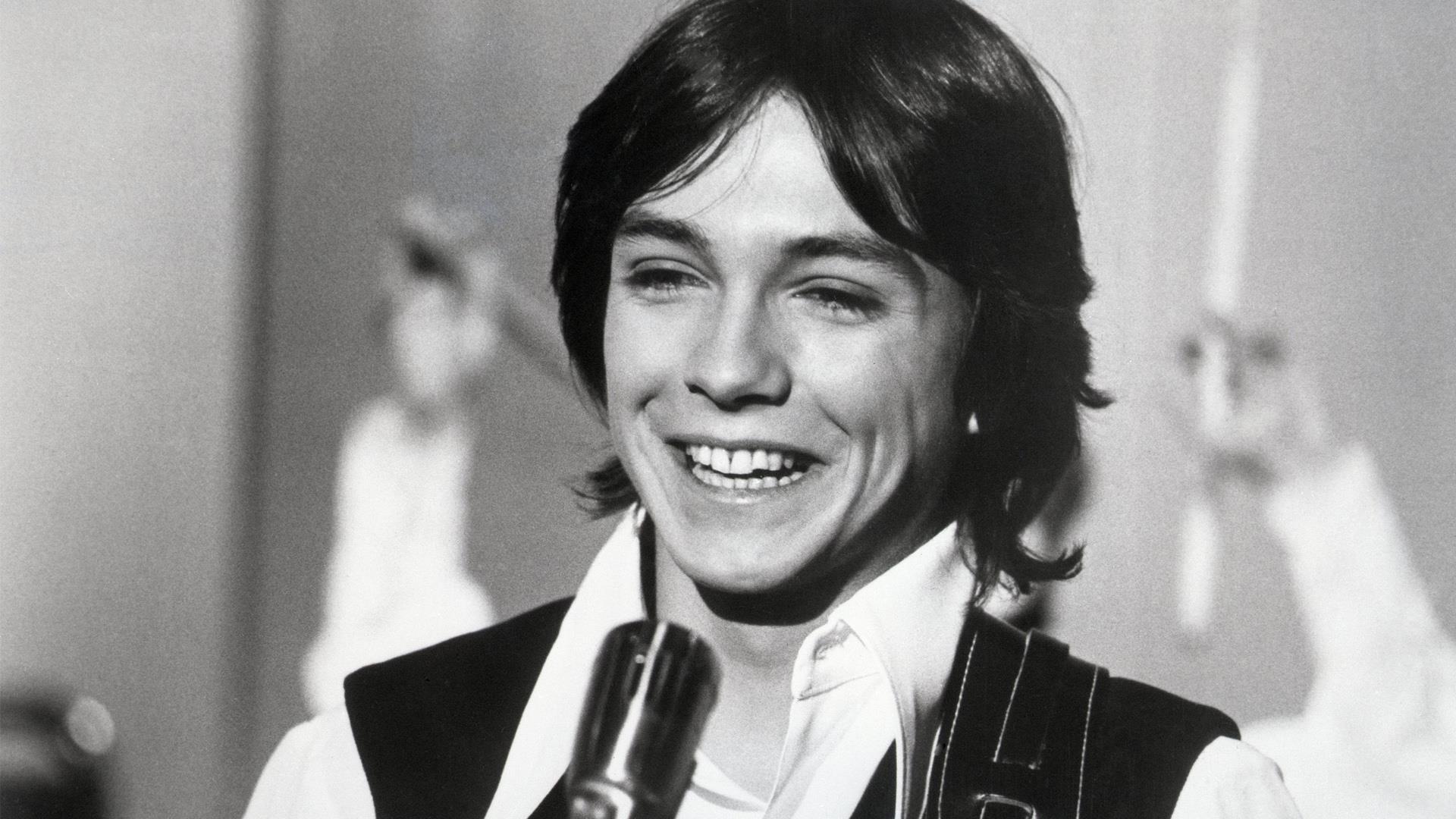
“Labor of Love” is the sound of devotion after the fireworks—a grown-up confession that real love is not a miracle you find, but a choice you make, day after day.
If you want the most important context up front, it’s this: “Labor of Love” opens David Cassidy’s self-titled 1990 comeback album David Cassidy (track 1), released on Enigma Records—a record that marked his first U.S. album in 14 years. The song was co-written by David Cassidy, Sue Shifrin, and Michael Dan Ehmig, placing Cassidy not merely as a voice, but as a participant in the song’s emotional blueprint. And while “Labor of Love” itself was not promoted as the featured hit single, the album did reintroduce Cassidy to the U.S. charts—peaking at No. 136 on Billboard’s album chart—during a moment when adult pop-rock was about polish, restraint, and hard-earned feeling rather than teen-idol heat.
That’s the “ranking” truth in honest terms: “Labor of Love” didn’t arrive with a widely documented major chart peak of its own, because the campaign’s spotlight went to “Lyin’ to Myself”—the album’s featured single, which returned Cassidy to the U.S. singles chart conversation. So the song’s legacy is less about numbers and more about placement: it was chosen to be the first thing you hear, the front door into this particular chapter of his life.
And that choice tells you what Cassidy wanted in 1990: not to chase his past, but to stand in the present with steadier shoes on.
By the time David Cassidy arrived, his name already carried decades of echoes—television fame, pop stardom, the weight of being remembered in a single frozen pose. Yet the album’s own story is quietly dramatic: it was his only release on the now-defunct Enigma Records, and the label’s instability meant the comeback didn’t have the long runway it deserved. There’s something almost poignant about that—how art can be carefully made, then forced to live in a world where business collapses don’t care how honest a chorus is.
So what does “Labor of Love” actually mean?
Its title is the key. A “labor of love” is work you do not because it’s easy, but because it matters—work you would still choose even on the days it exhausts you. In romance, that phrase holds a bittersweet maturity: it suggests that love isn’t always lightning; sometimes it’s carpentry. Sometimes it’s repair. Sometimes it’s the humility of showing up again after you’ve already been hurt, after you’ve already been disappointed in yourself, after you’ve already learned how pride can poison the air in a room.
That’s why this song feels so fitting as an opener. It doesn’t swagger. It doesn’t pretend you can sing your way out of loneliness in three minutes. Instead, it leans into a slower, more adult kind of yearning—the kind that comes when you’ve lived long enough to understand that passion without care is just noise. Real devotion has a cost, and it pays it willingly.
Even the collaboration behind it reinforces that feeling. Cassidy’s co-writing with Sue Shifrin (who appears repeatedly across the album credits) signals a deliberate attempt to build a coherent emotional language for this record—less “image,” more inner life. You can hear it in the way the album positions the song: first track, first sentence, the opening line of a letter that says, in effect, I’m here again—and I’m not pretending anymore.
And perhaps the most quietly moving part is this: David Cassidy was released primarily in the U.S. on CD and cassette, with vinyl editions appearing in parts of Europe—a detail that feels symbolic now, like a record straddling eras, formats, and identities. Just as the industry was changing its skin, Cassidy was doing something similar—trying to be seen not as a relic, but as a working artist with something tender and current to say.
If you play “Labor of Love” today, it doesn’t feel like a bid for relevance. It feels like a man choosing sincerity over spectacle. And that’s why it lasts: because beneath the production, beneath the comeback narrative, beneath the shifting labels and chart math, the song insists on one unglamorous, timeless truth—love, at its deepest, is not a trophy. It’s the work we do with open hands, even when nobody is applauding.