
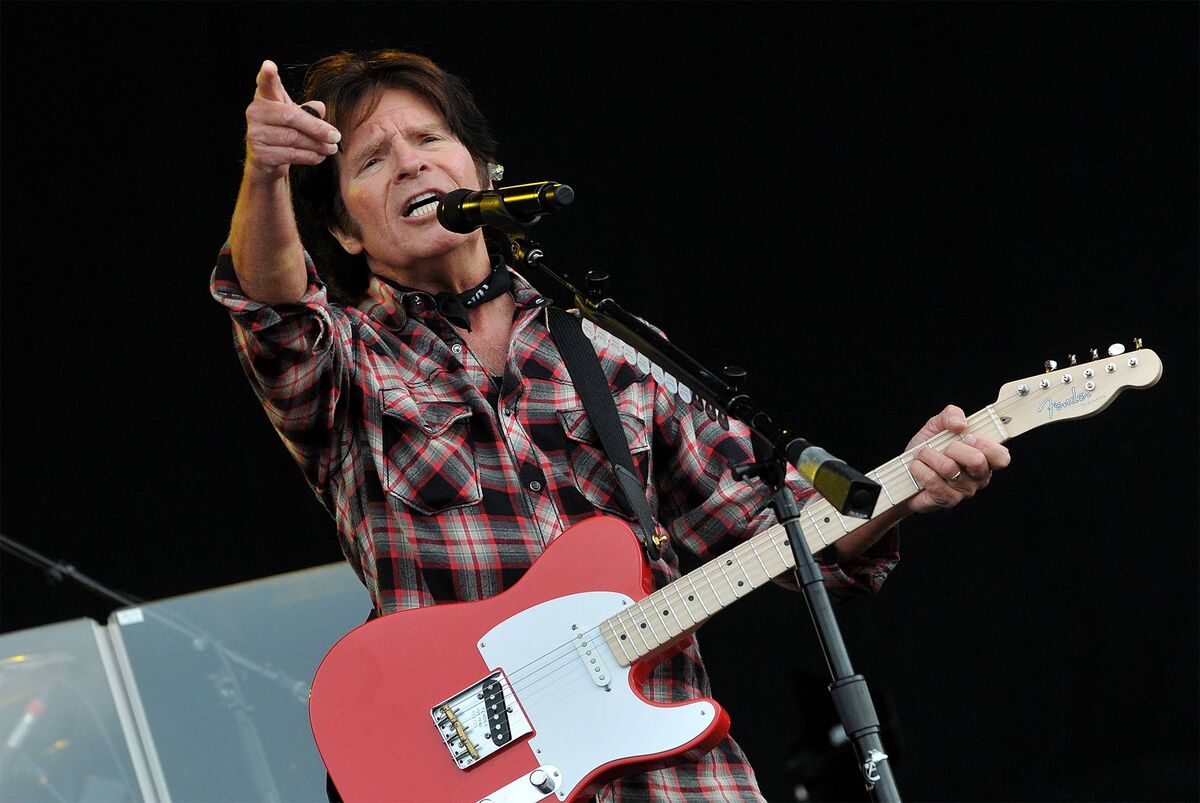
“Garden Party”—as John Fogerty revives it—feels like a gentle manifesto: when the crowd demands your past, you keep your dignity by singing your truth.
“Garden Party” is, first and foremost, Rick Nelson’s song—written and recorded by Rick Nelson and The Stone Canyon Band, released in July 1972, and inspired by a very public moment of misunderstanding at Madison Square Garden. What makes John Fogerty’s version so affecting is that it doesn’t treat the tune like a museum piece. He sings it like a letter that still arrives on time—because the lesson at its center never stopped being necessary.
Fogerty recorded “Garden Party” for his 2009 album The Blue Ridge Rangers Rides Again, where it appears as track 3 and runs 3:51. His recording is also a small gathering of American rock history: it features Don Henley and Timothy B. Schmit of the Eagles, their harmonies folding in like familiar voices on a porch at dusk. The album itself was released September 1, 2009, a sequel in spirit to Fogerty’s 1973 country-leaning solo detour, and it was produced by Fogerty—tight, rootsy, and deliberately unflashy.
But to understand why Fogerty chose this song—and why it fits him so naturally—you have to walk back into the original scene.
On October 15, 1971, Richard Nader’s Rock ’n’ Roll Spectacular Volume VII took place at Madison Square Garden. The bill promised a celebration of early rock and roll, and the crowd came hungry for the hits they could wear like old jackets. Rick Nelson, though, arrived as a living, changing artist—long hair, contemporary clothes—and dared to play beyond the “oldies” script. When he performed a country-influenced version of the Rolling Stones’ “Honky Tonk Women” (via “Country Honk”), the audience booed. Nelson believed the boos were aimed at him, and he left the building rather than return for the finale. Out of that bruising night came “Garden Party”, a song that turns humiliation into wisdom without turning bitter.
Its commercial story, ironically, was triumphant. The single entered the U.S. Billboard Hot 100 in July 1972, with a debut position of No. 77 (debut chart date: 07/01/72), and later rose to No. 6—Nelson’s last U.S. Top 40 pop hit. It also topped Billboard’s Easy Listening chart for two weeks, proof that the song’s calm tone carried far beyond the drama that sparked it.
The heart of the lyric is the line everyone remembers, because it lands like a life lesson you don’t want to learn the hard way: “you can’t please everyone, so you’ve got to please yourself.” Around that refrain, Nelson threads sly cameos and coded references—“Yoko” and the “walrus,” a mysterious “Mr. Hughes” connected in the lore to George Harrison—as if the whole rock era is milling around in the background while one man tries to keep his footing.
Now bring that message forward to John Fogerty in 2009, and you can feel why it resonates. Fogerty has always carried a particular American burden: being adored for what you did, then being asked to repeat it exactly, forever, as if your best years should remain on demand. His voice—still sinewy, still weathered—knows how to make a moral sound conversational. And with Don Henley and Timothy B. Schmit beside him, the song becomes less a confession and more a shared shrug from musicians who’ve all lived inside the strange bargain of fame: the audience’s nostalgia versus the artist’s need to keep breathing forward.
Musically, Fogerty’s take doesn’t chase the original’s sting; it softens the edges. The groove is steady, friendly, almost smiling—yet the lyric remains a bruise under the shirt. That contrast is exactly why “Garden Party” endures: it teaches without preaching. It offers a simple, hard-earned truce with the world. Applause is wonderful, but it’s not a compass. And when the night grows quiet, the only voice you truly have to live with is your own.
In Fogerty’s hands, “Garden Party” becomes what it always wanted to be: not a revenge song, not a complaint—just a clear-eyed reminder that self-respect is the one encore you can’t outsource.