
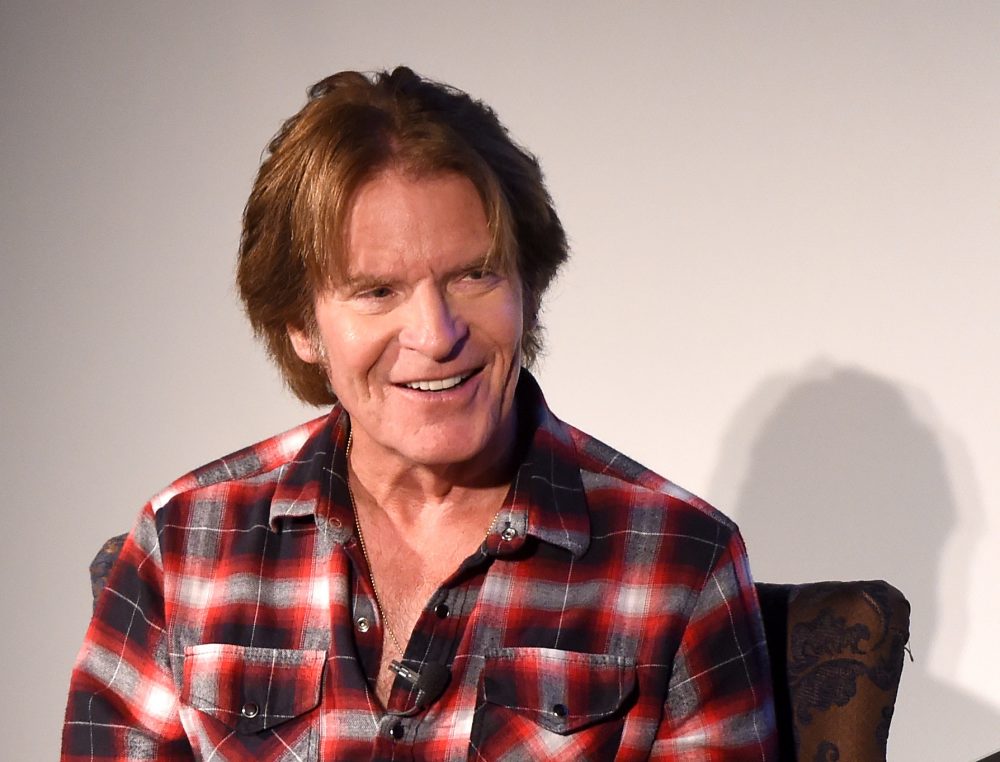
“Never Ending Song of Love” is John Fogerty’s way of saying some feelings don’t age—they simply keep playing, like a familiar melody that refuses to leave the room.
The version most people mean when they say John Fogerty – “Never Ending Song of Love” is his warm, rootsy recording from The Blue Ridge Rangers Rides Again—released September 1, 2009, cut quickly and joyfully in sessions that began in October 2008. On the charts, that album didn’t arrive as a blockbuster headline so much as a friendly return: it reached No. 24 on the US Billboard 200 (its best U.S. album placement for this project), and in the UK it made a brief, telling appearance—first charting on November 7, 2009 at No. 98 on the Official Albums Chart (a one-week run, with that first week also being its peak). Those numbers matter because they show the kind of “success” this record was built for: not hype, but recognition—listeners hearing Fogerty step away from the roar of rock history and into the front-porch light of American song.
And the song choice is no accident. “Never Ending Song of Love” wasn’t born in 2009. It came from the early ’70s crossroads of rock, soul, and country, written by Delaney Bramlett (with some sources also crediting Bonnie Bramlett) and first made famous by Delaney & Bonnie in 1971. Their single became their signature pop hit—peaking at No. 13 on the Billboard Hot 100 and No. 8 on the Easy Listening chart. So when Fogerty sings it decades later, he’s not “covering a tune” so much as tipping his hat to a whole era when the radio still had room for a love song that sounded like real life—simple words, honest pulse, no melodrama required.
The story behind Fogerty’s recording is, in its own quiet way, touching. The Blue Ridge Rangers Rides Again was conceived as a sequel to his 1973 album The Blue Ridge Rangers, a project where he famously played the “band” himself—an invented name for a very personal detour into country and traditional material. The 2009 album plays with that same idea (even joking through the title’s grammar), but this time Fogerty chose community over solitude: he recorded it with a real ensemble in a tight burst of studio time, leaning into the easy chemistry of seasoned players rather than the old one-man illusion. You can hear that difference in “Never Ending Song of Love”. The track doesn’t feel “constructed.” It feels shared—like a roomful of musicians smiling at one another as the tape rolls.
As for meaning, the lyric is almost disarmingly plain: love isn’t a one-time declaration; it’s a refrain. What lasts isn’t the fireworks, but the return—coming back to the same heart, the same promise, the same hard-earned tenderness. In Fogerty’s voice, that message carries extra weight. This is a singer who spent years being misunderstood as a symbol—first of a band, then of an era, then of a certain kind of American sound. Here, he steps down from the monument and becomes a man with a record collection, revisiting a song that once floated through the early ’70s like a friendly breeze.
There’s also a deeper charm in how Fogerty delivers it: he doesn’t chase modern polish. He aims for something older and steadier—rhythm you can sway to, melody you can hum without thinking, and a vocal that sounds less like performance and more like memory. If the original Delaney & Bonnie hit felt like a young couple insisting they could outrun doubt, Fogerty’s reading feels like someone who’s already lived through a few seasons and learned that the best love songs don’t “end” because life doesn’t politely fade out on cue.
In the end, “Never Ending Song of Love” works because it’s both modest and profound. It doesn’t pretend love is easy; it simply refuses to treat love as disposable. And when a voice like John Fogerty’s—so tied to American roads, American weather, American regret—sings that kind of devotion with a relaxed grin, you don’t just hear a cover. You hear a circle closing gently… and the music, as promised, going on.