
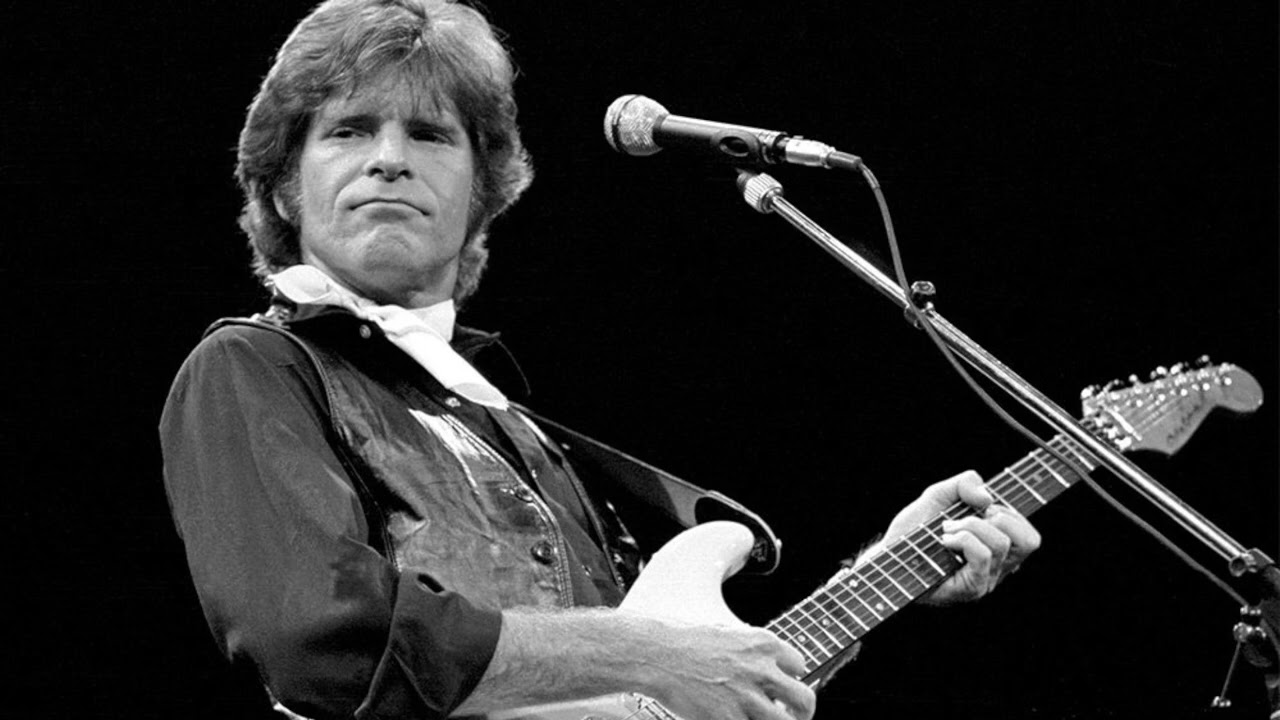
“Born on the Bayou” (with Kid Rock) feels like an old swamp myth told in a new voice—John Fogerty keeping the murky folklore intact, while Kid Rock adds modern grit to the same haunted water.
The collaboration “Born on the Bayou (with Kid Rock)” arrived as part of John Fogerty’s guest-filled celebration album Wrote a Song for Everyone, released May 28, 2013. The project made a loud first step in the marketplace—debuting at No. 3 on the Billboard 200, the highest-charting debut of Fogerty’s career, with first-week sales reported at 51,319. And this particular track had its own high-visibility “first public moment”: the newly recorded “Born on the Bayou” featuring Kid Rock debuted during the NFL broadcast on Super Bowl Sunday, February 3, 2013. That detail matters, because it frames the duet as more than a studio experiment—it was presented as a headline-worthy reintroduction of an American classic.
Yet the power of this version comes from how faithfully it honors the song’s original spell.
“Born on the Bayou” began life as the dark opening track of Creedence Clearwater Revival’s second album Bayou Country, released in January 1969. It was also issued as the B-side of CCR’s breakthrough single “Proud Mary,” with that single reaching No. 2 on the Billboard Hot 100 in 1969. In other words, the song’s earliest “chart story” is intertwined with one of the biggest early CCR hits—but its deeper story has always been something else: atmosphere, place, and the strange truth of invented memory.
Fogerty has openly described the bayou setting as a kind of myth—a “mythical childhood” placed in a swamp where he hadn’t actually lived, filled with heat-haze imagery and the word “hoodoo,” which he explained as an other-worldly apparition or presence. That confession is crucial to the meaning. “Born on the Bayou” isn’t a documentary postcard; it’s a dreamscape. It’s America as imagined through blues records, river fog, and late-night radio—an emotional geography more than a literal one.
So what changes when Kid Rock steps into that fog with Fogerty?
The best collaborations don’t repaint the picture—they adjust the lighting. On Wrote a Song for Everyone, Fogerty’s goal was to revisit CCR classics with artists who reflect how far the songs have traveled, and the track listing explicitly pairs “Born on the Bayou” with Kid Rock as a featured guest. In that pairing, you can hear a meeting of two American performance instincts: Fogerty’s tight, story-driven swamp-rock authority, and Kid Rock’s rough-edged swagger—less polished, more barroom-gravel, like a modern echo in an older corridor.
The song’s meaning, at its core, remains the same: it’s about identity that feels fated, almost supernatural—being “born” into a place that might be real, or might be a state of mind you can’t shake. The bayou becomes a symbol for everything we carry that isn’t neatly explained: where we come from, what we fear, what we crave, what we can’t quite leave behind. In this duet, that symbolism arguably becomes more generational. Fogerty sings like the keeper of the myth—someone who’s lived with the story long enough to know exactly where the shadows fall. Kid Rock enters like a present-day witness, the voice of someone still living in the rough weather of modern American self-invention, still insisting on authenticity even when the line between pose and truth is thin.
And that is why the collaboration works: because “Born on the Bayou” has always been about the feeling of realness, not the paperwork of it. A swamp you never lived in can still be the swamp that raised your imagination. A hoodoo you can’t define can still be the shape of the fear you recognize. With John Fogerty and Kid Rock together, the song doesn’t become “new”—it becomes newly current, as if that old Southern fog rolled forward into a different decade and found the same human heartbeat still thumping underneath.