
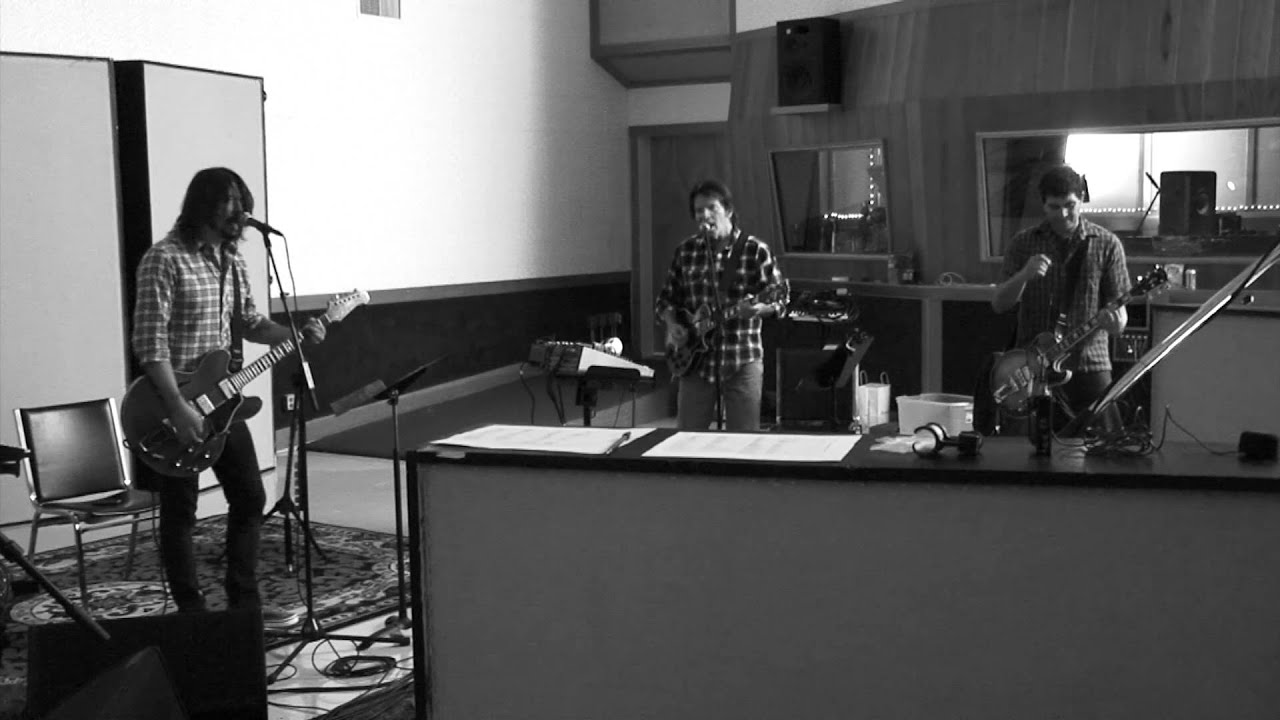
The restless spirit of rock confronts the shadows of its own making.
When John Fogerty released “Wicked Old Witch” as part of his 2004 album Deja Vu (All Over Again), the song arrived not as a nostalgic echo of his Creedence Clearwater Revival past, but as a defiant reaffirmation that the fire still burned — raw, ragged, and righteous. While the single itself did not chart in the traditional sense, the album marked Fogerty’s triumphant re-entry into the contemporary rock landscape after years of silence and industry battles. It reminded listeners that the voice behind “Bad Moon Rising” and “Fortunate Son” remained an unyielding force of American rock: uncompromised, unapologetic, and still unafraid to name the devils in the room.
“Wicked Old Witch” is more than a swamp-rock throwback; it is an exorcism rendered in electric guitar. Fogerty had long carried ghosts — legal entanglements over his Creedence catalog, estrangement from former bandmates, and the ceaseless weight of being one of rock’s most recognizable voices. Here, he channels those demons into allegory. The titular witch becomes a symbol for all that had haunted him: betrayal, manipulation, greed — forces that had sought to curse his creative life. Yet he refuses to play the victim. His voice, weathered but steadfast, transforms bitterness into catharsis. Each growl and riff is less an act of accusation than liberation — a bluesman’s sermon delivered through roaring amplifiers.
Musically, “Wicked Old Witch” reconnects Fogerty with the elemental sound he helped define decades earlier: swampy rhythms fused with Delta grit, an unrelenting groove forged from slide guitar and stomping percussion. The production is spare yet potent — every instrument feels close enough to touch, every note steeped in muscle and sweat. This tactile immediacy is crucial to Fogerty’s method; his music has always been physical before it is intellectual. In “Wicked Old Witch,” that visceral energy becomes an act of reclamation. He takes back his sound by embodying it fully once again, proving that authenticity needs no adornment when conviction runs this deep.
Lyrically, Fogerty uses fable-like imagery to speak truth in metaphorical terms. The witch could be a person or a system; she could represent artistic exploitation or even one’s inner saboteur. What matters is the tension she provokes — a confrontation between creativity and corruption, innocence and cynicism. By naming her “wicked,” Fogerty draws on archetypal Americana: small-town cautionary tales and frontier folklore mingled with rock’s mythic struggle against moral decay. It’s no accident that this track sits within Deja Vu (All Over Again), an album steeped in reflection on war, loss, and renewal. “Wicked Old Witch” stands as its personal reckoning — a storm breaking after decades of thunderclouds gathering on the horizon.
In that sense, the song’s power lies not in its chart performance but in its spiritual gravity. It captures an artist reclaiming not just his voice but his story. And as the final chords fade, one can almost see Fogerty standing tall amid the ruins — guitar in hand, smiling grimly at the darkness he has finally learned to name and outsing.