
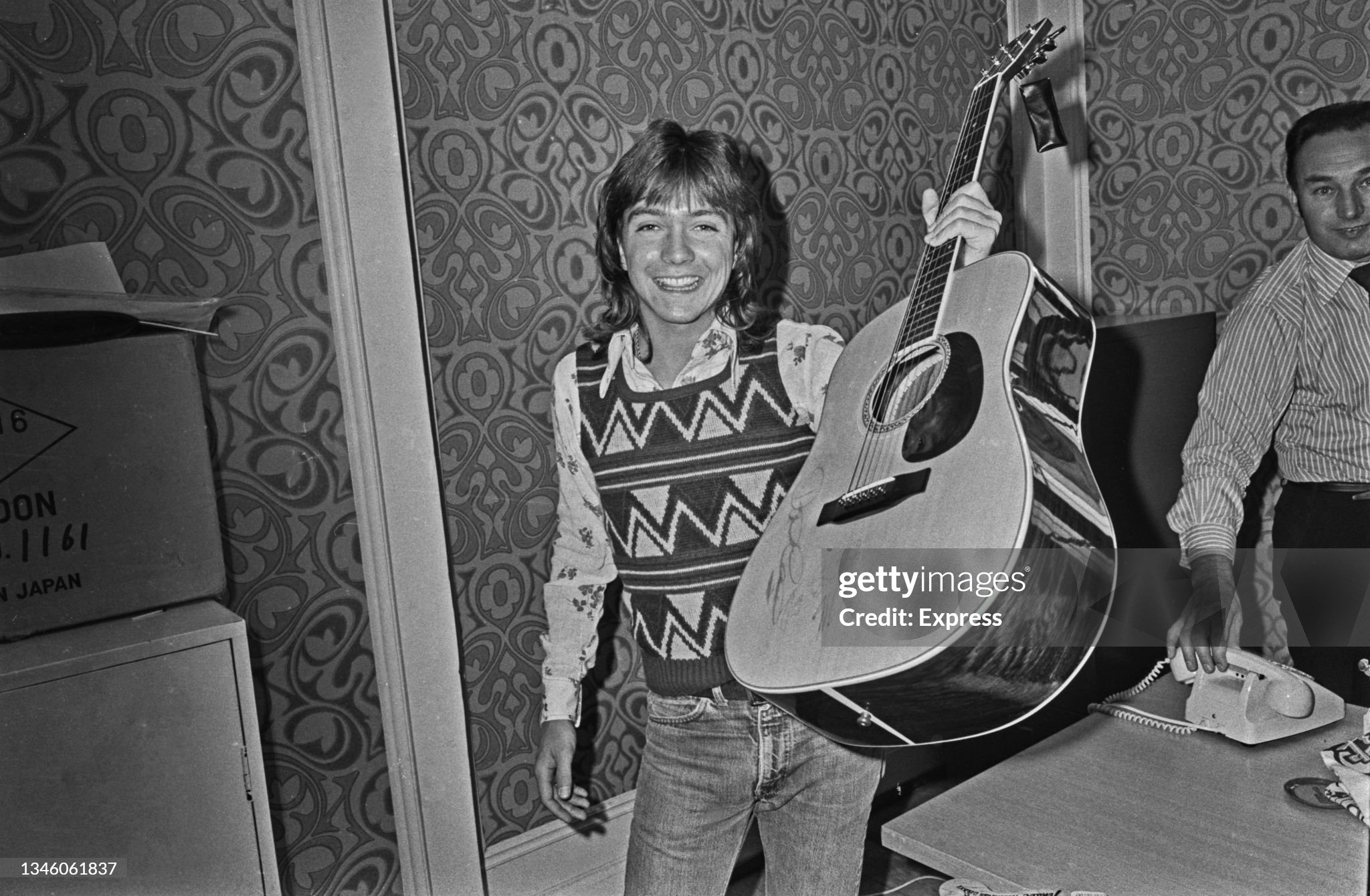
A road-worn little confession disguised as bubblegum pop, “One Night Stand” is really about loneliness in motion—how applause fades, suitcases close, and the heart keeps rolling on.
“One Night Stand” sits at a fascinating crossroads in the David Cassidy universe: it sounds bright and easy, yet its story is quietly adult. The song opens on the road—“Every night… a different town… I sing my song”—and that single image tells you everything you need to know about its emotional weather: constant movement, constant faces, and a kind of tired charm that can feel like freedom until it starts to feel like exile. The writing credit is equally telling: it was written by “,”producer-songwriter”] and Paul Anka, two hitmakers who understood how to slip a real ache inside a melody that goes down smooth.
The most important “at release” facts belong to where the track first lived. “One Night Stand” appears on Sound Magazine, released in August 1971—an album that reached No. 9 on the U.S. Billboard 200 and was certified Gold. The recording date is even documented: “One Night Stand” was cut on May 5, 1971, which helps explain why it has that early-’70s studio polish—sunny on the surface, meticulously built, designed for television and radio but still capable of surprising depth.
Now, about chart ranking: “One Night Stand” itself was not the A-side single being charted at the time. Instead, it became the B-side to It’s One of Those Nights (Yes Love), released in December 1971. That A-side went on to reach No. 20 on the Billboard Hot 100 and No. 2 on Billboard Adult Contemporary in 1972. So if you’re looking for the moment it “arrived” in the public ear, it arrived in the classic old way: by being the song you heard when you flipped the record over—when you stayed a little longer after the obvious hit had finished.
And that is exactly the right fate for a song like this.
Because “One Night Stand” isn’t trying to be the big, declarative center of attention. It’s a small, cinematic scene: a performer drifting from gig to gig, meeting people he doesn’t truly get to know, collecting brief sparks that vanish by morning. The title sounds playful—almost like a wink. But the lyric’s point is sharper: when your life is always moving, intimacy becomes a stopover rather than a home. In that sense, the “one night stand” isn’t celebrated so much as accepted, the way you accept rain on tour. It’s part of the landscape.
What makes the song poignant in the David Cassidy context is how neatly it parallels the idea of fame in that era. Cassidy’s public image—so radiant, so instant, so widely projected—could easily make people forget that performers are often surrounded and still alone. This song quietly restores that human perspective. Even within The Partridge Family world—so often remembered as cheerful, family-friendly pop—“One Night Stand” lets a shadow fall across the stage lights.
Musically, it works because Farrell and Anka write like craftsmen. The structure moves briskly, the hook lands cleanly, but the narrative keeps tugging at the thread underneath the sheen. It’s not a tragedy; it’s a mood: a man learning that charm can’t substitute for roots, and that romance without continuity eventually starts to feel like hunger. That’s why the opening line matters so much—it doesn’t begin with love, it begins with travel. Love is almost an accident along the way.
And when you listen with time in your ears, the song starts to feel like a message in a bottle from early-’70s pop itself: a reminder that even the “light” records often carried real emotional intelligence. They just delivered it gently—no lectures, no heavy-handed confession, only a melody bright enough to get played… and a story sad enough to be remembered.
So while “One Night Stand” may not have its own headline chart peak, it has something rarer: the particular staying power of a B-side that tells the truth. The hit gets you to buy the single; the flip side is the one you keep for yourself.