
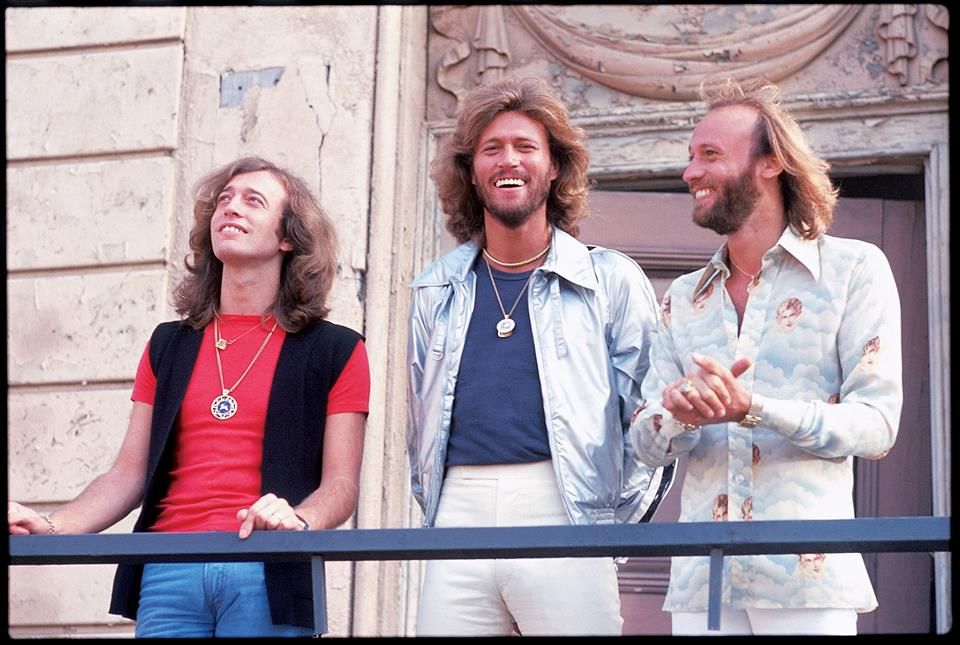
“Big Chance” is a young Bee Gees’ miniature sermon—one quick, wistful burst about pride, escape, and the aching hope that life might still hand you one clean opening.
In the Bee Gees’ long story, “Big Chance” is easy to miss because it was never dressed up as a hit single. Yet it’s precisely the kind of early track that tells you who they were before the world decided what they were. “Big Chance” appears on their Australia-only 1966 album Spicks and Specks (released November 1966 on Spin), recorded earlier that year (April–June 1966) at St Clair Studios in Hurstville, with Nat Kipner producing.
Most importantly, it was written by Barry Gibb—still a teenager, already writing with that curious blend of simplicity and wounded wisdom—and on the recording the lead vocal is Robin Gibb (with Barry also credited on lead vocals in session documentation), a detail that matters because Robin’s tone naturally carried a plaintive, watchful quality even this early. The song itself is tiny—about a minute and forty-something seconds depending on the source/edition—yet it arrives with the emotional weight of a much longer confession.
To place it in its real historical weather, remember what was happening around this album. “Spicks and Specks” (the single) became the Bee Gees’ first major Australian hit in late 1966, even as the group had already decided to uproot and pursue their future in the U.K. That tension—success arriving at the very moment you’re packing your bags—hangs over the whole record. And “Big Chance” feels like a private thought that slips out while the suitcases are still open: the uneasy knowledge that opportunity can be real, but fragile… and that people, in their pride, often do the very thing that keeps them from it.
The title phrase, “Big Chance,” is deceptively plain. It sounds like optimism. But the song’s emotional posture is more complicated: it watches human beings rationalize their exits, their mistakes, their vanishing acts. Without quoting the lyric at length, you can hear the moral observation: we tell ourselves it’s “easier” to walk away than to face what we’ve made—or what we haven’t had the courage to make. That’s a striking theme for a band still years away from international fame. It suggests a songwriter already listening to adult conversation from the corner of the room, noticing how often grown-ups confuse escape with strength.
Musically, it’s very much a 1966 Bee Gees artifact—tight, melodic, and economical, built to make its point and leave you with an echo. The arrangement doesn’t luxuriate; it moves like a quick thought you can’t stop thinking. Robin’s vocal gives it its ache: not dramatic, not showy, just certain in a way that feels older than the calendar. When he sings lines about pride and leaving, there’s a faint chill beneath the pop surface—like the song is warning you that the heart can become its own worst enemy, quietly, politely, while still smiling for company.
What I find most affecting is how “Big Chance” foreshadows the Bee Gees’ lifelong obsession with consequence. Long before the falsetto era, long before disco grandeur, their best songs were always about the emotional bill coming due: the moment after the decision, the moment after the door closes, the moment you realize you can’t talk your way out of what you’ve done. “Big Chance” is an early sketch of that worldview—compressed, youthful, but already unmistakable.
And maybe that’s why it endures for listeners who go digging. It doesn’t beg to be remembered. It simply sits there on Spicks and Specks, a small, sharp shard of insight from three brothers still becoming themselves. A “big chance,” the song implies, isn’t only something the world gives you. Sometimes it’s something you must stop sabotaging—by pride, by fear, by the old habit of running when you should have stayed and tried to be brave.