
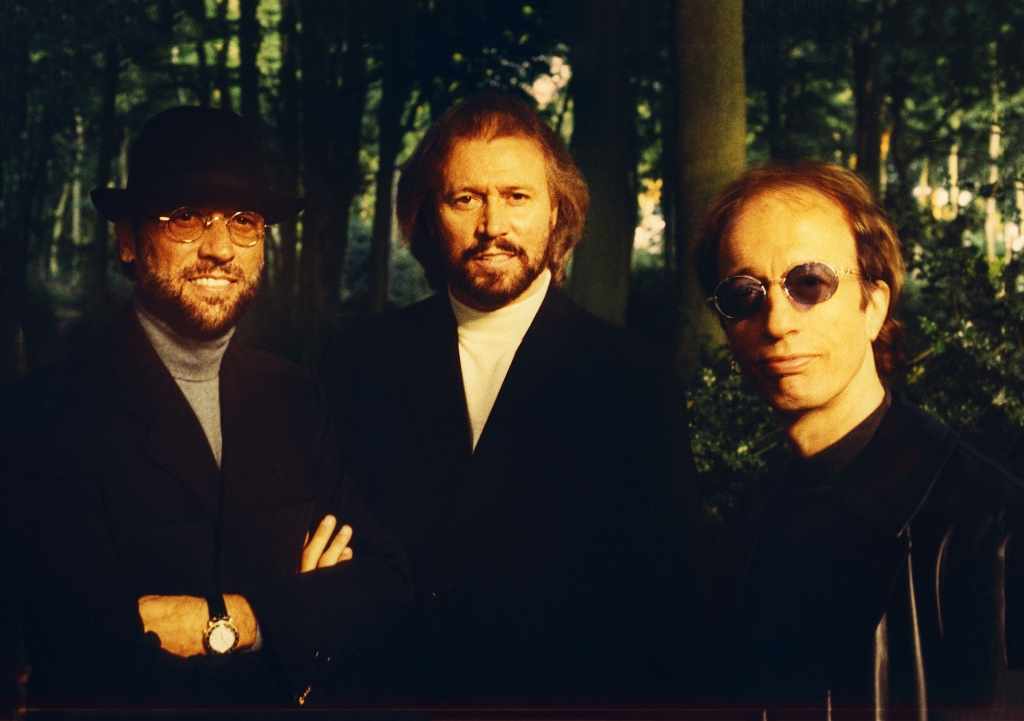
“This Is Where I Came In” sounds like a circle closing gently—three voices returning to their own beginning, not with fanfare, but with the calm of people who’ve already lived the storm.
In the Bee Gees’ long arc—so often measured in eras (the late-’60s balladeers, the ’70s world-conquering hitmakers, the ’90s craftsmen of adult pop)—“This Is Where I Came In” feels like a deliberate act of return. Released as a single on March 5, 2001, it was the only single from their final studio album of the same name. In the UK, it entered the Official Singles Chart on April 7, 2001, and peaked at No. 18, ultimately spending 14 weeks in the Top 100. Those numbers matter because they place the song where it belongs: not in the glare of their biggest commercial triumphs, but in that quieter category of late-career records that feel like letters—written carefully, with nothing left to prove.
The album This Is Where I Came In was released in the UK on April 2, 2001. It reached No. 6 on the UK Official Albums Chart (first chart date April 14, 2001) and stayed on the chart for six weeks. In the United States, it was released on April 24, 2001 (as listed by AllMusic), and Billboard later noted the album’s No. 16 peak on the Billboard 200 (week of May 12, 2001). It’s almost poetic: the Bee Gees didn’t need a comeback narrative, yet the charts still gave them a dignified salute.
But the real “ranking” of “This Is Where I Came In” has always been emotional rather than numerical—because of what it represents. This was the title track of the group’s final album of new material as the Bee Gees. Knowing what came later makes the song land differently: Maurice Gibb died in January 2003, and with that loss, the Bee Gees as a working trio effectively ended. So the title—“This Is Where I Came In”—starts to feel like more than a clever phrase. It becomes the sound of a door gently closing, not slammed, not dramatized—just acknowledged.
The story behind the recording also supports that sense of craft and closure. The album was recorded across 1998–2000, with sessions at Middle Ear in Miami Beach and Area 21 in London, produced by the Bee Gees alongside Peter-John Vettese. Even those locations feel symbolic: Miami warmth and London grey, sunshine and city shadow—two climates the Bee Gees always knew how to translate into melody.
Musically and vocally, the song is a small showcase of what made them singular. The writing credit is the classic trio—Barry Gibb, Robin Gibb, Maurice Gibb—and the vocal structure reflects their late-career identity: Robin takes the first verse and chorus, while Barry steps forward on the second verse and supports the chorus with harmony. It’s not a battle for the spotlight; it’s a handoff. A shared voice, the way families speak—finishing each other’s sentences, even when the sentences are about time passing.
So what is the song really about?
On the surface, “This Is Where I Came In” can be heard as a relationship song—someone looking back at the beginning point, recognizing patterns, realizing how easily love loops into the same mistakes and the same longing. But in a broader, almost autobiographical light, it works as something rarer: a meditation on cycles. The Bee Gees spent decades reinventing themselves, sometimes triumphantly, sometimes painfully, always melodically. And here, they seem to be saying that after all the styles and seasons, you end up facing the same essential questions you started with: Who am I without the noise? What does my voice mean when it’s not chasing the moment?
That’s why the title line feels so loaded. “This Is Where I Came In” isn’t just nostalgia; it’s accountability. It suggests the humility of returning to the starting point and admitting: I can’t pretend I didn’t choose this road. I can’t pretend I’m not shaped by where it began.
For listeners who grew up with the Bee Gees’ harmonies as part of the air—on car radios, at weddings, in living rooms where the evening news ended and music began—this song can carry an extra ache. Not because it’s their most famous melody, but because it feels like the band speaking softly, as if they know the room is listening more closely now. There’s a certain late-in-life wisdom to it: the understanding that the loudest statements rarely last as long as the quiet ones.
And perhaps that’s the final gift of “This Is Where I Came In”: it doesn’t demand you remember a decade, a hairstyle, a trend. It asks you to remember something simpler—the feeling of voices blending, of brothers singing as if one heart had three throats. A circle closes. The bell doesn’t toll; it hums. And somewhere inside that hum is the tender, unmistakable sense of coming home—right to the place where it all began.