
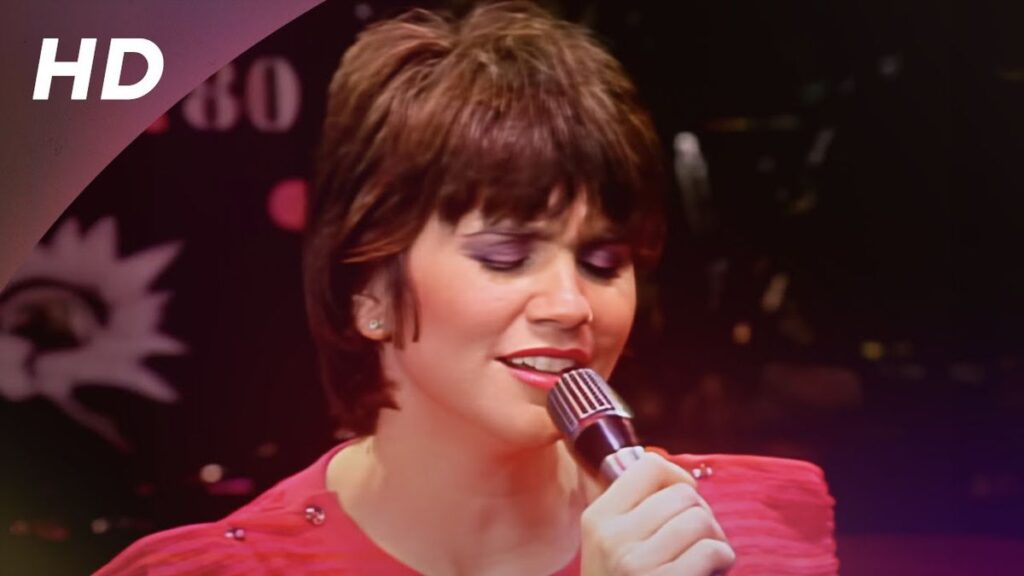
“Look Out for My Love” feels like a late-night warning whispered through a half-open door—tender, uneasy, and painfully aware that love can be both shelter and weather.
On Linda Ronstadt’s 1980 album Mad Love, “Look Out for My Love” arrives like a chill in the middle of a bright room. It isn’t one of the album’s big radio flagships, and that’s part of its strange magnetism: it lives slightly off to the side, where the most revealing feelings often hide. Mad Love was released on February 26, 1980, produced by Peter Asher, and it captured Ronstadt at a daring crossroads—leaning into the nervier, sharper edges of late-’70s/early-’80s rock and new wave while keeping her voice unmistakably her own.
The song’s most important “behind the curtain” truth is authorship. “Look Out for My Love” was written by Neil Young, and it was first released in 1978 by Neil Young with Crazy Horse (associated with Young’s Comes a Time era). Ronstadt didn’t choose it because it was fashionable; she chose it because it fit her emotional temperature. You can hear her recognize the lyric’s mix of affection and unease—the way it warns without shouting, the way it loves without pretending love is always safe.
And even though “Look Out for My Love” wasn’t pushed as a headline A-side, it did step briefly into the singles world. Ronstadt’s label placed it as the B-side to her 1980 single “I Can’t Let Go,” which was released on June 10, 1980. That’s the kind of detail older record lovers understand instinctively: sometimes the song that stays with you the longest isn’t the one on the front of the 45. It’s the one you found by turning the record over, when the room was quieter and you weren’t trying to impress anyone with your taste.
So what is this song really saying? In Young’s writing, “love” can feel like a force of nature—beautiful, necessary, and capable of wreckage. The lyric imagery carries a sense of motion and apprehension: the feeling that things are changing, that someone is about to arrive (or return), and that the heart doesn’t know whether to brace itself or open the door. In Ronstadt’s hands, that uncertainty becomes almost physical. She doesn’t sing it like a lecture or a threat. She sings it like someone trying to keep a loved one from getting hurt—including by her.
Musically, Mad Love frames “Look Out for My Love” in a modern, taut setting—less country glow, more electric edge—yet Ronstadt’s voice remains the warm human center. That contrast is the secret sauce: the arrangement suggests tension and speed, but her phrasing still carries the old Ronstadt virtues—clarity, emotional directness, and that uncanny ability to sound both strong and exposed in the same breath. Where some singers would lean into drama, she leans into truthfulness. She lets the line sit there, unadorned, as if she knows the listener can handle it.
The meaning, ultimately, is not simply “be careful.” It’s something deeper and sadder: be careful because I care—and because caring doesn’t guarantee safety. “Look Out for My Love” is about recognizing that love has consequences, that closeness changes people, that even good intentions can leave bruises. And yet it’s also a song that refuses cynicism. It warns because it still hopes. It reaches because it still believes there is something worth protecting.
If you play it today, it feels like a message sent from 1980 to the present: don’t confuse intensity with security, don’t confuse familiarity with kindness, and don’t ignore that quiet inner voice when it tells you something is shifting. In that sense, Linda Ronstadt didn’t just cover Neil Young—she translated him into her own emotional language: luminous, practical, and heartbreakingly sincere.