
“Sunflower” is a gentle benediction—an ordinary morning turned sacred, where love feels less like fireworks and more like steady light that keeps coming back.
What makes “Sunflower” such an unusual entry in Neil Diamond’s story is that it is his song, yet for most of its life it belonged to someone else’s voice. Diamond wrote “Sunflower,” but the first widely known recording was by Glen Campbell, released as a single on June 20, 1977, as the second single from Campbell’s album Southern Nights. That 1977 release wasn’t a minor footnote either: Campbell’s “Sunflower” became his eighth and final No. 1 on Billboard’s Easy Listening/Adult Contemporary chart (one week at No. 1), and it also reached No. 39 on the Billboard Hot 100 and No. 4 on the U.S. country chart. In other words, the song bloomed in public—just not in its writer’s own garden.
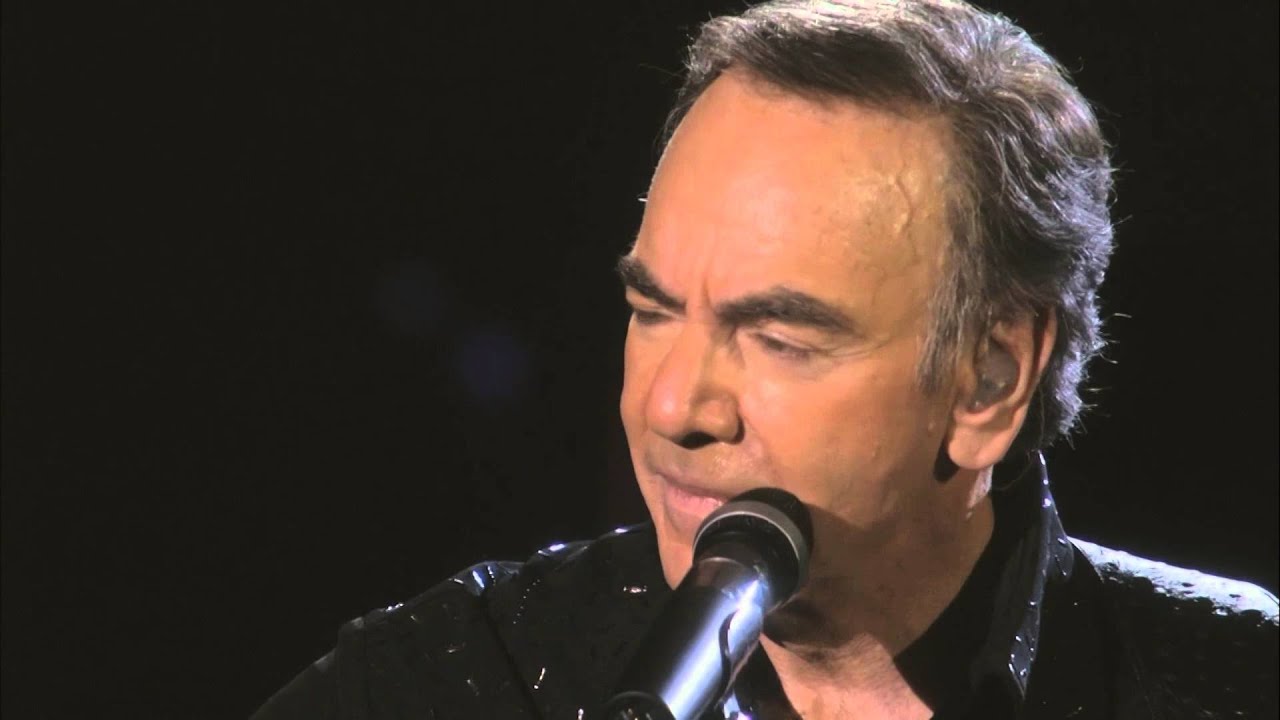
The twist, and the reason the title suddenly feels almost symbolic, is that Neil Diamond did not release his own version until late 2018, when it was included on his 50th Anniversary Collector’s Edition set. Apple Music dates Diamond’s track release to November 30, 2018. That means “Sunflower” spent more than forty years as a kind of musical “letter” with someone else’s signature on the envelope—famous, loved, and sung in the world, while its original author stayed just out of frame.
There’s something quietly moving about that. Diamond’s songwriting has always carried a gift for direct address: he writes like a man speaking to one person in a crowded room, making the crowd disappear. “Sunflower” fits that tradition perfectly in spirit—warm, plainspoken, morning-bright. Even the title suggests a love that doesn’t demand drama: a sunflower doesn’t seduce the sun; it simply turns toward it, faithfully, day after day. In the best love songs, the romance isn’t a storm. It’s a habit of the heart.
In Glen Campbell’s hands, that habit becomes luminous. Campbell was a master of making tenderness sound effortless—his voice could smile without grinning, ache without breaking. So when he sings “Sunflower” in 1977, at the height of his adult-pop and country-pop reign, the song feels like open windows: easy air, soft optimism, a promise small enough to keep. That’s likely why it performed so strongly on the Adult Contemporary chart—because it speaks the language of reassurance rather than conquest.
But when you return to the song knowing that it was written by Neil Diamond, another layer appears: the song starts to feel like one of Diamond’s recurring themes dressed in gentler clothes. Again and again, his work circles the desire to be a steady presence—someone who shows up, someone who stays, someone who can make a hard world feel briefly kinder. “Sunflower” belongs to that emotional family, even if the melody traveled first under Campbell’s name.
So what does it mean that Diamond waited until 2018 to release his own recording? It suggests a kind of patience that is rare in pop mythology. Most writers rush toward ownership, toward being “first.” Diamond, knowingly or not, let the song become what it wanted to become in the world—then, decades later, he finally stepped forward and said, quietly: I remember this one. It was mine too.
That is why “Sunflower” endures as more than a pleasant relic. It’s a song with two lifetimes: a 1977 hit life in Glen Campbell’s golden, comfort-giving voice, and a late-life return in Neil Diamond’s own catalog—like a circle gently closing. In the end, “Sunflower” doesn’t chase the spotlight. It is the spotlight—soft, morning-colored, and faithful enough to rise again.