
“Stayin’ Alive” is a pulse you can lean on—three minutes of swagger that somehow carries a quiet survival prayer beneath the glitter.
Few records announce their era as clearly as “Stayin’ Alive”—and fewer still outlive that era without turning into a museum piece. The 2007 Remastered Saturday Night Fever LP Version you’re listening to is the full 4:45 album take, the one that breathes just a little longer and lets the groove stretch its legs before the fade. It’s also the version that matches how the song originally lived inside the double-LP phenomenon Saturday Night Fever, released November 15, 1977 on RSO Records.
The essential chart story is carved into pop history. Released as a single on December 15, 1977 (with “If I Can’t Have You” as the B-side), “Stayin’ Alive” rose to No. 1 on the U.S. Billboard Hot 100 for four consecutive weeks, beginning the week of February 4, 1978. In the UK, it peaked at No. 4—a reminder that even global anthems can have slightly different destinies depending on which side of the Atlantic you were dancing on.
But numbers only explain the “how big.” They don’t explain the strange emotional trick this song pulls off: sounding like pure confidence while admitting, almost against its will, to a private panic. That tension is right there in the lyric’s core—macho strut in the walk, then the crack in the mask: “life’s going nowhere, somebody help me.” Even AllMusic criticism noted how the bravado is balanced by those flashes of desperation—city-life nerves wrapped in a rhythm that won’t let you fall.
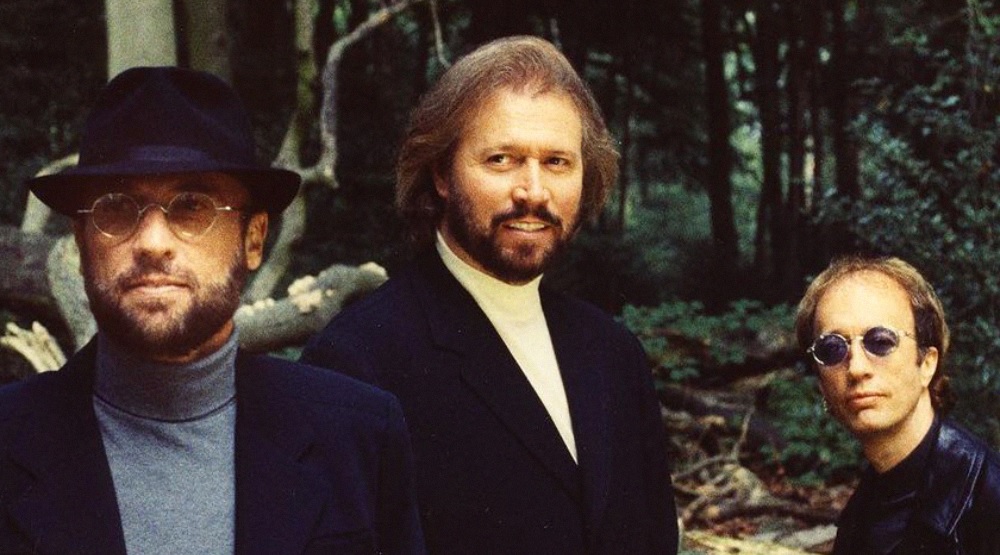
The performance itself is built like a machine that learned how to feel. Barry, Robin, and Maurice Gibb wrote the song and co-produced it with Albhy Galuten and Karl Richardson. And in one of pop’s most famous studio workarounds, a real-life interruption shaped the record’s heartbeat: when drummer Dennis Bryon had to leave the session due to a family death, the group ended up constructing the beat by looping two bars from the already-recorded “Night Fever” drum track. That detail matters because it fits the song’s theme: survival through improvisation, momentum created when life doesn’t give you ideal conditions.
The “LP version” identity is also more than trivia. The album cut is 4:45, while the single edit runs about 3:25—a tighter radio suit for the same body. On the longer version, the groove has time to hypnotize. Those little instrumental breaths—often shaved away for airplay—make the song feel less like a slogan and more like a lived-in night: the streetlights passing, the mind racing, the feet refusing to stop.
And then there’s the cultural footprint you can’t separate from the sound. “Stayin’ Alive” sits in the opening of Saturday Night Fever, and that placement helped fuse the track to an image of forward motion—walking, striding, refusing to disappear. The soundtrack itself became a once-in-a-generation monument: it spent 24 straight weeks at No. 1 in the U.S. during 1978 and helped define disco as not just a genre, but a social atmosphere. When you hear the song now, you’re not only hearing a hit—you’re hearing the way an entire decade learned to turn anxiety into style, and loneliness into choreography.
The 2007 remaster doesn’t change what the Bee Gees did; it changes how clearly you can stand in the room with them. On streaming listings, it’s explicitly labeled “Stayin’ Alive – 2007 Remastered Version” and keeps the 4:45 runtime—faithful to that LP identity. What comes through most, in a good remaster, is the architecture: the tightness of the rhythm guitar, the spring of the bass, the clean, stacked harmony that sounds like three brothers arguing with time and winning—at least for the length of a song.
And that’s why “Stayin’ Alive” still lands. Beneath the disco polish, it’s a record about keeping your head above water—about moving so your thoughts don’t swallow you whole. It doesn’t promise that life makes sense. It promises something humbler and more useful: a beat, a breath, a reason to take the next step—ah, ha, ha, ha… stayin’ alive.