
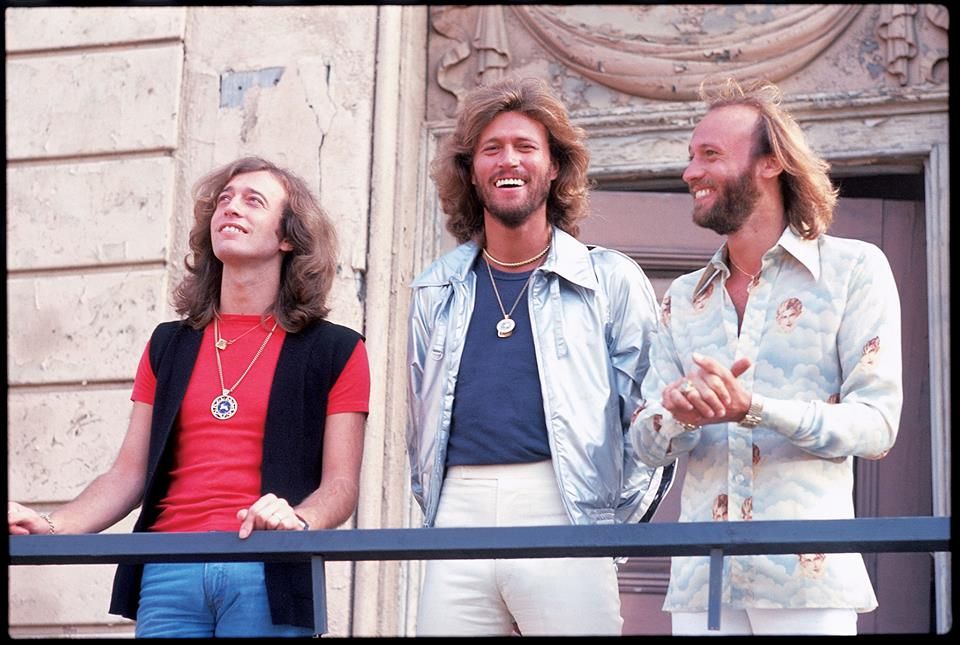
“Down to Earth” is the Bee Gees’ gentle command to step back from the clouds—an almost storybook call for perspective, where wonder and worry look small once you climb high enough to see the whole world at once.
If you’re coming to Bee Gees songs through the disco glare of the late ’70s, “Down to Earth” can feel like opening an older drawer and finding a different kind of treasure: whimsical, poetic, slightly surreal, and quietly serious underneath. The track belongs to their 1968 studio album Idea (released in August 1968), and it was written by Barry, Robin, and Maurice Gibb. It was not released as a standard single, so it doesn’t have a “debut chart position” of its own—but the album that carried it certainly made an impact: Idea reached No. 4 on the UK Albums Chart and No. 17 in the United States (Billboard 200 listing).
That context matters, because Idea sits at a fascinating hinge-point in the Bee Gees’ story: the group still steeped in the ornate pop craftsmanship that made their late-’60s records shimmer, yet already chasing stranger colors—psychedelic pop and art-rock touches that gave their songwriting room to roam. And “Down to Earth” is one of those songs that roams with purpose. It doesn’t sprint toward a radio-friendly punchline. It strolls, it points, it invites you to look.
There’s also a small, almost magical piece of “behind the scenes” history: “Down to Earth” was recorded on 8 January 1968, the same day the group recorded “The Singer Sang His Song.” That date places it right in the heart of the band’s intensely productive London period—when ideas seemed to arrive faster than they could be neatly explained. And you can hear that in the song’s character: it has the feeling of a thought that became music before anyone had time to overthink it.
Lyrically, “Down to Earth” is a classic late-’60s kind of parable—playful on the surface, philosophical underneath. The opening address, “Down to earth, my merry men…,” has the flavor of a fable, like a narrator tapping a map and saying: come closer, there’s something you ought to notice. It’s the Bee Gees imagining a world seen from above, where “millions and millions” of lives appear at once—tiny, busy, fragile. In that widened view, human drama doesn’t disappear, but it changes scale. The song becomes a reminder that perspective is not coldness; it can be mercy. When you’re overwhelmed, the mind narrows. “Down to Earth” tries to widen it again—softly, almost kindly, as if to say: lift your head, breathe, see further.
Musically, it carries that Idea-era Bee Gees signature: bright melodic turns, layered harmonies, and a sense that the band is painting with careful brushstrokes rather than thick paint. There’s a sweetness in the phrasing that keeps the message from sounding preachy. The Bee Gees were never at their best when they lectured; they were at their best when they sang a thought—when the melody itself did the persuading. Here, the tune feels like a hand on the shoulder, not a finger wagging in the air.
What’s especially moving, heard now, is how “Down to Earth” foreshadows the Bee Gees’ lifelong talent for translating big, abstract feelings into something you can hum. Later, they’d do it with yearning and pulse, with heartbreak turned into dancefloor oxygen. But in 1968, they did it with wonder—an almost innocent belief that stepping back might save you, that looking outward might quiet the noise inside.
So while “Down to Earth” may not come with its own chart headline, it carries a different kind of prestige: it’s a deep-cut that reveals the band’s inner weather. It’s the sound of the Bee Gees thinking in melody—inviting you to stand on the chair, as the lyric suggests, and see what’s been there all along: a crowded world, a small self, and the oddly comforting truth that sometimes the most human thing you can do is simply come down to earth.