
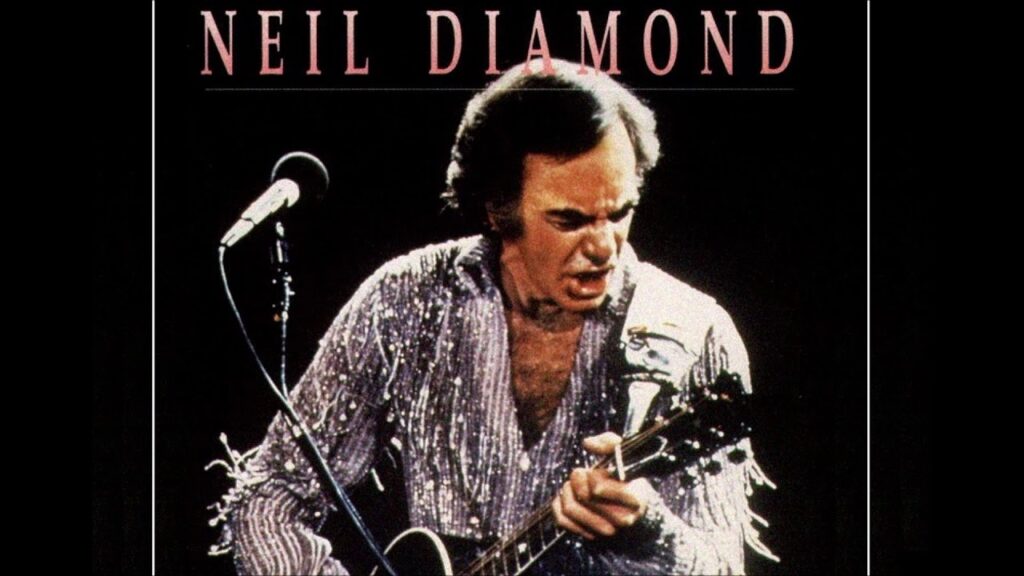
The artist as his own fading masterpiece—Neil Diamond’s portrait of creation, loss, and the weary beauty of survival.
When Neil Diamond released “The Last Picasso” in 1974 as part of his lush, introspective album Serenade, he was at the height of his creative powers and commercial success. The album reached the upper ranks of the Billboard charts, buoyed by singles that showcased Diamond’s unmistakable blend of pop sophistication and emotional candor. Though “The Last Picasso” was not released as a single in all territories, it became one of the record’s defining statements—an atmospheric meditation that stood apart from the radio-driven tracks surrounding it. In a decade when Diamond’s voice could fill arenas, this song revealed something more intimate: a man standing before his own artistic reflection, reckoning with what it means to keep painting—to keep creating—when time has already begun to steal color from the canvas.
There is a duality at play within “The Last Picasso.” On the surface, it is an ode to the mythic figure of Pablo Picasso—the archetype of the restless artist who never ceased reinventing himself. Yet beneath that surface, Diamond’s lyricism draws us inward, turning the painter into a mirror for the songwriter himself. The figure he sketches is both legendary and lonely, a man whose genius isolates him as much as it exalts him. Diamond sings not as a distant admirer but as a peer haunted by similar shadows: the endless pursuit of perfection, the sacrifices made in devotion to craft, and the quiet terror that each new creation might be the last burst of brilliance before decline.
Musically, “The Last Picasso” is quintessential mid‑’70s Diamond—grand yet restrained, textured with orchestral flourishes that seem to shimmer like light on aged varnish. The arrangement unfolds like an exhibition hall opening its doors: strings sweep in gentle arcs; piano chords trace deliberate strokes; subtle percussion lends heartbeat and motion. But at its core lies that unmistakable voice—husky with experience, imbued with both authority and fragility. It is as though Diamond is not only describing Picasso but embodying him: surveying his life’s work with awe and exhaustion intertwined.
What gives the song its lingering power is its universality. You need not be a painter—or even an artist—to feel its weight. It speaks to anyone who has wrestled with legacy, who has stared into the twilight of their own ambitions and asked whether their efforts will endure once they are gone. In that sense, “The Last Picasso” transcends biography or homage; it becomes a hymn to persistence amid impermanence. Diamond captures that rare moment when creativity and mortality intersect—a moment where art is no longer just expression but evidence of existence itself.
As Serenade plays on, “The Last Picasso” stands like a quiet gallery corner—beautifully lit, reverent, slightly melancholy. Here, Neil Diamond doesn’t simply sing about an artist; he becomes one painting with sound instead of pigment, leaving us with an image both poignant and eternal: every artist is, in their own way, the last Picasso.