
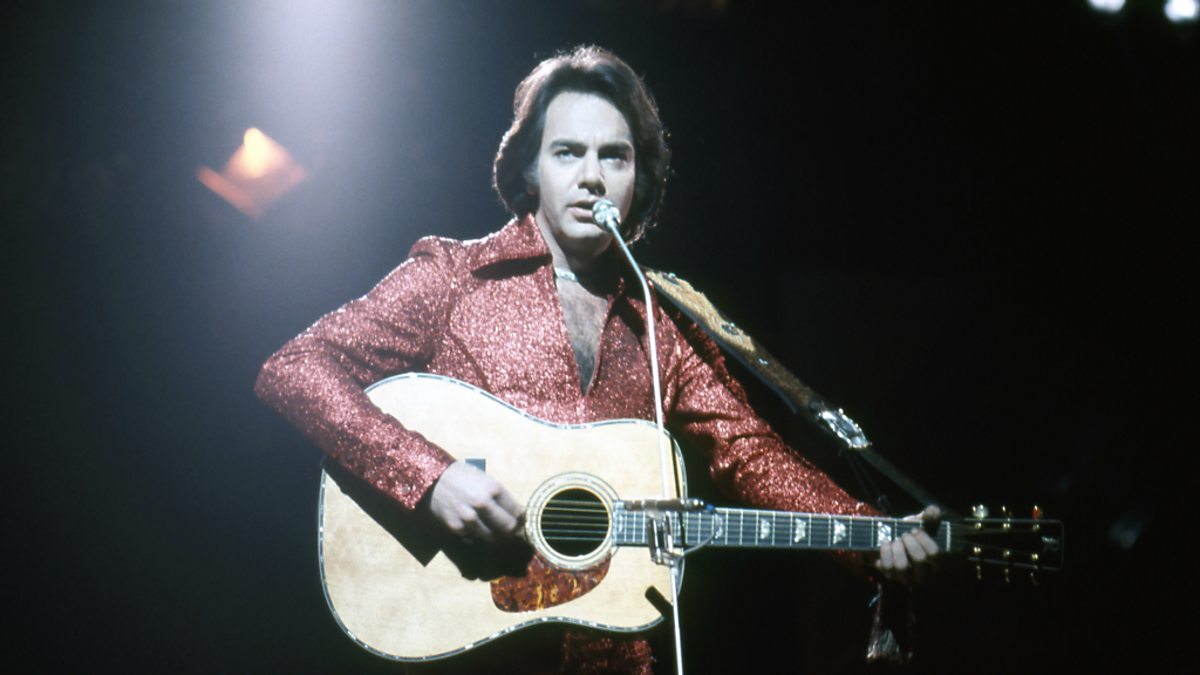
“Summerlove” drifts like a warm postcard from a season that’s already gone—sweet on the surface, but quietly haunted by the knowledge that summers don’t stay.
Neil Diamond recorded “Summerlove” for The Jazz Singer soundtrack, released in November 1980, and it sits there like a softer candle among brighter flames—track 7, tucked between “On the Robert E. Lee” and “Hello Again.” The album itself is one of those rare cases where the music outgrew the movie in cultural footprint: The Jazz Singer soundtrack became Diamond’s biggest-selling U.S. album, selling over 5 million in the United States and reaching No. 3 on the pop albums chart (Billboard 200). That is the world “Summerlove” comes from—not a minor side project, but a mainstream triumph, a late-era peak wrapped in cinematic ambition.
The song’s authorship tells you why it feels slightly “outside” the typical Diamond lane. “Summerlove” is credited to Neil Diamond and Gilbert Bécaud (music/lyrics), with Bob Gaudio producing—an intriguing combination that hints at European romanticism meeting American pop craft. Bécaud’s name carries its own kind of old-world elegance; Diamond’s brings the plainspoken, chest-level sincerity he could deliver like nobody else. Put them together and you get a song that doesn’t swagger. It sighs. It remembers.
What matters most about “Summerlove” is the way it behaves inside The Jazz Singer. The soundtrack is often recalled for its big, chart-driving moments—songs that stamped themselves onto radio and national memory. Wikipedia notes that three songs from the album became Top 10 hits on the Billboard Hot 100: “Love on the Rocks” (No. 2), “Hello Again” (No. 6), and “America” (No. 8). “Summerlove” isn’t one of those headline climbers, and that’s exactly why it can feel so personal: it’s not performing for the spotlight. It’s speaking into the half-light, into that quieter hour when the heart finally tells the truth.
The meaning of “Summerlove” is built into its title—two words that already contain their own ending. “Summer” is a season we romanticize because it’s brief. “Love,” when paired with summer, becomes a beautiful gamble: intense, glowing, and—if we’re honest—often temporary. The song lives in that tender contradiction. It invites you to remember how easy it is to believe in forever when the days are long, the nights are soft, and the future feels like it can wait. Then, gently, it reminds you that the future never waits. It arrives like autumn air through an open window.
There’s also something especially poignant about hearing this sentiment in 1980 Neil Diamond—a performer already seasoned by decades of fame, already carrying the weight of earlier romantic epics, already aware (whether he said it out loud or not) that the heart keeps a ledger. By the time The Jazz Singer arrived, Diamond wasn’t writing from naïve youth. He was writing from a place that knows how memory works: how it polishes the good parts, blurs the rough edges, and leaves you with a single ache you can’t quite name. That ache is the true “summer love”—not just the romance itself, but the aftertaste of it.
And the “story behind” the soundtrack adds one more layer of bittersweet color. The album was released on Capitol Records—a deviation from Diamond’s then-usual label situation—because the film was produced by EMI Films, linked to Capitol’s corporate family at the time. Even the business details feel like a reminder of how art is often carried by circumstance. Yet somehow, despite industry machinery and cinematic expectations, the soundtrack still delivers moments that feel private. “Summerlove” is one of them.
If you listen to it as a stand-alone song, it can feel like an old photograph warmed by the sun: charming, romantic, easy to hold. But if you listen with a little more life behind you, it starts to sound like something else—a quiet acknowledgment that the sweetest chapters are often the shortest, and that we keep returning to them not because we think we can relive them, but because they once made us feel fully alive. Neil Diamond, with his gift for turning plain language into emotional architecture, doesn’t try to rescue the season. He simply lets it glow—long enough for you to remember what it was like to believe, even briefly, that summer could last.