
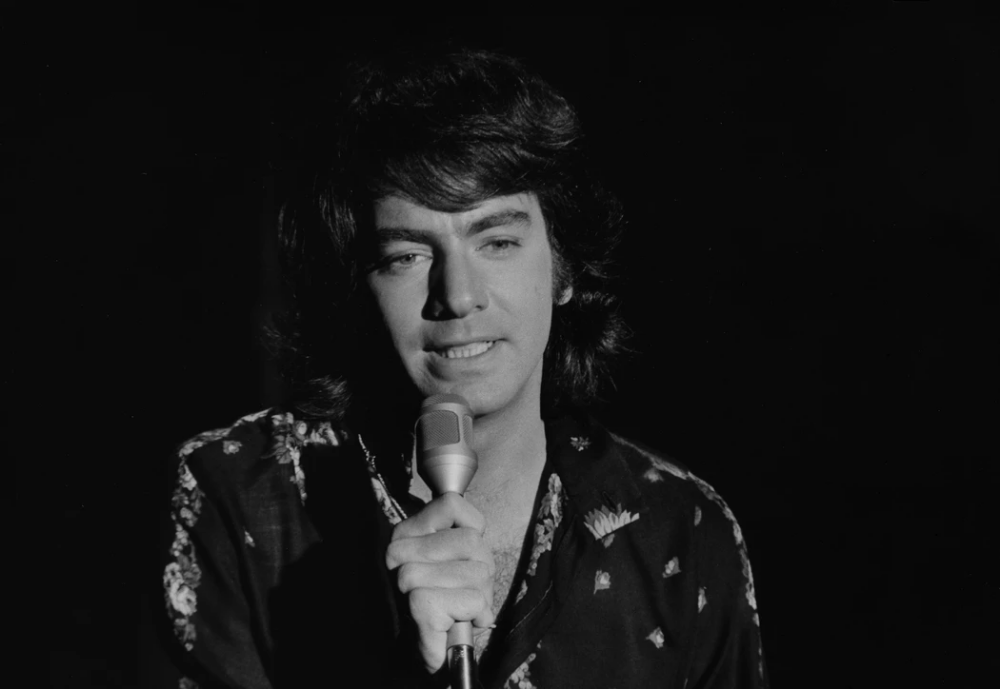
“Oh Mary” is a late-night confession—Neil Diamond singing into the silence until a name becomes a prayer, and longing becomes the only honest language left.
“Oh Mary” opens Neil Diamond’s 2005 album 12 Songs like the first light in an empty room—soft, unguarded, and a little startled by its own truth. Released on November 8, 2005, 12 Songs marked Diamond’s return to a stripped, songwriter-forward approach under producer Rick Rubin, and the album’s impact was immediate: it reached No. 4 on the Billboard 200, one of Diamond’s strongest chart showings in decades. In that context, “Oh Mary” isn’t just Track 1—it’s the doorway Rubin and Diamond wanted you to walk through first: no spectacle, no old tricks, just a man, a melody, and a heart that refuses to stay quiet.
The basic facts are elegantly simple. “Oh Mary” is written by Neil Diamond and runs 5:12, a generous length that allows the song to unfold like memory—circling, returning, and deepening rather than racing toward a chorus built for radio. It sits atop an album recorded across April 2004 to summer 2005, shaped in studios around Los Angeles and Hollywood, where Rubin famously pushed Diamond back toward essentials—especially the physical act of playing, not just singing.
That “story behind it” matters, because “Oh Mary” sounds like a song written in the quiet after a long life of being heard by crowds. Wikipedia’s album history notes that Diamond began writing material again after touring, retreating to a Colorado cabin where he found himself snowed in and working on new songs—an image that fits “Oh Mary” perfectly: a man alone with time, with weather, with the unglamorous hours when the mind stops performing and starts remembering. Rubin then encouraged Diamond to keep writing for many months and brought in musicians associated with the intimate, organic feel of Rubin’s Johnny Cash “American Recordings” era—players like Mike Campbell and Benmont Tench appear in the album personnel.
And you can hear that philosophy even if you don’t know a single credit. “Oh Mary” is built around restraint. It doesn’t “arrive” with a bang; it approaches you. The vocal is close, human, slightly weathered in the best way—like someone speaking softly because he’s afraid that if he raises his voice, the emotion will break into something messy. The production leaves space where older pop records might have filled every corner. Rubin’s great gift, when he’s at his best, is letting the room be part of the performance—letting silence do some of the storytelling.
As for meaning: “Oh Mary” is not a plot-driven narrative so much as a psychological one. The repeated calling of “Mary” functions like fixation—like the mind stuck on a single face, a single absence, a single unfinished conversation. The name becomes less a person than a symbol: of longing you can’t talk yourself out of, of love that doesn’t conclude neatly, of the way desire can feel holy and humiliating at the same time. The song’s power is that it doesn’t pretend the speaker is above any of this. There’s no heroic posture—only the ache of needing, and the uneasy awareness of how much power that need has.
What makes this especially poignant in Diamond’s catalog is timing. In 2005, he wasn’t writing as the young Brill Building grinder or the early-’70s arena poet. He was writing as a man in his sixties, with a long history behind him—success, reinvention, the strange loneliness that can exist even inside a celebrated life. 12 Songs was widely discussed as a creative refresh precisely because it sounded so unvarnished—Diamond returning to the craft of the song itself, without the big stage lights. And “Oh Mary”, placed first, signals the album’s intent: listen closely—this is personal.
In the end, “Oh Mary” endures because it treats longing not as teenage drama but as a lifelong condition—something that can revisit you even when you’ve “made it,” something that can still knock on your door at night. It’s a song for anyone who has ever spoken a name into the dark—not to summon a person back, but to prove to themselves that the feeling was real. And in that quiet insistence, Neil Diamond doesn’t just sing about love. He shows how love, even when it hurts, can be the last honest thing we have.