
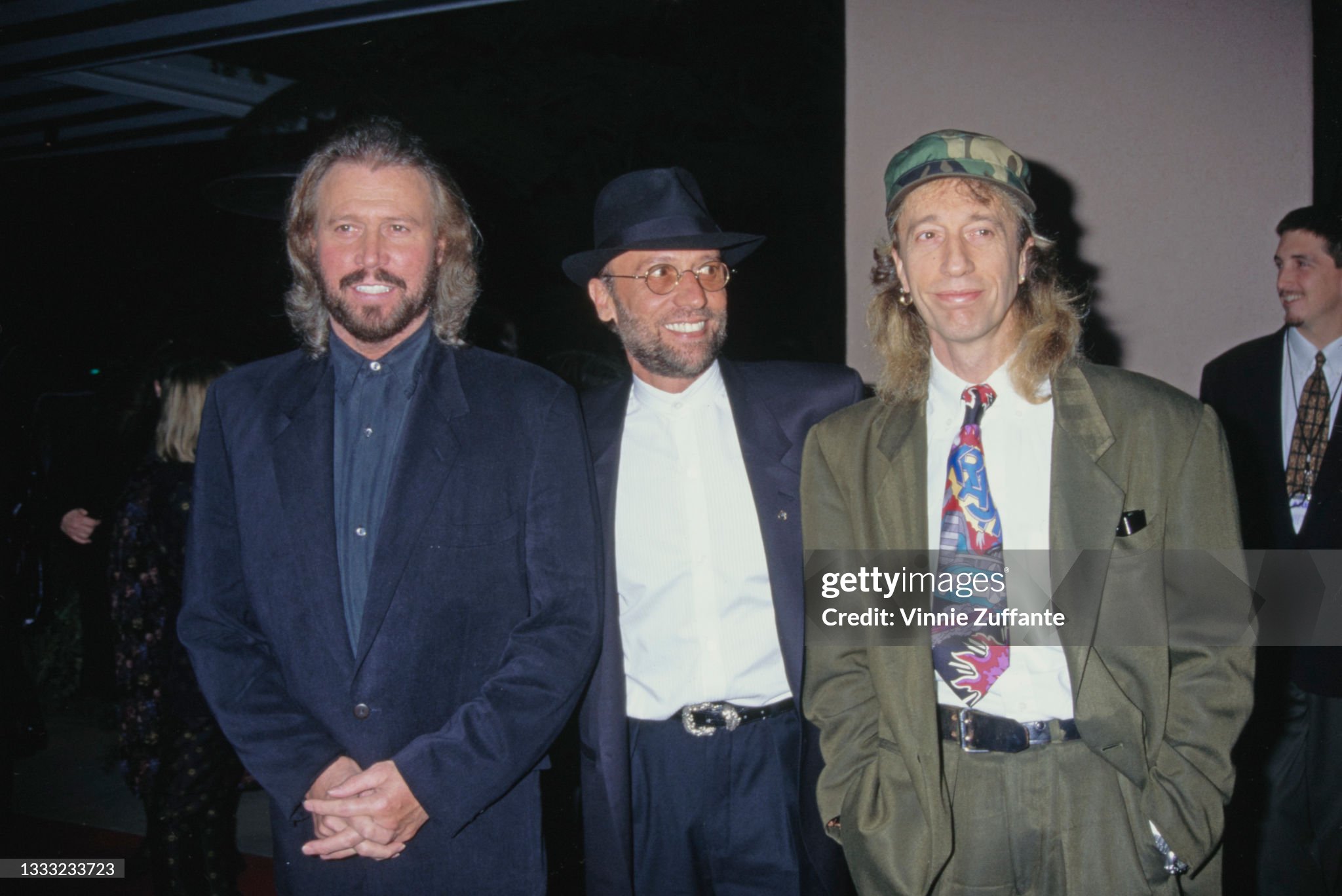
Long before the mirrored lights and fevered dance floors, “Massachusetts” revealed the Bee Gees as masters of homesickness, melancholy, and emotional atmosphere — a song so hushed and aching it still feels like loneliness set to evening light.
When the Bee Gees released “Massachusetts” on September 19, 1967, they were still years away from the disco era that would later define them in the public imagination. Yet this single already showed something just as important, and in some ways even more enduring: their instinct for sorrow, atmosphere, and emotional storytelling. The song was released ahead of Horizontal, later appearing on that 1968 album, and it became the group’s first UK No. 1 single, while also reaching No. 11 on the Billboard Hot 100 in the United States. It went to No. 1 in a long list of countries and sold in enormous numbers worldwide, making it not a hidden gem discovered later, but a major early Bee Gees statement recognized in its own time.
That matters, because “Massachusetts” proves the Bee Gees were never merely a dance band waiting for the 1970s to arrive. Even in 1967, they were capable of creating records that felt intimate, wounded, and strangely cinematic. The song was written by Barry, Robin, and Maurice Gibb, with Robin Gibb taking the lead vocal, and it came from a very specific imaginative idea: an answer to the flower-power mythology of San Francisco. Rather than celebrating the hippie dream, the song imagines someone who has gone west toward that cultural promise and ended up longing for home instead. The famous image of “the lights all went out in Massachusetts” suggests not a literal blackout, but a place emptied by yearning, as though everyone had already gone chasing another version of happiness somewhere else.
That is one reason the song still feels so haunting. It is not a protest song. It is not a psychedelic anthem. It is not even, in the usual sense, a love song. It is a homesick song, and homesickness can cut deeper than romance because it carries more than one kind of loss. In “Massachusetts,” what aches is not only the absence of a place, but the absence of certainty, belonging, and emotional shelter. The singer has gone outward into the world, and the world has not healed him. So he turns back in memory. That emotional movement gives the record its quiet power. It sounds like retreat, but also revelation.
There is also something deeply poignant in the fact that the brothers had never actually been to Massachusetts when they wrote it. They were in New York, writing in the Regis Hotel, and they were drawn partly to the sound of the state’s name itself. The song was also originally intended for The Seekers, but when that did not happen, the Bee Gees recorded it themselves. Those details only deepen the song’s mystery. This was not autobiography in the narrow sense. It was imagination reaching toward emotional truth. And somehow that distance makes the song feel more universal, not less. Massachusetts becomes less a real destination than a spiritual one — the name of the place the heart wants to return to when everything else has turned uncertain.
Musically, the record is just as revealing. It was recorded in August 1967 at IBC Studios in London, and the arrangement by Bill Shepherd gives it a fragile, almost suspended beauty. The performance is brief — only about 2 minutes 22 seconds — yet it leaves an afterimage much larger than its length should allow. Robin’s lead vocal is central to that effect. He sings with the kind of tremulous sadness that would become one of the Bee Gees’ great emotional signatures. There is no bravado here, no dramatic overstatement. The grief is carried in the phrasing itself, in the sense that every line is already half a memory while it is being sung.
This is why “Massachusetts” remains such powerful evidence against the idea that the Bee Gees were only a dance-era phenomenon. Of course, they would later remake the sound of pop with “Jive Talkin’,” “Night Fever,” and “Stayin’ Alive.” But songs like “Massachusetts” remind us that before all that rhythmic brilliance, there was already an extraordinary gift for melancholy. They could write a melody that felt like fading daylight. They could make longing sound graceful. They could turn a simple pop single into something that seemed to hold distance, memory, and emotional exile all at once.
Perhaps that is why the song lingers so strongly now. It belongs to 1967, certainly, but it does not feel trapped there. Its sadness is too elemental for that. The record understands something timeless: that sometimes the farther people go in search of freedom, excitement, or reinvention, the more sharply they begin to miss the place — real or imagined — where they once felt known. In “Massachusetts,” the Bee Gees gave that feeling a melody so soft and mournful that it still seems to arrive through mist. And that is why the song endures as an early masterpiece: not simply because it was a hit, but because it revealed, long before disco ever crowned them, how beautifully the Bee Gees could break the heart.