
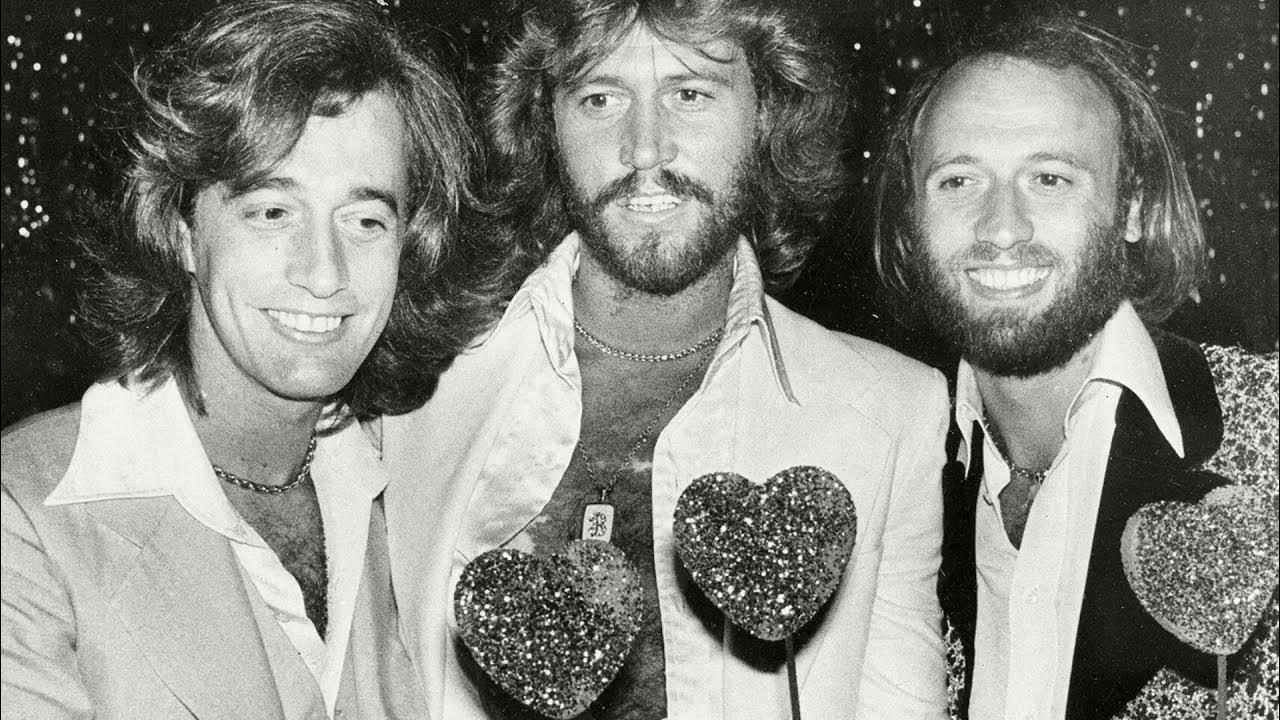
“Love You Inside Out” catches the Bee Gees at the very peak of their late-70s power—where disco turns intimate, desire turns elegant, and confidence glides in without ever having to raise its voice.
By the time “Love You Inside Out” arrived in the spring of 1979, the Bee Gees were no longer simply hitmakers. They were a phenomenon moving with the kind of inevitability pop music only grants a few artists in any generation. Released as a single on April 6, 1979, from the album Spirits Having Flown, the song became the group’s ninth and final No. 1 on the Billboard Hot 100, reaching the top for one week in June 1979. In the UK, it peaked at No. 13. Those numbers matter, but the real story is even more impressive: it was the third U.S. No. 1 single from Spirits Having Flown, following “Too Much Heaven” and “Tragedy,” and it extended the Bee Gees’ astonishing run of six consecutive U.S. chart-toppers in just over a year. By then, they were not chasing the late 70s—they were defining them.
That is what makes “Love You Inside Out” so thrilling. It sounds like success, yes—but more than that, it sounds like artists who know exactly who they are. There is no hesitation in it. No awkward reaching. No strain to appear modern, sensual, or cool. The song simply inhabits those qualities as naturally as breath. It is full of desire, but not desperate desire; full of romance, but not innocence. This is grown-up attraction wrapped in satin rhythm. The title alone suggests both tenderness and total surrender, and the record delivers that promise with remarkable poise. The Bee Gees do not attack the listener here. They seduce with control.
Part of that power comes from context. Spirits Having Flown, released in January 1979 and hitting No. 1 on both the UK Albums Chart and the Billboard 200, was the Bee Gees’ first major studio statement after the world-changing impact of Saturday Night Fever. That placed them in a difficult position. They had become closely identified with disco, and Barry Gibb openly pushed back against the idea that the group was only a dance act. On Spirits Having Flown, they answered that pressure not by retreating from rhythm, but by broadening it—bringing in soul, pop, intricate vocal layering, and a more luxurious sense of arrangement. “Love You Inside Out” is a perfect example of that balance. It belongs to the disco age, certainly, but it is smoother, warmer, and more intimate than the word “disco” alone can capture.
The song was written by Barry, Robin, and Maurice Gibb, and produced by the Bee Gees with Albhy Galuten and Karl Richardson—the team that helped shape the group’s most polished late-70s sound. You can hear that craftsmanship everywhere in the recording. The groove is supple rather than aggressive. The harmonies are sleek, but never cold. Barry’s vocal phrasing has that unmistakable late-70s Bee Gees blend of falsetto sparkle and rhythmic confidence, while the arrangement moves like silk over a body in motion. There is funk in it, there is disco in it, but there is also something almost lounge-like in its assurance. It knows that attraction does not always need urgency; sometimes it is strongest when it is already certain of itself.
And that may be the deepest pleasure of “Love You Inside Out”: its confidence. So many love songs are built on pursuit, fear, jealousy, or pleading. This one feels different. It is not about wondering whether the feeling is real. It is about inhabiting that feeling completely. The lyric imagery carries physical closeness, loyalty, and passion all at once, but without sounding crude or heavy-handed. That was one of the Bee Gees’ great gifts at their peak: they could make sensuality sound sophisticated. In lesser hands, a song like this might have tipped into gloss or excess. In theirs, it becomes graceful—almost aristocratic in its self-possession.
There is also something moving, in hindsight, about where the song stands in their history. “Love You Inside Out” was the last Bee Gees single to reach No. 1 in America. That gives it an unexpected emotional weight. At the time, no one listening on a car radio or dancing under mirrored lights would have known they were hearing the final summit of one chapter. But history has a way of making certain songs glow differently. What sounded then like one more effortless triumph now feels like the closing flourish of an extraordinary imperial run. Not an ending in sadness, exactly—but an ending in full possession of style, identity, and command.
If “How Deep Is Your Love” revealed the Bee Gees’ tenderness, and “Stayin’ Alive” their cultural force, then “Love You Inside Out” may reveal their late-70s self-belief more clearly than almost any other hit. It is sleek but not mechanical, intimate but not fragile, danceable but never shallow. It carries that rare combination of glamour and emotional ease. The Bee Gees are not trying to prove anything here. They have already arrived. That is why the record feels so relaxed in its brilliance. Confidence, when it is real, does not need to shout.
So yes, this is a song of disco, of desire, and of pure late-70s style. But it is also a song of mastery. “Love You Inside Out” captures the Bee Gees at the moment when craft, charisma, commercial power, and sensual elegance all met in the same groove. It remains one of the finest examples of how they could take the sound of an era and make it feel personal—how they could turn dance music into something silky, knowing, and emotionally alive. And that is why the song still endures. Not merely as a hit, not merely as nostalgia, but as a reminder of what confidence sounds like when three brothers are absolutely in command of the room.