
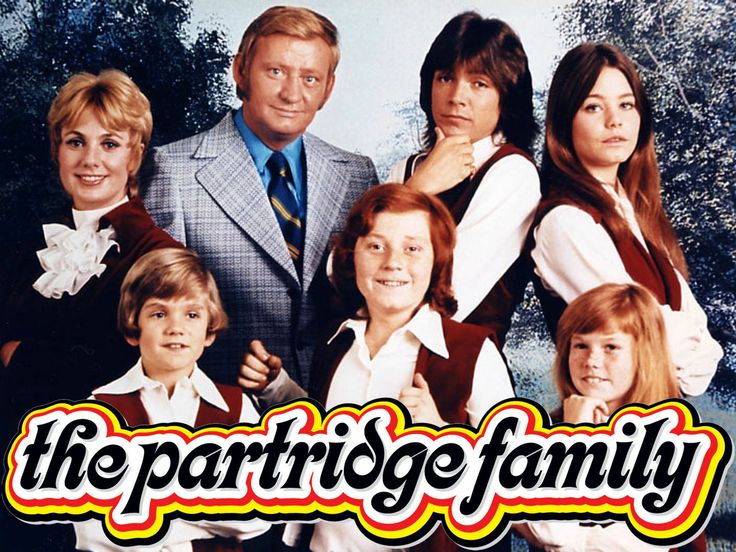
“Sunshine” lives up to its name from the very first note because The Partridge Family do not just sing it brightly — they make it feel like light breaking through, easy on the ear and instantly good for the spirit.
There are Partridge Family songs that win you over with big chart history, and then there are songs like “Sunshine” that work by sheer mood. Before you even get to the chorus, the title has already kept its promise. The song feels open, upbeat, and warmly melodic in that unmistakable early-70s way — pop music designed not for grand tragedy or heavy self-importance, but for lift, glow, and the simple pleasure of feeling a little better after three minutes. “Sunshine” was included on Crossword Puzzle, released in June 1973, and although there was no U.S. single from the album, the track was released as a single in Japan. The album itself became the last Partridge Family album to chart in the U.S., peaking at No. 167 on Billboard’s Top LPs chart.
That chart fact actually helps explain part of the song’s charm. “Sunshine” is not one of the huge, endlessly cited Partridge Family smashes. It is the kind of track listeners tend to discover a little later, once they move beyond the obvious hits and start hearing how much craft and personality was tucked into the group’s later records. Because it is not overplayed, it still feels fresh. And because it opens up so quickly — bright melody, welcoming rhythm, instant uplift — it earns its title without effort. Some songs have to fight to seem cheerful. “Sunshine” simply arrives that way.
The song was written by Wes Farrell, Danny Janssen, and Bobby Hart, which already tells you a lot about why it works. Farrell, of course, was one of the central architects of the Partridge Family sound, while Hart had already helped shape some of the brightest, hookiest pop of the 1960s. Even later compilations that revisit the group’s best material still single out “Sunshine” and credit that writing team, with the track traced back to Crossword Puzzle. In other words, this was not filler tossed onto a late-period album. It came from people who knew exactly how to build a song that felt immediate, tuneful, and effortlessly likable.
What makes “Sunshine” so satisfying is its emotional simplicity. It does not pretend to be deeper than it is, and that honesty is part of its appeal. The lyric’s central image — “I’ve got the sunshine in my hands / You’ve got the sunshine in your hands / We’ve got the sunshine in our hands / Now let it shine all over this land” — tells you everything about the song’s spirit without needing complexity for its own sake. It is communal, optimistic, and made to feel shared rather than solitary. That was one of the best things The Partridge Family could do when they were in this mode: turn a pop song into a small pocket of good weather.
There is also something revealing about where “Sunshine” sits in the broader Partridge Family story. By 1973, the phenomenon was no longer in its absolute first rush, and Crossword Puzzle belongs to the later chapter of the group’s album run. But songs like this prove that even after the biggest commercial peak, they could still deliver records full of easy charm and polished joy. The title itself sounds almost archetypal for the group: bright, clean, hopeful, and radio-friendly. Yet the execution is what seals it. This is not just sunshine as branding. It is sunshine as arrangement, pacing, and mood. The song feels light on its feet in exactly the way that makes a Partridge Family favorite last.
And that is why it lives up to its name from the first note. “Sunshine” does not need drama, irony, or nostalgic over-importance to make its mark. It succeeds on older pop virtues: a welcoming hook, a buoyant feel, and the sense that music can still brighten a room simply by meaning to. In a catalog remembered mostly for bigger titles, this one remains a lovely reminder that The Partridge Family were often at their best when they aimed for joy and actually hit it. “Sunshine” feels good because it is built to feel good — and sometimes that kind of sincerity is the most enduring magic of all.