
“Down on the Corner” endures because it takes something wonderfully ordinary—a sidewalk band, a few homemade instruments, a little pocket change—and turns it into a celebration of joy that still feels alive every time the record spins.
There is something deeply charming about “Down on the Corner” because it never tries too hard. It does not come dressed in grand emotion, social drama, or heavy symbolism. Instead, Creedence Clearwater Revival gives us a street-corner scene so vivid, so cheerful, and so unpretentious that it feels as though we can step right into it. You can almost see the crowd gathering, almost hear the scrape of the washboard and the bright little clatter of a jug-band rhythm, almost feel the easy pleasure of people stopping for a moment simply because music has made the day a little lighter. That is one reason the song has never grown old. It understands a truth many bigger songs miss: sometimes the most lasting magic comes from small pleasures honestly observed.
Released in October 1969 as part of the celebrated “Down on the Corner” / “Fortunate Son” single, and included on the album Willy and the Poor Boys, the song became one of CCR’s biggest hits, reaching No. 3 on the Billboard Hot 100 in December 1969. In Canada it climbed to No. 4, and it also charted strongly in several European countries, including No. 2 in Germany. Those numbers matter, of course, but what matters even more is the contrast built into that single itself. On one side was “Fortunate Son,” fiery, suspicious, and politically charged. On the other was “Down on the Corner,” open-hearted and playful. That pairing says a great deal about John Fogerty and CCR at their peak: they could sound outraged about the state of the world and, at almost the same moment, remind you that music on a street corner could still hold a community together.
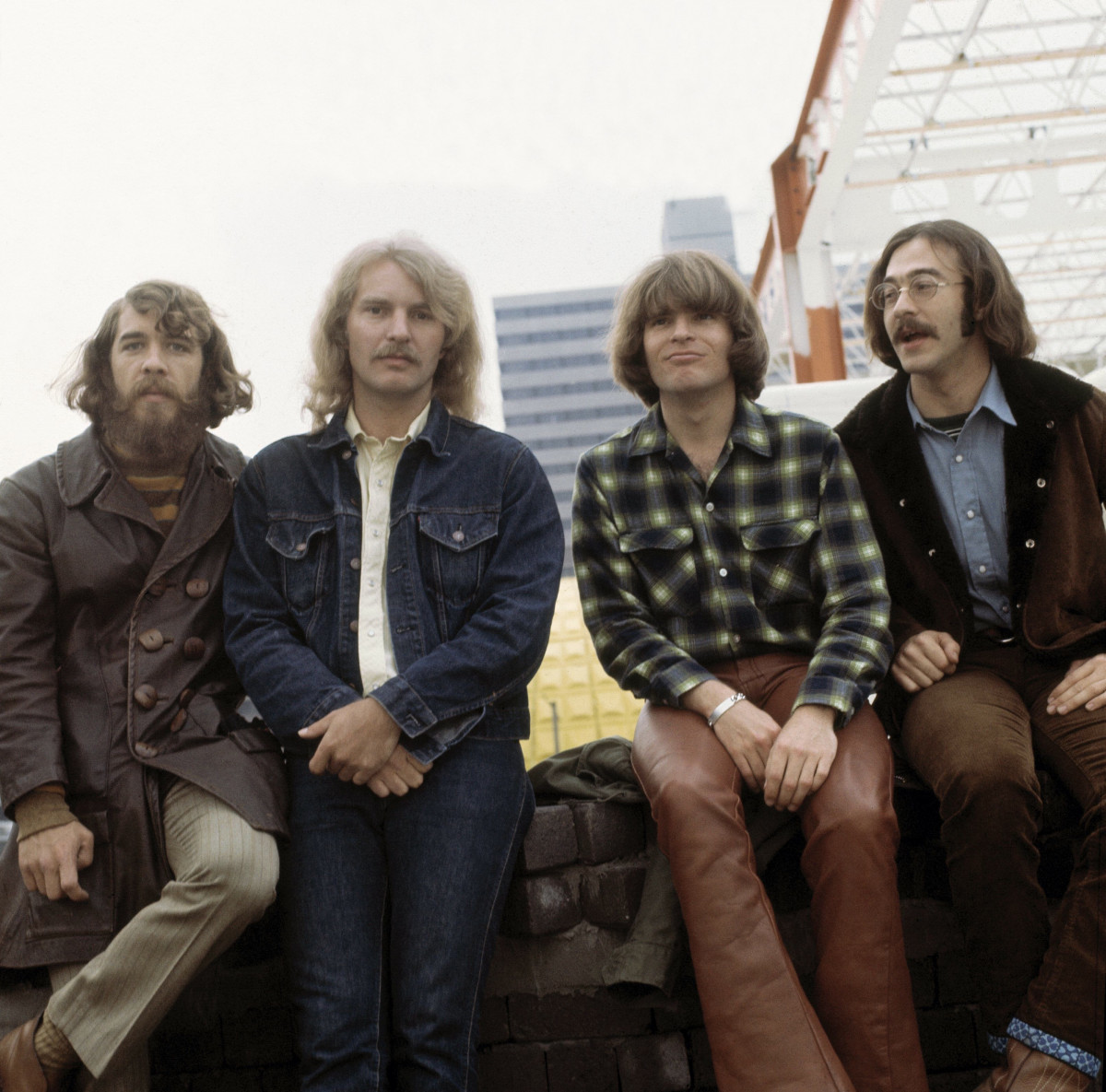
The song’s little story is part of its lasting appeal. It centers on the fictional group Willy and the Poor Boys, a rough-and-ready band playing for nickels and smiles. The details are unforgettable because they are so tactile: the harmonica, washboard, kazoo, Kalamazoo guitar, and gut bass all give the song a homemade quality, as if the whole thing were assembled out of scraps, spirit, and rhythm. That kind of imagery was not accidental. The members of CCR even performed the song in costume as Willy and the Poor Boys, echoing the concept seen on the album cover of Willy and the Poor Boys. It gave the record a friendly theatrical touch, but never in a way that felt artificial. The whole charm of the song lies in the illusion that anyone, with enough heart, could join in.
And that may be the secret of why “Down on the Corner” still feels timeless. It is not simply about music; it is about what music does. The song imagines music as a public good, something not locked away in concert halls or reserved for stars, but offered out in the open air where ordinary people live. There is an old democratic spirit in that idea. A street corner becomes a stage. Spare change becomes applause. A passing crowd becomes, however briefly, a shared world. John Fogerty did not need many words to suggest all of that. He just needed the right groove, the right scene, and that wonderfully welcoming chorus.
Musically, the song has exactly the kind of bounce that makes it seem effortless, though records that sound effortless are often the hardest to make. Billboard at the time called attention to its “infectious” beat, and that was well observed. There is a loose-limbed swing in “Down on the Corner” that keeps it from ever sounding stiff or overworked. It moves with a grin. Even now, it feels like the sort of record that can brighten a room before anyone has fully decided they are in the mood to listen. That is not a small gift. Plenty of songs are admired; far fewer are instantly welcoming.
What also gives the song its staying power is how beautifully it fits Creedence Clearwater Revival’s larger identity. CCR always had a rare talent for making records that sounded rooted in older American forms—rock and roll, country, blues, swamp rock, folk memory—without ever feeling dusty or academic. “Down on the Corner” is a perfect example. It nods to older traditions of jug bands and front-porch music, but it never feels like an exercise in nostalgia. It feels alive, present, and cheerful. The band is not preserving a museum piece here; they are letting an older spirit run free inside a hit single. That balance between familiarity and vitality is one of the reasons CCR’s best music has aged so gracefully.
There is also something quietly moving about how unpretentious the song remains. In an era when rock music was often becoming more self-serious, more sprawling, more interested in making statements, “Down on the Corner” stayed simple without being slight. That simplicity is not emptiness. It is confidence. The song knows exactly what it is doing. It is offering delight, rhythm, and a picture of music as fellowship. It trusts that to be enough. And more than half a century later, it still is.
In the end, “Down on the Corner” lasts because it captures something people never stop needing: the pleasure of hearing music that feels local, human, and shared. It reminds us that joy does not always arrive as something grand. Sometimes it comes from a made-up band on a sidewalk, from a chorus everyone can remember, from the sound of a great American group pretending to be even humbler musicians and somehow becoming even more lovable in the process. Creedence Clearwater Revival turned that simple fun into something enduring, and that is why the song still feels so fresh—like a little burst of sunlight on an ordinary corner, still drawing a crowd after all these years.