
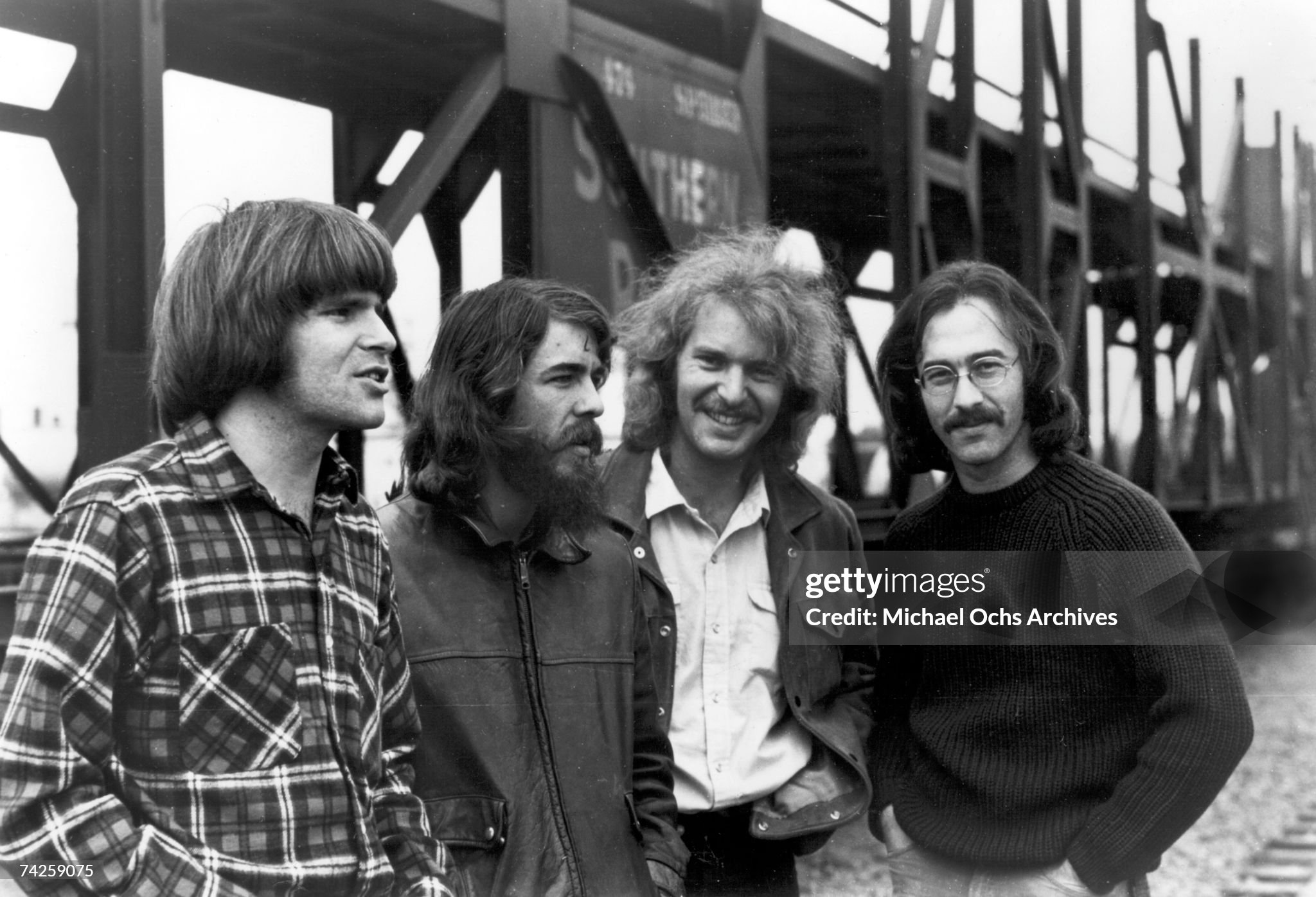
“Lodi” endures because it tells a hard truth too many gifted people learn sooner or later: talent may fill a room, but it does not always open the next door.
There is something almost unbearably human about Creedence Clearwater Revival’s “Lodi.” On paper, it is a modest song: no grand apocalypse, no mythic romance, no swaggering triumph. Released in 1969 as the B-side to “Bad Moon Rising” and later included on the album Green River, it was not one of Creedence’s biggest chart monsters, though it still reached No. 52 on the Billboard Hot 100. Yet that modest chart life is part of the song’s mystery. “Lodi” has lasted because it speaks for a quieter heartbreak—the heartbreak of realizing that effort, skill, and persistence do not guarantee arrival. Sometimes they only keep you on the road a little longer.
That is why the song still hits so hard for anyone who has ever watched promise collide with reality. The narrator is not untalented. That is the first crucial thing. He is not a fool, not a fraud, not some comic drifter too deluded to know better. He is a working musician who has given years to the craft, sung his songs, paid his dues, followed the old dream wherever it led—and now finds himself stranded, broke, and spiritually threadbare in a place that feels like the end of momentum itself. The pain of “Lodi” comes from that cruel mismatch: the man clearly has something to give, but the world has no obligation to reward it.
John Fogerty later explained that he imagined in “Lodi” “a much older person” than he actually was at the time, calling it “sort of a tragic telling” about a man stuck where people do not really appreciate him. That is a remarkable act of empathy from such a young songwriter. Fogerty was near the beginning of a great career when he wrote it, yet he projected himself into the life of someone already worn down by disappointment. He also said he chose Lodi partly because it had “the coolest sounding name,” and had not even visited the town before writing the song. But if the geography was partly intuitive, the emotional truth was exact. He understood, very early, the loneliness of being unseen.
That is the secret of the song’s force: “Lodi” is not really about one California town. It is about the place where ambition goes when applause runs out. Everyone who has chased a calling knows some version of that place. It may not be a literal roadside town, and it may not involve music at all. It may be a stalled career, a long season of obscurity, a body of work that never found its audience, a life spent becoming good at something the world only notices by accident. “Oh Lord, stuck in Lodi again” lands so deeply because it sounds like more than a lyric. It sounds like a private sentence people whisper to themselves when they realize that perseverance and recognition are not the same thing.
Musically, CCR make that resignation even more piercing by refusing melodrama. The arrangement is plainspoken, steady, almost weary in its movement. There is no lush self-pity, no orchestral pleading. Creedence Clearwater Revival were masters of compression, and here they compress defeat into something devastatingly ordinary. That ordinariness is why the song feels real. Failure in life is rarely cinematic. More often, it is a cheap room, a missed connection, a little less money than you need, a crowd that barely remembers your name. The song’s quiet gait mirrors that truth. It does not collapse. It keeps going—because people in that situation usually do.
There is also a deeper irony that gives “Lodi” extra sting. It came from a band in the middle of an astonishing commercial run. Green River was the second of three CCR albums released in 1969, an extraordinary year in which the group were becoming one of America’s defining rock acts. So while the band themselves were climbing, Fogerty wrote one of rock’s most empathetic songs about downward motion. That tension matters. “Lodi” is not the complaint of a bitter has-been; it is the warning dream of a successful young artist who already sensed how fragile success could be. That may be one reason the song never feels cynical. It feels frightened, humble, and achingly aware.
And perhaps that is why the song has aged so beautifully. Many records about ambition either romanticize the struggle or celebrate the breakthrough. “Lodi” does neither. It honors the bruised middle distance, the long, unglamorous stretch where talent survives without guarantee. It understands that being gifted can be its own sorrow, because the gift keeps asking to be used even when the world is not listening. That is a truth far bigger than music. It belongs to painters, teachers, writers, laborers, caretakers—anyone who has carried real ability into rooms that offered too little back.
So why does Creedence Clearwater Revival’s “Lodi” still hit so hard? Because it never lies. It knows that talent is real, effort is real, devotion is real—and still, success may not come, or may come late, or may pass by altogether. Yet the song is not cruel. It is compassionate. It looks at the stranded soul with dignity. And in that dignity lies its lasting power. “Lodi” does not merely sing about failure. It sings about the sadness of having something valuable inside you and learning, one difficult mile at a time, that the world does not always know what to do with it.