
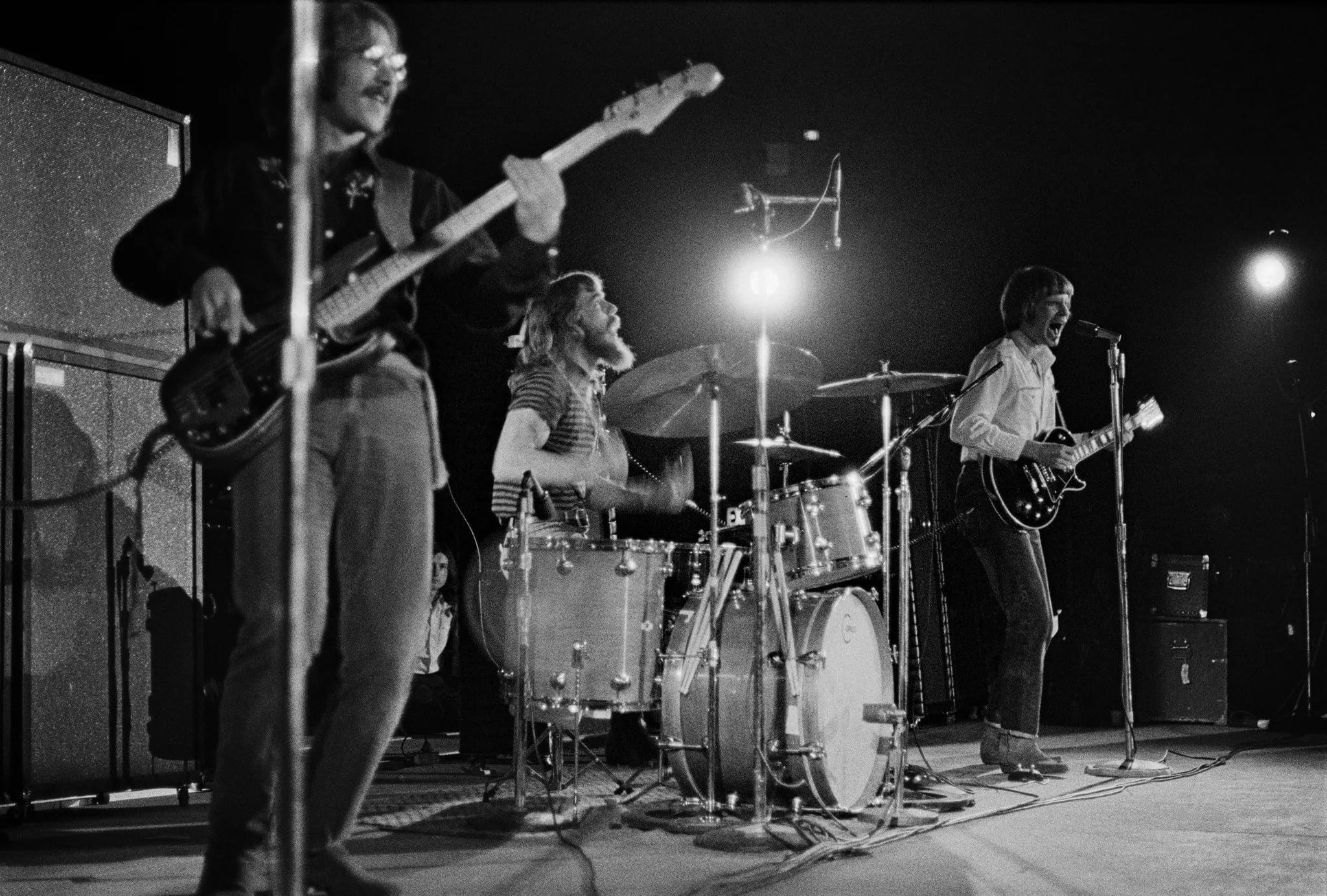
“Penthouse Pauper” is Creedence Clearwater Revival turning blues into a workingman’s thunderclap—envy and anger sharpened into a vow: I may be down here, but I’m not bowing.
If there’s a song in the early Creedence Clearwater Revival catalog that sounds like it was born with dirt under its fingernails, it’s “Penthouse Pauper.” It doesn’t arrive smiling. It arrives with its jaw set—short, loud, and certain that dignity can survive even when money and power do their best to grind it down.
The essential facts place it right at CCR’s first great leap. “Penthouse Pauper” is a John Fogerty original on Bayou Country, the band’s second studio album, released January 15, 1969 on Fantasy Records. It runs 3:39, and its placement on the album matters: it sits on Side Two, directly after “Good Golly, Miss Molly” and before “Proud Mary.” That sequencing feels almost cinematic—like Fogerty wanted one last hard shove of raw blues grit before the riverboat hymn of “Proud Mary” glides in and changes the air.
In chart terms, the song’s story is not the story of a single. “Penthouse Pauper” was not released as its own A-side, so it didn’t have a separate Billboard Hot 100 debut. Instead, it lived where so many of CCR’s best truths lived: as a deep album cut discovered by listeners who played the whole record. Its commercial halo, however, is impossible to ignore—because Bayou Country is the album that carried “Proud Mary,” released as a single in January 1969 and peaking at No. 2 on the Billboard Hot 100 in March 1969. When the world came rushing toward CCR through “Proud Mary,” “Penthouse Pauper” was already there on the album—standing in the doorway, scowling a little, daring you to pretend class doesn’t matter.
What makes “Penthouse Pauper” unforgettable is its emotional engine: a working-class snarl that never quite becomes self-pity. The title itself is a knife twist—two worlds jammed together in one phrase. A “penthouse” implies height, privilege, clean glass, and distance from ordinary noise. A “pauper” is the person the world expects not to speak too loudly. Fogerty fuses them into a single character, then lights the fuse. The song feels like the moment you realize the ladder was never built for you—and you decide, stubbornly, that you’ll climb anyway, even if you have to use splinters and rage as rungs.
Musically, it’s CCR doing what they did better than almost anyone in 1969: compressing a whole social drama into a tight, muscular band performance. It’s blues-rooted, yes, but not museum-blues—this is blues turned into rock ‘n’ roll gasoline. Fogerty’s guitar is not ornamental; it’s argumentative. The rhythm section pushes like a factory line that doesn’t stop just because your heart is tired. And over it all, that vocal—Fogerty’s bark with a preacher’s conviction—makes the lyric feel less like a story and more like a confrontation.
The deeper meaning, though, isn’t simply “I’m poor and I’m mad.” It’s the refusal to be made small. “Penthouse Pauper” is about the psychological violence of being told your place—and the equally powerful decision to reject that script. In the late ’60s, plenty of rock bands were chasing cosmic escape hatches; CCR kept dragging the songs back to the ground, back to the human grit of pride, resentment, and survival. This track, sitting just before “Proud Mary” on Bayou Country, feels like a final stomp of the boot before the boat starts rolling—an insistence that even the most joyful movement forward carries the memory of what tried to hold you down.
That’s why the song still hits today, even without the “single” spotlight. Some tracks become famous because they win the week. “Penthouse Pauper” becomes beloved because it understands a lifetime: the sting of being underestimated, the heat of being used, the private promise to remain unbroken. It’s not a song that asks for sympathy. It’s a song that asks for recognition. And once you’ve heard it in the right mood—late at night, volume a little too high—it doesn’t really leave. It simply stands there, shoulders squared, reminding you that pride can be louder than money, and a so-called pauper can still shake the walls of a penthouse.