
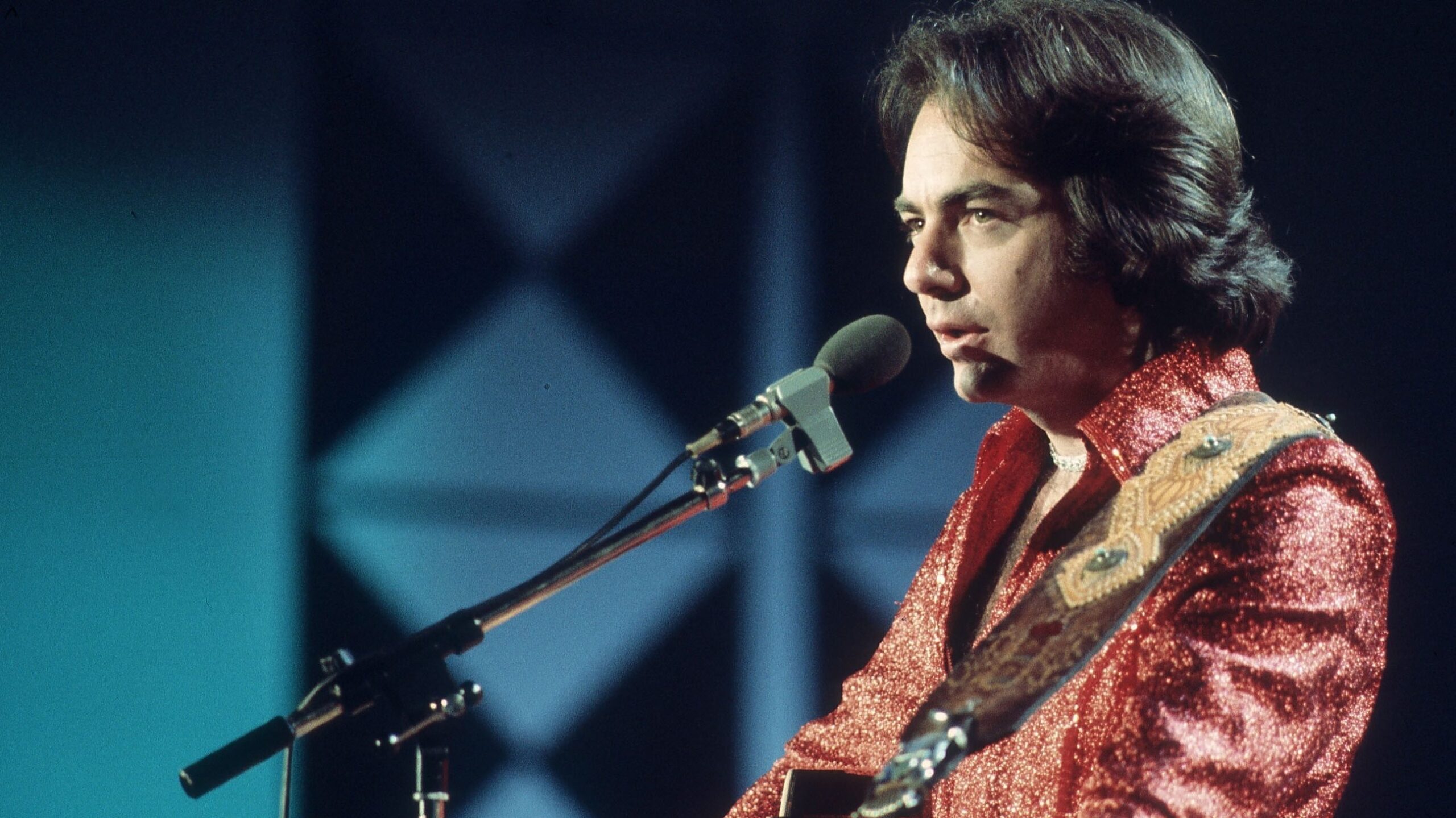
The sadness in “Forgotten” is not theatrical or loud—it is the quieter sorrow of looking back and realizing that what vanished from a life did not vanish from the heart.
There is something painfully honest about a song called “Forgotten.” Even before Neil Diamond begins to sing, the title alone carries a bruise. It suggests not only loss, but a second wound after loss—the fear that what mattered deeply may be slipping out of memory, or worse, slipping out of the world’s concern. That is why the song lingers. Not because it begs for tears, but because it moves with the weary dignity of someone standing in the half-light, holding what remains of feeling after time has already done its damage.
“Forgotten” appeared on Home Before Dark, released in May 2008, with Rick Rubin producing and the song placed at the emotional heart of the album’s track list. The album itself was no minor late-career footnote: it debuted at No. 1 on the Billboard 200, the first chart-topping album of Neil Diamond’s long career, and official album pages list “Forgotten” among its central tracks. That matters, because this was a period when Diamond was not merely revisiting old strengths—he was stripping his music down, letting age, reflection, and gravity speak more plainly than before.
But the most valuable part of the story is not the chart history. It is the emotional setting around the song. Home Before Dark was made during a late period in Neil Diamond’s career when his voice had gained more weather in it, more grain, more humanity. Under Rick Rubin’s production, the album was built not around grand ornament, but around space, restraint, and the power of a mature voice telling the truth without hurry. That is the first spark worth keeping near the front of any introduction to “Forgotten.” This is not the sadness of youth, when everything feels like immediate catastrophe. It is older than that. It is sadness that has learned patience. Sadness that sits down beside you rather than knocking at the door.
The second precious detail is even simpler: “Forgotten” was important enough to be singled out for the deluxe edition’s bonus DVD as an acoustic studio performance. That tells its own quiet story. Some songs survive best when dressed in production, but others reveal their true strength when left nearly alone. “Forgotten” seems to belong to that second kind. The song’s sorrow is not decorative. It does not need clutter around it. Its ache is built into the title, the melody, and the plainspoken emotional weight Diamond carries into it.
What makes the song stay with a listener is that it does not dramatize pain in the usual way. It feels less like a breakdown than a reckoning. The sadness here is not only about someone gone, or time wasted, or love dimmed. It is about the human terror that what once mattered desperately can become remote, blurred, unheld. That is a particular kind of heartbreak—the kind that comes not in a single violent moment, but in the slow recognition that life keeps moving even when the heart is not ready to let go. Neil Diamond was always capable of emotional directness, but in “Forgotten” that directness seems softened by age into something even more affecting: not a cry, but a confession.
And because he sings it with such steadiness, the song never sinks into self-pity. That is crucial. Lesser performances might have turned a title like “Forgotten” into melodrama. Diamond does the opposite. He lets the sadness breathe. He trusts silence. He trusts memory. He trusts the listener to understand that the deepest grief is often the one least interested in spectacle. In that way, the song feels almost intimate enough to overhear, as though we are listening not to a performance but to the thoughts a person admits only when the room has gone quiet and the evening has begun to close in.
That is why the title says it all. “Forgotten” is not trying to dazzle. It is trying to name the ache as plainly as possible. And once named, that ache becomes harder to escape. The music ends, yes—but the feeling does not. It remains in the air the way certain memories remain in a life: softened by time, perhaps, but never erased. In Neil Diamond’s “Forgotten,” sadness is not a passing mood. It is a shadow with manners, a sorrow that knows how to sit still. And perhaps that is why it lingers so long after the final note—because it sounds like the kind of pain that has already learned it may never fully leave.