
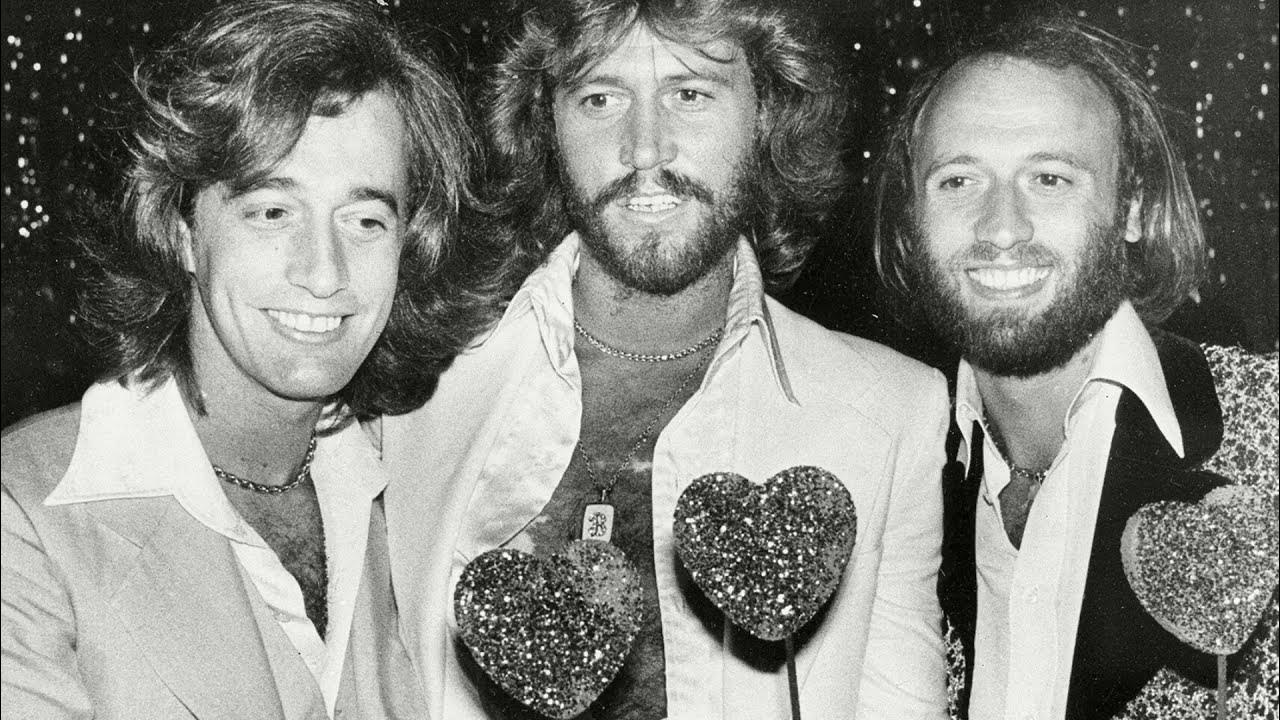
More than a soundtrack title, Saturday Night Fever became the moment the Bee Gees helped teach pop culture how to move with attitude—how to glide, pose, pulse, and wear rhythm like confidence.
Strictly speaking, “Saturday Night Fever” is not the title of a Bee Gees song. It is the title of the 1977 film and its landmark soundtrack album, the project that carried some of the group’s most defining recordings into the center of world culture: “Stayin’ Alive,” “Night Fever,” “How Deep Is Your Love,” “More Than a Woman,” and “If I Can’t Have You.” The soundtrack was released on November 15, 1977, and its success was staggering. It spent 24 consecutive weeks at No. 1 on the Billboard 200, topped the UK chart for 18 straight weeks, later won the Grammy Award for Album of the Year, and was eventually added to the U.S. National Recording Registry for its cultural and historical significance. It also became one of the best-selling soundtrack albums of all time, with worldwide sales commonly cited at over 40 million copies.
That is why the phrase “More Than Nostalgia” fits so perfectly. Saturday Night Fever is often remembered through white suits, mirrored floors, and the bright pulse of late-1970s disco, but the real story is larger than retro style. This was the moment when pop stopped merely asking people to dance and started teaching them how to carry themselves inside the music. The soundtrack did not just provide background for a cultural phenomenon. It shaped the phenomenon itself. The Library of Congress later recognized the album’s significance, and the long chart run confirms that it was not a passing fad or a single-season craze. It altered the emotional posture of popular music.
One of the most important stories behind the soundtrack is how quickly it all came together. According to the documented history of the album, Robert Stigwood brought the Bee Gees into the project during post-production, not at the beginning of filming. John Travolta later recalled that the group was not originally central to the movie’s earliest musical conception. Once Stigwood commissioned them, however, the brothers wrote the key songs for the film virtually in a single weekend in France. That detail matters because it explains some of the soundtrack’s electricity. These songs do not feel overworked or overdesigned. They feel seized in a burst of instinct, style, and momentum.
There is also a smaller but crucial piece of mythology at the center of it all. The Bee Gees did not want to write a song called “Saturday Night.” Instead, they already had a song called “Night Fever,” and they persuaded Stigwood to change the film’s title to Saturday Night Fever. That one decision says a great deal. It shows that the Bee Gees were not merely supplying tunes to fit a movie; they were helping define the movie’s identity. And once “Night Fever” was released as a single in 1978, it did more than support the film’s success. It became one of the era’s core anthems, spending eight weeks at No. 1 on the Billboard Hot 100, the longest run at the top for any single that year.
That is where the deeper meaning of your title begins to open up: “the moment pop culture learned how to strut.” The soundtrack’s power was not only in rhythm, but in posture. “Stayin’ Alive” carried urban cool and survival with a hard, steady pulse. “Night Fever” turned the dance floor into a place of sleek anticipation and release. “How Deep Is Your Love” brought tenderness into the same world without breaking its spell. Together, these songs taught mainstream pop something new: that feeling glamorous, wounded, hungry, and rhythmically self-possessed could all belong in the same cultural room. The soundtrack did not just soundtrack movement. It stylized it.
That is why the project still feels powerful now. Nostalgia softens things; Saturday Night Fever still has edge. The soundtrack captured a culture discovering that dance music could be more than celebration. It could be identity. It could be sexual confidence, social ambition, loneliness in public, and release under pressure. The Bee Gees had already made extraordinary records before this, but here they found the exact emotional and rhythmic language that let them dominate the late 1970s. Billboard still identifies them above all with the Saturday Night Fever phenomenon, and not by accident. This was the point where their songwriting, falsetto harmonies, and pop instincts fused with a broader image of modern cool.
So the real story is not simply that Saturday Night Fever became a classic soundtrack. It is that the Bee Gees helped turn a movie title into a cultural stance. The lights, the beat, the walk, the hair, the clothes, the mirrored confidence—all of it came together in a way that made pop feel newly physical, newly performative, newly aware of its own silhouette. That is why Saturday Night Fever remains more than nostalgia. It marks the instant when pop culture learned not just how to dance, but how to strut. And once that lesson was learned, popular music never quite walked the same way again.