
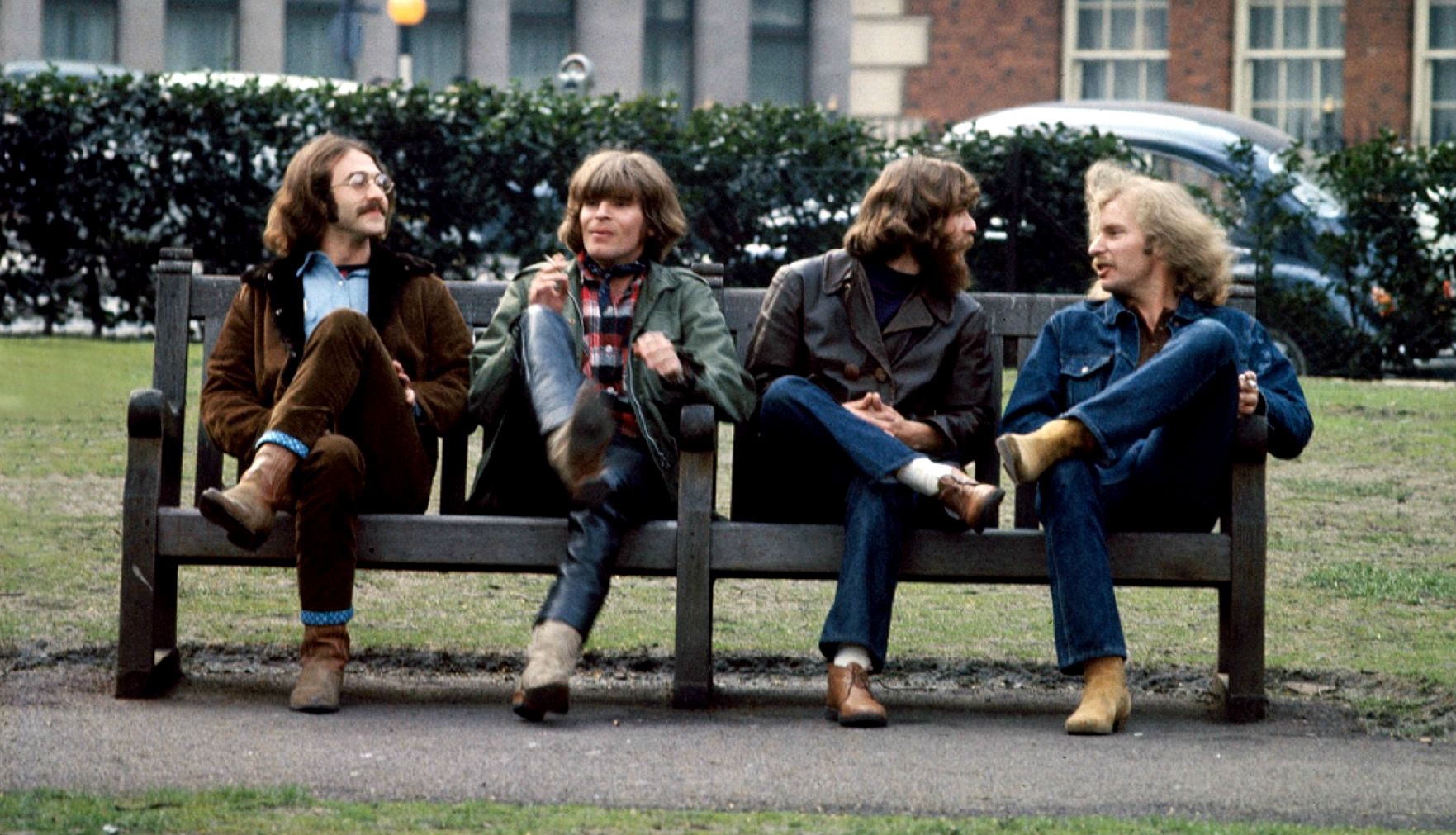
“Bootleg” turns outlaw folklore into rhythm and foggy Southern atmosphere, capturing the rough-edged freedom that made Creedence Clearwater Revival feel larger than radio itself.
Some songs announce themselves with a grand chorus, a chart milestone, or a famous opening line that never leaves the public ear. “Bootleg” by Creedence Clearwater Revival works differently. It creeps in on a humid groove, half-shadow and half-smile, and before long it has wrapped itself around the listener like back-road air at sundown. Released in early 1969 on the album Bayou Country, the song was never one of the band’s biggest headline singles, yet it remains one of the most revealing pieces in the CCR catalog. It shows just how naturally John Fogerty could build a whole world out of a few earthy images, a lean arrangement, and a voice that sounded like it had already lived through every mile of the American road.
Historically, “Bootleg” arrived during a crucial rise. Bayou Country, the second studio album by Creedence Clearwater Revival, reached No. 7 on the Billboard 200, helping establish the group as far more than a promising band with a regional feel. This was the record that broadened their identity. It carried the breakthrough hit “Proud Mary”, but beyond that celebrated classic were songs like “Bootleg” that deepened the atmosphere of the album and proved that CCR could do more than chase radio success. They could create a mythology.
The title itself points to American folklore: homemade liquor, hidden stills, people slipping through the dark with something forbidden and profitable in the back of a truck. But like many great Fogerty songs, “Bootleg” does not behave like a history lecture. It feels more like a fevered scene caught in motion. The lyric suggests secrecy, pursuit, and rural improvisation, all set against a groove that never hurries. That is part of its charm. “Bootleg” is not just about illegal whiskey; it is about a whole mood of American defiance, that old instinct to survive outside the polished world, to build your life in the margins and trust your own hands.
One of the enduring fascinations of Creedence Clearwater Revival is that they were California musicians who sounded, to millions of listeners, as though they had emerged from the mud, rivers, and sawmill smoke of the Deep South. “Bootleg” is one of the clearest examples of that miracle. The rhythm section moves with loose confidence, the guitar lines stay economical, and John Fogerty sings with a grit that makes the song feel inherited rather than written. There is nothing ornamental here. CCR always understood that a strong groove, an unforgettable vocal color, and the right detail could do more than elaborate production ever could.
The story behind the song is tied to Fogerty’s gift for transforming American archetypes into compact rock songs. He had a rare ear for language that sounded old, local, and lived-in. In “Bootleg”, he reaches toward a tradition of hidden economies and rough characters, but he never romanticizes it too neatly. Instead, he lets the music do much of the storytelling. The beat suggests movement. The atmosphere suggests danger, or at least the thrill of being just out of sight. The result is a song that feels cinematic without becoming theatrical.
What gives “Bootleg” its lasting power is that it sits at the crossroads of several things CCR did better than almost anyone else: roots-rock drive, bluesy restraint, memorable imagery, and the uncanny ability to make a studio recording feel like a local legend that had been floating around for generations. This was never a band interested in excess for its own sake. Even when they sounded rough, they were precise. Even when they seemed casual, they were carefully shaping mood. “Bootleg” is full of that discipline. It sounds tossed off in the best way, but the performance is tightly controlled, with every instrumental part serving the song’s humid sense of place.
It is also worth remembering that songs like this helped define why album tracks mattered in the late 1960s. Not every essential Creedence Clearwater Revival song had to be a giant single. Some were there to deepen the band’s world, to give texture to the records that listeners took home and lived with. “Bootleg” belongs to that tradition. It rewards attention. The more one listens, the more it reveals how completely CCR understood tension, space, and tone.
There is a particular kind of nostalgia that only Creedence Clearwater Revival can stir: not nostalgia for luxury or glamour, but for motion, weather, grit, and ordinary American mythology. “Bootleg” carries that feeling beautifully. It is dusty, sly, a little mysterious, and deeply musical. In a catalog filled with towering songs, this one remains a reminder that the soul of CCR was never only in the obvious classics. Sometimes it lived just as strongly in the shadows, where a song like “Bootleg” could rumble past like a secret being carried through the night.