
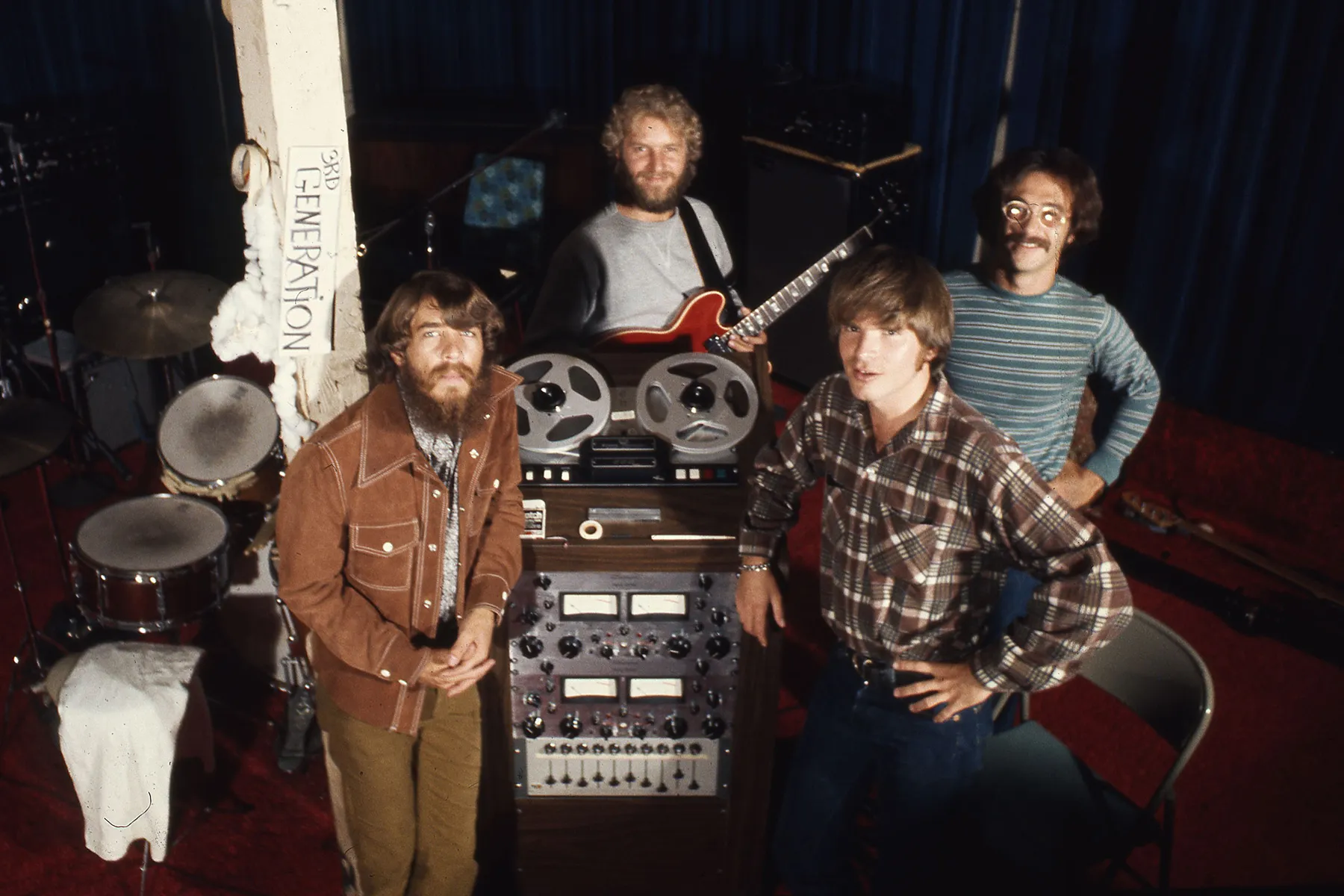
“Penthouse Pauper” turns class tension into swamp-rock fire, with Creedence Clearwater Revival delivering one of their fiercest declarations of pride, grit, and independence.
There are songs that arrive like polished statements, and then there are songs that come crashing through the door with mud on their boots. “Penthouse Pauper” belongs to the second kind. Released in January 1969 on Creedence Clearwater Revival’s second studio album, Bayou Country, it was never pushed as a major single, so it did not carve out its own separate chart history the way “Proud Mary” did. But the song lives inside a record that changed everything for the band. Bayou Country climbed to No. 7 on the Billboard album chart in the United States, helping establish CCR as one of the most urgent and distinctive American bands of the era. In that setting, “Penthouse Pauper” stands as one of the album’s most muscular and revealing tracks.
Written by John Fogerty, the song is built on a delicious contradiction right from its title. A “penthouse pauper” is a man surrounded by the appearance of comfort but spiritually untouched by wealth, status, or social ambition. Fogerty takes that paradox and turns it into a defiant piece of character writing. The narrator may be poor by ordinary standards, or maybe rich in ways that cannot be measured by money, but either way he refuses to be impressed by polished society. What matters in this song is not class position but attitude. There is swagger in every line, and a little grin hiding behind the grit.
Musically, “Penthouse Pauper” is one of the strongest examples of how Creedence Clearwater Revival could make a studio recording feel live, loose, and dangerous without losing precision. Doug Clifford’s drumming drives the track forward with a rough-edged insistence, while Stu Cook holds the bottom end firmly in place. Tom Fogerty and John Fogerty lock into the guitar work with the kind of compact ferocity that became a CCR signature. Nothing is wasted. The arrangement is lean, hard, and unpretentious. Like so much of the band’s best work, it sounds as if it came not from a strategy session but from instinct.
That instinct mattered because CCR never really fit the neat image of late-1960s rock royalty. They were from El Cerrito, California, yet they sounded as if they had crawled out of the American South, soaked in delta blues, rockabilly, country, and old-fashioned rhythm and blues. At a time when many bands were turning toward psychedelic ornament and grand statements, Creedence Clearwater Revival often aimed for something more direct. “Penthouse Pauper” captures that plainspoken force beautifully. It rejects pretense not just in lyric, but in sound. You can hear a band that trusted groove, attitude, and conviction more than fashion.
The deeper appeal of the song lies in its class-conscious undercurrent. John Fogerty was especially gifted at writing about labor, dignity, and stubborn self-definition without sounding preachy. In “Penthouse Pauper”, the narrator feels like a man who has seen enough of society’s measuring sticks to stop caring about them. He knows what he is, and perhaps more importantly, what he is not. He is not a social climber. He is not eager for approval from the well-dressed crowd. There is humor in the song, but there is also a serious emotional truth: some people would rather keep their soul intact than trade it for elegance.
That is one reason the song has endured so well among devoted listeners, even if it is not always the first title named in a casual rundown of CCR classics. It speaks to an old American feeling, one deeply rooted in blues and roots music—the belief that hardship may bruise you, but it can also clarify you. The song does not beg for sympathy. It does not romanticize poverty in sentimental terms. Instead, it offers a proud, almost mischievous stance against the idea that refinement equals worth. In the hands of a lesser band, that idea might have turned stiff or slogan-like. In the hands of Creedence Clearwater Revival, it becomes something earthy, playful, and unforgettable.
There is also a broader historical pleasure in hearing “Penthouse Pauper” now. It reminds us that Bayou Country was not merely the album that introduced the world to “Proud Mary”. It was also the place where CCR sharpened their identity: compact songs, Southern atmosphere filtered through California imagination, and a deep respect for the language of working people. Even album cuts carried personality. Even the rougher corners felt intentional. That is part of why the band’s records still sound so alive decades later. They were never chasing elegance for its own sake. They were chasing truth in the tone.
If “Penthouse Pauper” still hits hard, it is because its message has not aged out of relevance. The world still admires surfaces too easily. Status still seduces. Performance still disguises emptiness. And yet here comes Creedence Clearwater Revival, all these years later, with a song that laughs at that whole game and keeps stomping forward. There is freedom in that sound. There is relief in it too. For anyone who has ever felt out of step with fashionable people and perfectly at peace because of it, this song does more than entertain. It recognizes them.
In the end, “Penthouse Pauper” is not simply a rough album track buried in a great catalog. It is a statement of identity from a band that understood how to make simplicity feel profound. It carries the smell of barroom wood, amplifier heat, and late-night resolve. And beneath its swagger, it holds a message as old as the blues: you can own very little, refuse almost everything the world tries to sell you, and still walk like a king.