
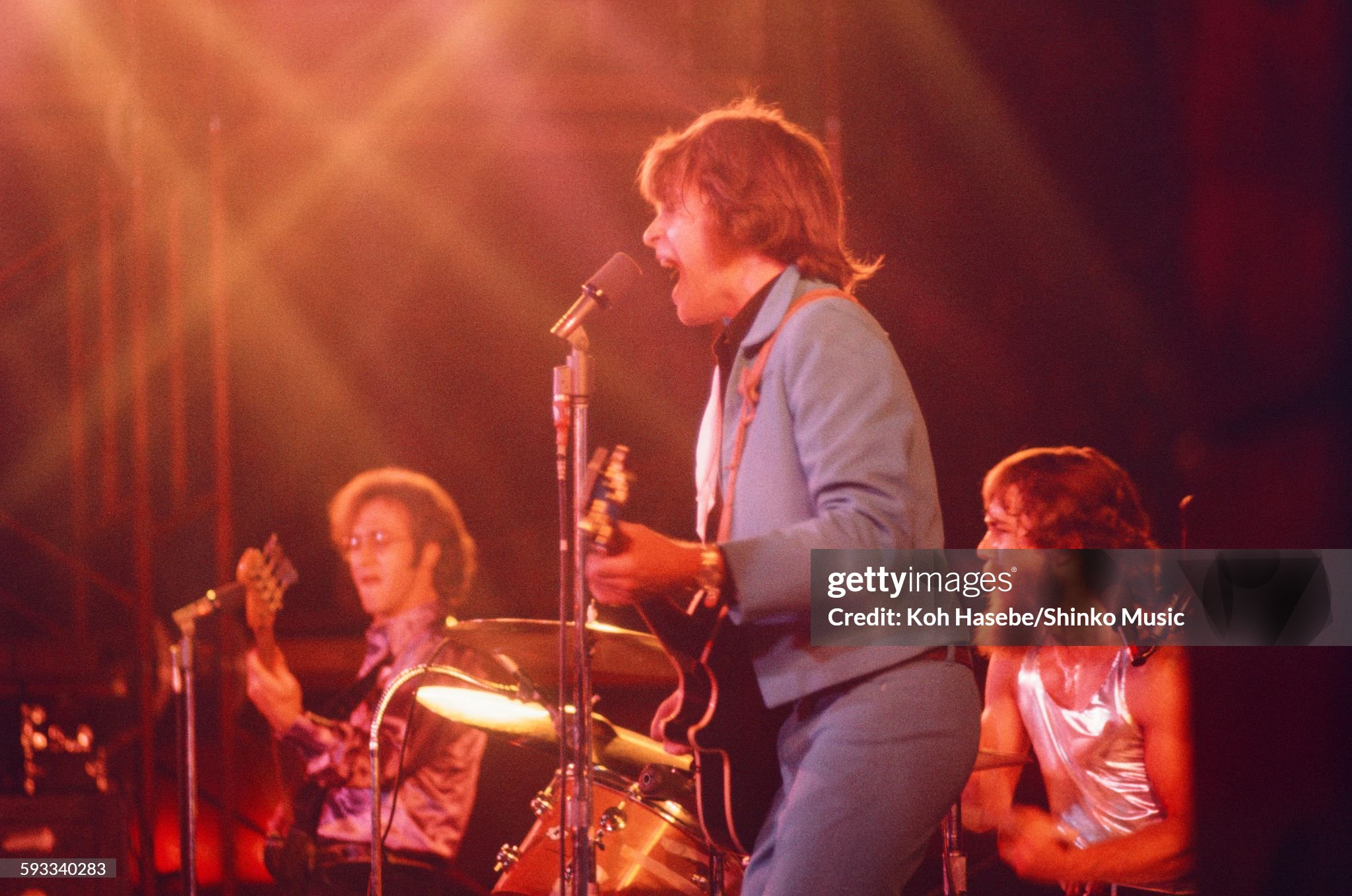
(Wish I Could) Hideaway is one of those late-period Creedence Clearwater Revival songs that feels small on the surface, yet deeply revealing underneath—a gentle wish to disappear just as the band itself was slipping out of reach.
There are songs that arrive like thunder, and there are songs that stay with you like a private thought you cannot quite shake. “(Wish I Could) Hideaway” belongs to the second kind. Released in 1972 on Mardi Gras, the final studio album by Creedence Clearwater Revival, it was not issued as a standalone hit single, so it did not chart on its own. But the album that carried it, Mardi Gras, reached No. 12 on the Billboard 200. That chart detail matters, because it reminds us of something important: even in a fractured final chapter, people were still listening. The name still mattered. The sound still carried a history.
What makes “(Wish I Could) Hideaway” especially interesting is who brought it to life. Unlike the band’s best-known classics, which were overwhelmingly shaped by John Fogerty, this song was written and sung by Stu Cook. By the time Mardi Gras was made, the internal balance of CCR had changed dramatically. Tom Fogerty had already left the group, and the remaining trio attempted a more democratic arrangement in which Cook and Doug Clifford would also write and sing. In historical terms, that decision was not a fresh beginning. It was the sound of a band trying, perhaps desperately, to keep itself together.
And that is one reason this song carries such a strange emotional weight. On paper, “(Wish I Could) Hideaway” is a modest track—easygoing, lightly wistful, unhurried. It does not storm forward like “Proud Mary” or bite with the social edge of “Fortunate Son”. Instead, it drifts. It leans back. It sounds as if it is searching for a quieter corner of the world. That very restraint is its meaning. The title itself is the confession: a desire to step away, to retreat, to vanish from pressure and noise. In another setting, it might simply feel like a laid-back country-rock reverie. But placed inside the final act of Creedence Clearwater Revival, it begins to feel like something more intimate, and more haunted.
The story behind the song cannot be separated from the story behind Mardi Gras. By 1972, CCR were no longer the unstoppable machine that had dominated the end of the 1960s. Between 1968 and 1970, they had built one of the most remarkable runs in American rock: hit after hit, album after album, all delivered with a lean, unmistakable power. Yet success had not brought peace. Tensions over leadership, songwriting, business matters, and control had been building for years. When the group finally entered its last recording phase as a trio, that tension was no secret. The result was an album that many listeners and critics heard as uneven, especially when measured against the extraordinary standard of earlier records such as Green River, Willy and the Poor Boys, and Cosmo’s Factory.
Still, history can sometimes be kinder than first reviews. Heard now, “(Wish I Could) Hideaway” has a fragile honesty that deserves more attention than it usually receives. Stu Cook does not sing with the hard authority that fans associate with John Fogerty. Instead, he brings something less commanding but more vulnerable. That matters. The performance feels human-sized. There is no attempt to overpower the listener. No grand statement. Just a quiet wish, carried by a band that sounds tired, reflective, and aware—whether consciously or not—that the end is near.
Musically, the song fits into the loose, rootsy language that always defined Creedence Clearwater Revival, but it lacks the clenched urgency of their classic peak. Some listeners have taken that as a weakness. Others hear it as part of the song’s truth. After all, not every meaningful song has to arrive with force. Sometimes a soft song tells the harder story. In this case, the softer the arrangement feels, the sadder the context becomes. It is difficult not to hear the title as echoing the emotional climate around the group itself: exhaustion, distance, and the wish to escape a room already filled with unresolved feeling.
That is the hidden poignancy of “(Wish I Could) Hideaway”. It is not one of the towering monuments of the CCR catalog. It is not a signature radio staple. But it may be one of the clearest windows into what Mardi Gras really represents—the moment when one of America’s great bands stopped sounding unified and started sounding exposed. For longtime listeners, that can be painful. Yet it can also be moving. Songs like this preserve the emotional texture of a band’s final season in a way statistics and headlines never can.
So the song endures not because it conquered the charts, but because it catches a feeling that many records never manage to hold: the longing to disappear before the lights fully go out. In the long shadow of Creedence Clearwater Revival, “(Wish I Could) Hideaway” remains a quiet, imperfect, unmistakably human farewell from the troubled world of Mardi Gras.