
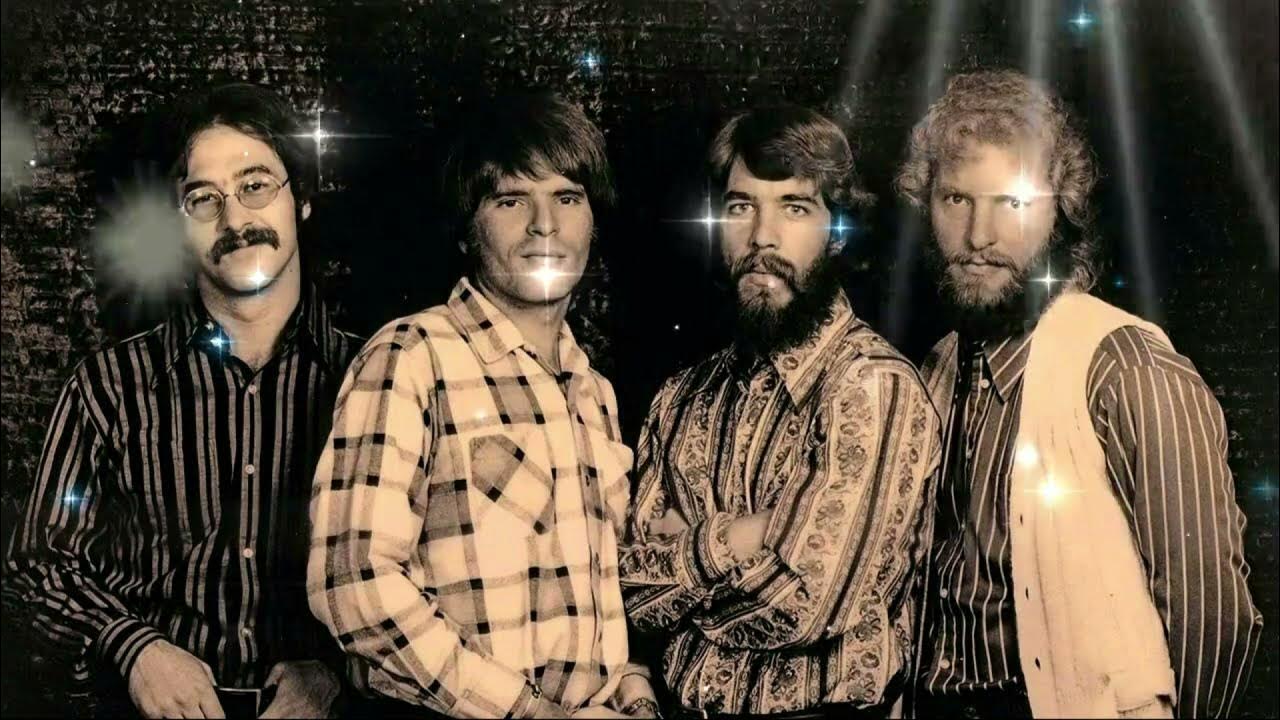
Born to Move is one of those late-period Creedence Clearwater Revival songs that says a great deal in a rush of rhythm: keep going, keep pushing, keep the wheels turning, even when the road beneath you is beginning to change.
Born to Move was never released as a standalone hit single, so it did not make its own run up the Billboard Hot 100. Yet its place in the Creedence Clearwater Revival story is more important than chart numbers might suggest. The song appeared on Pendulum, released in December 1970, an album that climbed to No. 5 on the Billboard 200. It was also the last CCR studio album made with the band’s classic four-man lineup before Tom Fogerty left the group. That alone gives Born to Move a special weight. It belongs to a moment when the machine was still running hard, but the strain inside it could already be felt.
By the time Pendulum arrived, Creedence Clearwater Revival had already done more in a few short years than most bands manage in a lifetime. They had stacked up hit after hit, built a sound instantly recognizable on radio, and become one of the defining American bands of their era without ever sounding polished in the artificial sense. Even when their records were precise, they still felt earthy, urgent, and human. On Pendulum, however, John Fogerty was beginning to stretch the band’s vocabulary. The album leaned more heavily into studio texture and mood, and unlike some earlier releases, it contained only original material. In that setting, Born to Move stands out as a reminder that CCR could still hit with blunt-force drive when they wanted to.
Musically, the song feels exactly like its title. It does not drift; it surges. There is a hard, forward-leaning pulse in it, the kind Creedence Clearwater Revival understood better than almost anyone. John Fogerty had a gift for taking simple rock-and-roll motion and making it feel mythic, as if a backbeat could carry dust, heat, labor, and longing all at once. Born to Move is built on that instinct. It is not ornate. It does not need to be. It drives on attitude, groove, and conviction, with the band sounding locked into the kind of lean momentum that made their best records feel less performed than lived.
The deeper meaning of Born to Move lies in that idea of motion as identity. This is not merely a song about dancing or physical movement. It suggests a temperament, almost a destiny. Some people, and some bands, are simply not made for stillness. They are built for the next town, the next night, the next burst of noise, the next chance to outrun whatever is closing in behind them. In that sense, the song fits naturally into the broader CCR universe, where rivers roll, trains rumble, roads stretch forward, and the American landscape is always in motion. But on Pendulum, that motion carries a slightly different feeling. It is less carefree, more urgent. There is energy here, yes, but there is also pressure.
That is part of what makes the song so compelling in hindsight. By late 1970, Creedence Clearwater Revival was still commercially powerful, but the internal balance of the group was becoming harder to maintain. John Fogerty’s leadership had long been central to the band’s success, yet it also created tension, especially as the years went on and frustrations inside the group deepened. Without forcing the song into autobiography, it is still hard not to hear Born to Move as the sound of a band pressing forward because stopping was unthinkable, even while change was already in the air. Within months, listeners would hear the beautifully weary Have You Ever Seen the Rain and the bright snap of Hey Tonight, both tied to the same Pendulum period, and both now inseparable from the story of a band nearing a turning point. Born to Move belongs to that chapter too, only it expresses the tension through momentum rather than reflection.
There is something especially moving about that contrast. Creedence Clearwater Revival has often been remembered for the obvious classics, and rightly so. But the album tracks sometimes reveal the character of a band more intimately than the biggest singles do. Born to Move may not carry the immediate cultural footprint of Proud Mary, Bad Moon Rising, or Fortunate Son, yet it preserves an essential truth about CCR: they knew how to make movement sound like necessity. Not fashion, not pose, not flash. Necessity. The song has that blue-collar determination that runs through so much of their work, the feeling that motion is not just freedom but survival.
For listeners returning to Pendulum after many years, Born to Move can feel like an old engine turning over the moment the key catches. It reminds us that Creedence Clearwater Revival was never only about the famous hooks. They were also about pressure, economy, instinct, and the mysterious power of a band that could say a great deal with very little excess. In this song, they sound restless, alive, and unwilling to stand still. That may be the simplest way to understand it, and perhaps the truest. Born to Move is not just a title. It is a summary of a spirit that defined CCR at their peak, and maybe even more poignantly, at the moment just before one chapter closed.