
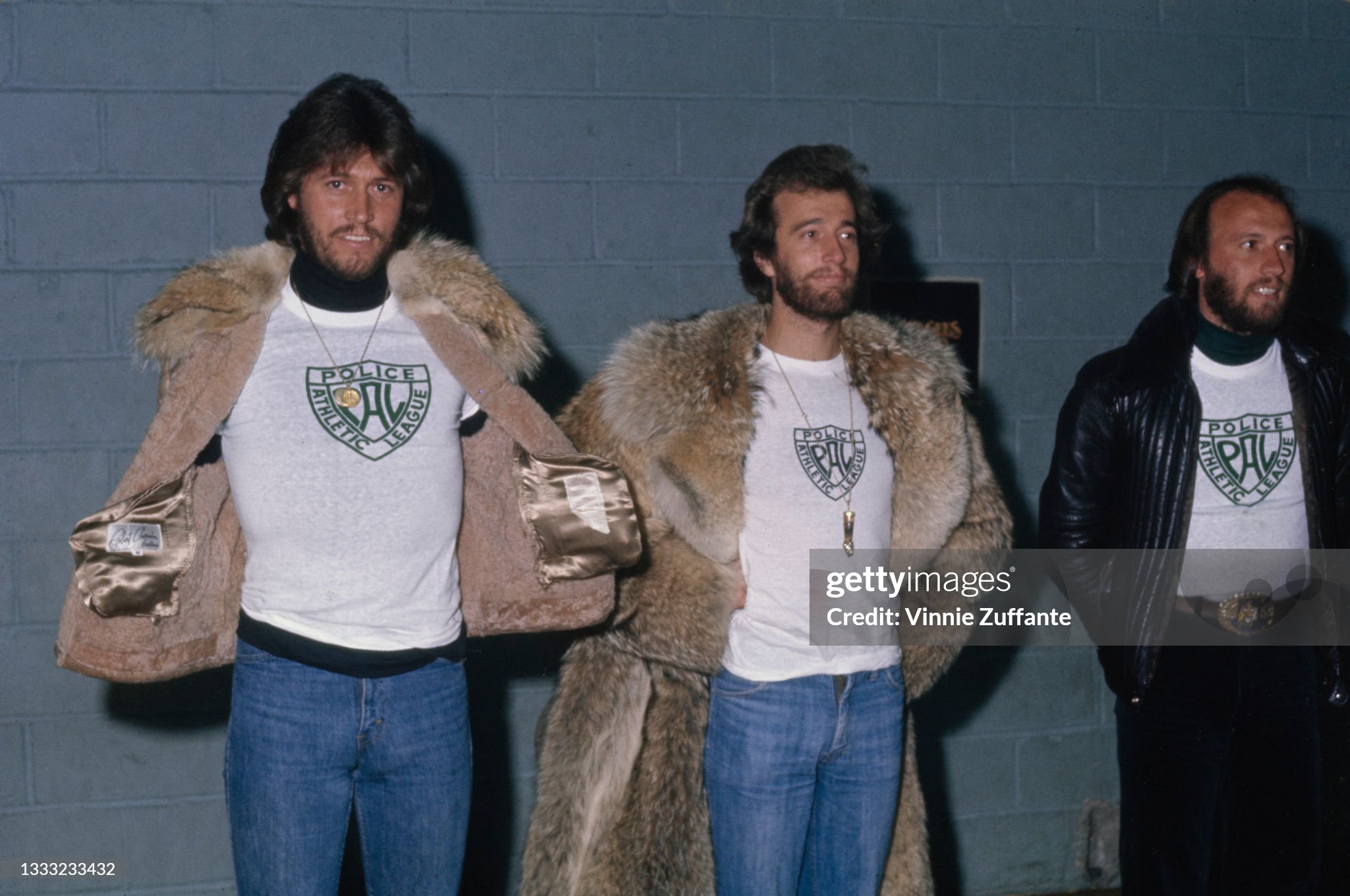
A song of wounded pride and quiet farewell, You’ll Never See My Face Again turns heartbreak into something elegant, final, and uncannily prophetic in the story of the Bee Gees.
You’ll Never See My Face Again is one of those Bee Gees recordings that seems to deepen with every passing decade. Released in 1969 on the lavish double album Odessa, it was never a major standalone chart hit in either the UK or the US, which may be one reason it remains a treasured discovery rather than an overplayed memory. But the album that carried it was no minor footnote. Odessa reached No. 10 on the UK Albums Chart and No. 20 on the US album chart, confirming that the Bee Gees were still operating on an ambitious, prestigious level even as strain inside the group was beginning to show.
That context matters, because this song feels inseparable from the emotional weather surrounding Odessa. By early 1969, the partnership between Barry Gibb, Robin Gibb, and Maurice Gibb was under real pressure. The sessions for Odessa produced music of tremendous beauty, but they also unfolded during one of the most difficult periods in the band’s early history. Disagreements over direction, identity, and even single choices were no longer small private irritations. The now well-known dispute surrounding First of May and Lamplight became one of the flashpoints that led to Robin Gibb temporarily leaving the group. In that light, You’ll Never See My Face Again almost plays like a farewell written before anyone was ready to say the word out loud.
What makes the song so affecting is that it does not lean on grand melodrama. It is sad, certainly, but it is not chaotic. The feeling is one of composure after disappointment, of standing still after the storm has already passed through the room. That is why the title itself cuts so deeply. You’ll Never See My Face Again is not simply about separation. It is about dignity. It is about the moment when hurt becomes distance, and distance becomes a kind of decision. The speaker in the song is not begging to be understood. He is drawing the curtain and leaving memory behind like a lamp still glowing in an empty house.
Musically, it belongs to the richly orchestrated world that made the late-1960s Bee Gees so distinctive. Before the rhythm and glitter of their later global triumphs, there was this other chapter: baroque, theatrical, deeply melodic, full of aching harmonies and literary atmosphere. On Odessa, the group pursued scale with uncommon seriousness, and the arrangements associated with Bill Shepherd gave the record much of its stately grandeur. You’ll Never See My Face Again carries that same feeling. The melody moves with solemn grace, and the harmonies do what the Bee Gees always did better than almost anyone else: they make sorrow sound beautiful without softening its truth.
There is also something striking about how modern the emotional core still feels. So many breakup songs are written in the heat of the moment, but this one feels like the morning after realization. It captures a colder, quieter pain: the understanding that some damage cannot be argued away, and that some partings arrive without raised voices. That emotional intelligence is a large part of why the song still lingers. It speaks to anyone who has learned that not all goodbyes are loud. Some are almost formal. Some arrive in careful language, with a straight back and a trembling heart.
For listeners who came to the Bee Gees mainly through the towering success of the 1970s, songs like this are a reminder of just how broad their artistry really was. The brothers were never only hitmakers. They were builders of mood, memory, and emotional nuance. You’ll Never See My Face Again stands as proof of that earlier identity, when their music often carried the melancholy elegance of chamber pop and the inward gaze of classic British songwriting. It may not have dominated the charts, but it reveals something more intimate than chart numbers ever can: the sound of a group reaching for beauty while trying to survive its own internal fractures.
That is why the song continues to resonate. Not because it was the biggest, or the most famous, or the easiest to summarize, but because it seems to hold two stories at once. On the surface, it is a beautifully written song about farewell. Beneath that, it feels like a shadow cast by a real turning point in the Bee Gees story. Heard today, it carries the ache of personal heartbreak and the tension of a band standing at the edge of change. Few songs manage to be so graceful and so revealing at the same time.
In the end, You’ll Never See My Face Again remains one of the hidden emotional centers of Odessa. It is not a song that shouts for attention. It waits for the right listener, the right evening, the right mood. Then it opens. And once it does, it is very hard to forget. Long after the final note fades, what stays behind is not just sadness, but the noble stillness of someone choosing silence over spectacle. That is a rare kind of heartbreak song, and the Bee Gees gave it a grace that time has only made more powerful.