
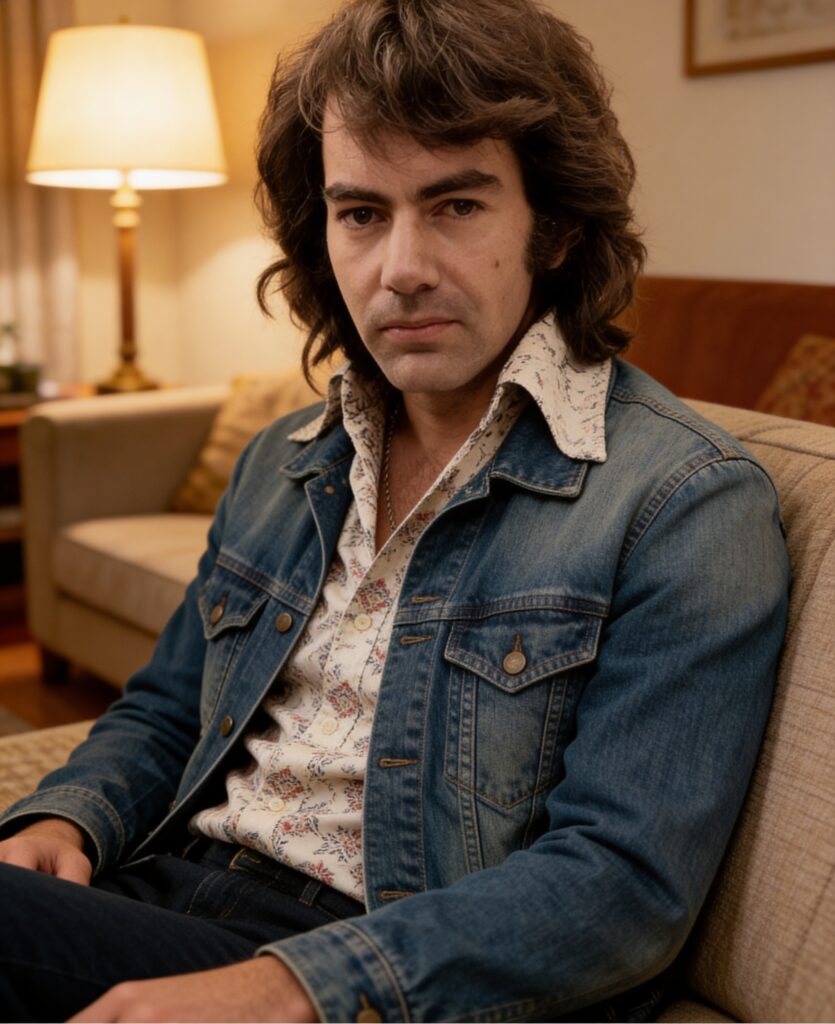
In Neil Diamond‘s reading of “Hallelujah”, the song sheds any grand display and settles into something quieter: a reflective, human meditation on grace, memory, and the calm that comes after a long emotional journey.
When Neil Diamond recorded “Hallelujah”, he was not chasing a new hit. He was doing something more interesting than that. His version appeared on Dreams, the 2010 album of personally meaningful songs that debuted at No. 8 on the Billboard 200. That detail matters, because it tells us where this performance belongs in his career: not in the restless climb upward, but in the rarer place where an artist sings from experience, from memory, and from a deep confidence in understatement. “Hallelujah” was not the album’s chart-driving single, but it remains one of its most revealing moments.
Of course, the song itself already carried a long and complicated history before Neil Diamond touched it. Written by Leonard Cohen and first released on the 1984 album Various Positions, “Hallelujah” had, by the time of Dreams, become one of the most interpreted songs in modern popular music. Different singers found different truths inside it. Some leaned into its spiritual mystery. Others emphasized its romantic ache. Many treated it as a dramatic showcase. Neil Diamond chose another path. He sang it as if he had lived with the song for years and no longer needed to prove anything through it.
That is what makes his version so affecting. There is restraint in the phrasing, but never distance. There is warmth in the tone, but no sentimentality. He does not turn “Hallelujah” into a theatrical statement. Instead, he draws it inward. The result feels less like a public performance and more like an old conversation resumed in a quieter room. For a singer whose catalog includes the towering emotional reach of “Sweet Caroline”, “America”, and “Love on the Rocks”, this kind of intimacy is especially striking. It reminds us that Neil Diamond was never only a singer of big choruses. He was also a careful narrator of feeling.
There is something especially moving about hearing a songwriter of his stature interpret a composition so closely associated with another legendary writer. Neil Diamond did not approach “Hallelujah” as a vehicle for reinvention in the flashy sense. He approached it with respect for the song’s architecture. The famous rise and fall of the melody remains intact, but what changes is the emotional weather. In his hands, the song feels seasoned. The questions inside it do not sound youthful or urgent; they sound contemplated, revisited, absorbed. That shift gives the performance its character.
The story behind Dreams helps explain why the song fits so naturally there. The album was built around songs that had stayed with Neil Diamond over time, songs he felt personally connected to rather than songs chosen for novelty. That idea is important, because it frames “Hallelujah” not as a random cover of a well-known classic, but as part of a larger act of reflection. By 2010, Neil Diamond had already written himself into American popular music history. On Dreams, he sounded like a man looking back through the music that helped shape him, and inviting listeners to do the same with their own lives.
Musically, his version favors clarity over excess. The arrangement supports the lyric rather than competing with it. That choice allows listeners to hear the words in a slightly different light. “Hallelujah” has always been a song full of tension between the sacred and the earthly, between devotion and disappointment, between beauty and uncertainty. Neil Diamond does not try to solve those tensions. He simply lets them sit beside one another, which may be the most honest thing any singer can do with this song. His reading suggests that faith, love, gratitude, and doubt are not separate chapters but often part of the same long story.
That may be why this performance lingers. Many versions of “Hallelujah” impress the ear. Neil Diamond‘s version reaches somewhere quieter. It feels lived in. The phrasing carries the weight of time without becoming heavy. Even the familiar lines seem to arrive with a different kind of patience. He sounds less interested in astonishment than in recognition, as if the song has been waiting for this calmer voice all along.
There is also a deeper irony here, and a beautiful one. Neil Diamond, one of popular music’s great writers of direct, memorable songs, chose to sing one of Leonard Cohen‘s most layered and elusive compositions. Yet he never sounds intimidated by its reputation. He finds the human center of it. That is the gift of the performance. He reminds us that songs survive not because they remain fixed, but because each honest singer uncovers a new angle of truth within them.
So if you return to “Hallelujah” through Neil Diamond, do not listen for the biggest note or the most dramatic flourish. Listen for the stillness. Listen for the kindness in the delivery. Listen for the sense that a song known around the world can still feel personal when it passes through the right voice. On Dreams, that is exactly what happens. Neil Diamond turns a modern classic into something deeply companionable, and in doing so, he gives “Hallelujah” one of its gentlest and most quietly memorable readings.